Introduction
You’ve just placed an order at Mây Bay restaurant, your bag of Vietnamese dishes is ready, and you’re heading home hoping to recreate exactly the same texture as you enjoyed in the restaurant. The only thing standing between you and that pleasure is reheating. A failed spring roll is a soggy, oily spring roll that has lost all its appeal. Good news: with a few simple steps, you can reheat your takeaway spring rolls perfectly and restore that characteristic crispiness that makes all the difference. This guide explains how, step by step. If you like ordering Vietnamese takeaway, you’ll find these tips particularly useful.
How to Reheat Your Takeaway Spring Rolls to Perfection When You’ve Just Ordered Vietnamese Takeaway – Guaranteed to Be Crispy?
Reading time: ~6 mins
- Why reheating takeaway spring rolls deserves your full attention
- The three methods that preserve crispness
- Dos and don’ts
- How to organise your takeaway order properly to get the most out of your meal
- FAQ
- How to reheat takeaway spring rolls without losing their crispiness
Why reheating takeaway spring rolls deserves your full attention
Ordering Vietnamese takeaway is a habit that’s here to stay, and for good reason. Vietnamese cuisine lends itself well to takeaway: the flavours are distinct, broths travel well in suitable containers, and dishes made with rice noodles or rice hold their shape well. Spring rolls, however, are a different matter altogether.
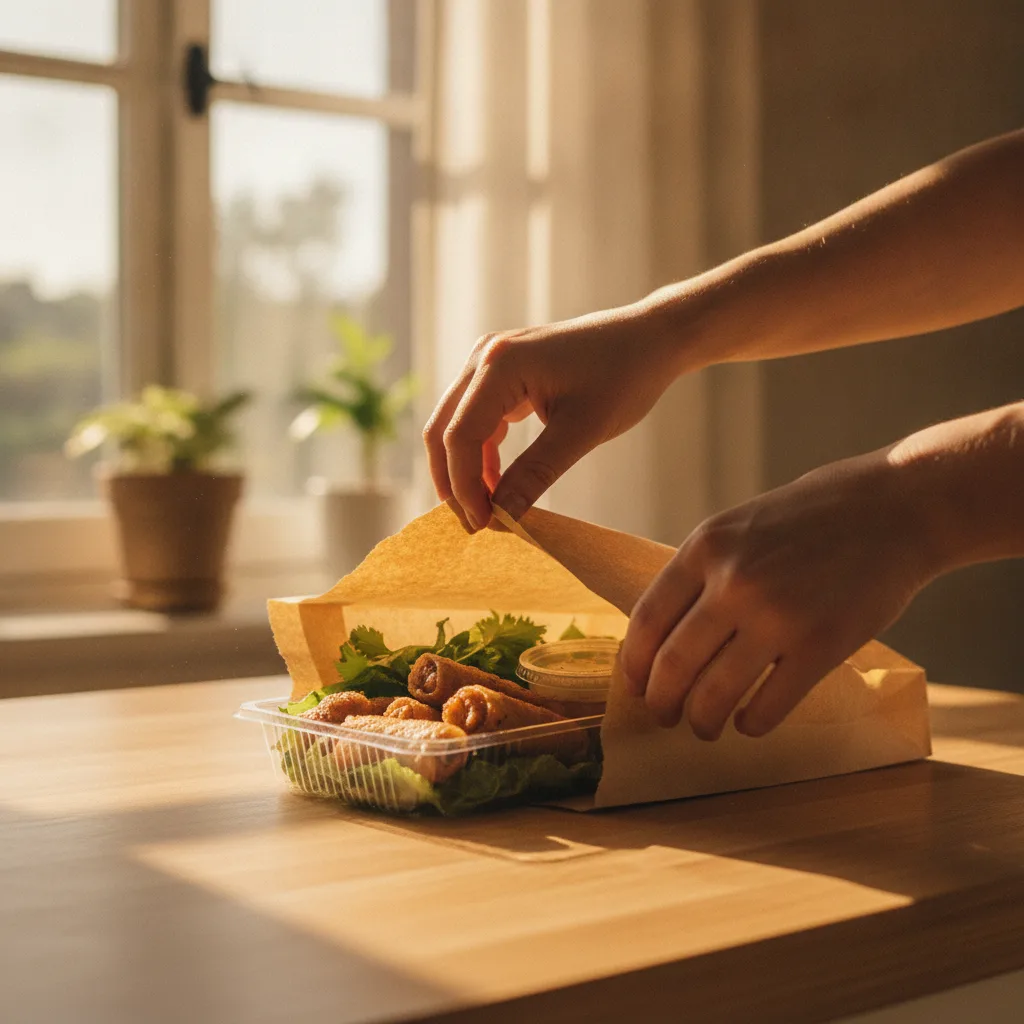
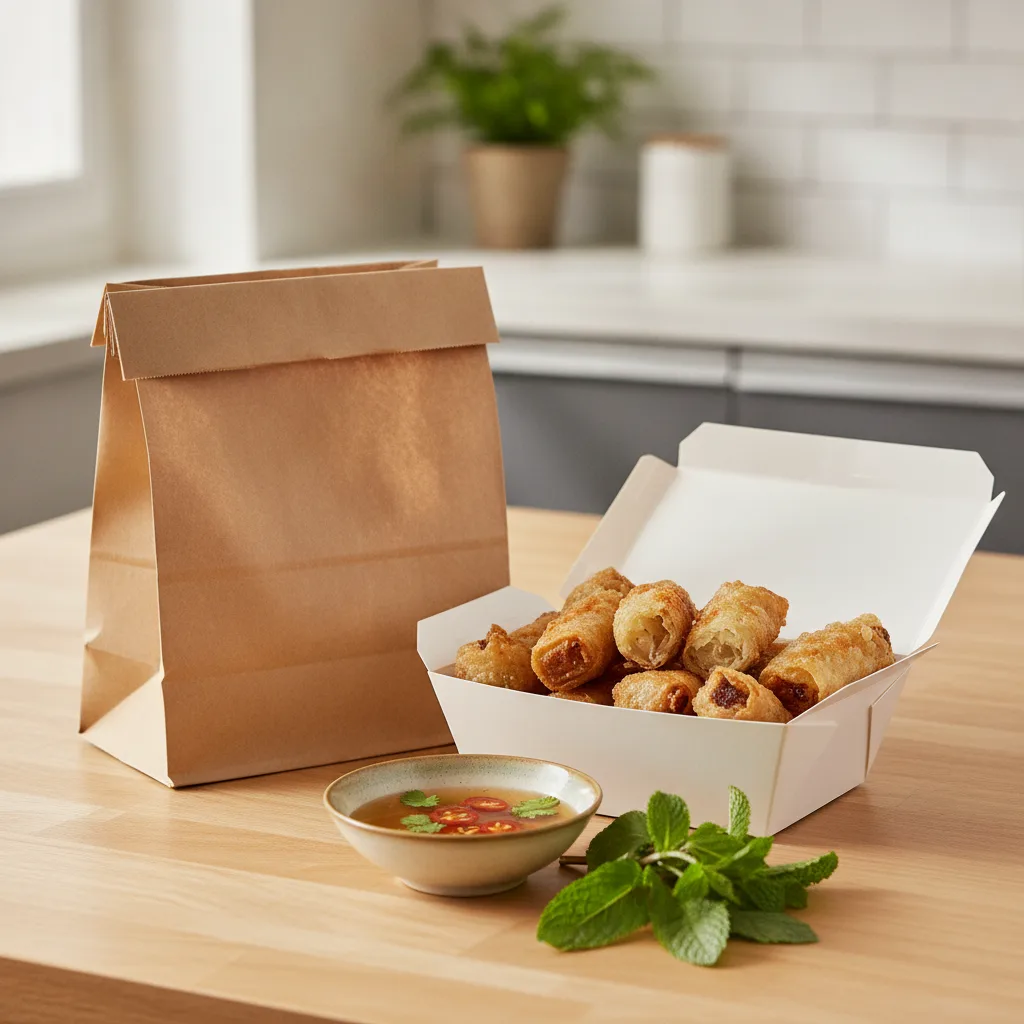
The cha gio, the crispy vegetable spring roll, is one of the most popular dishes in Vietnamese vegetarian cuisine. Its fried rice wrapper should remain light and crispy. However, as soon as it is sealed in a container, steam builds up and softens the crust. This isn’t a fault with the dish itself; it’s simply down to the physics of transport. The solution lies not in the packaging but in how you reheat it.
Three methods work really well, and there is just one that should be avoided at all costs.
The three methods that preserve crispness
A conventional oven or a fan-assisted oven
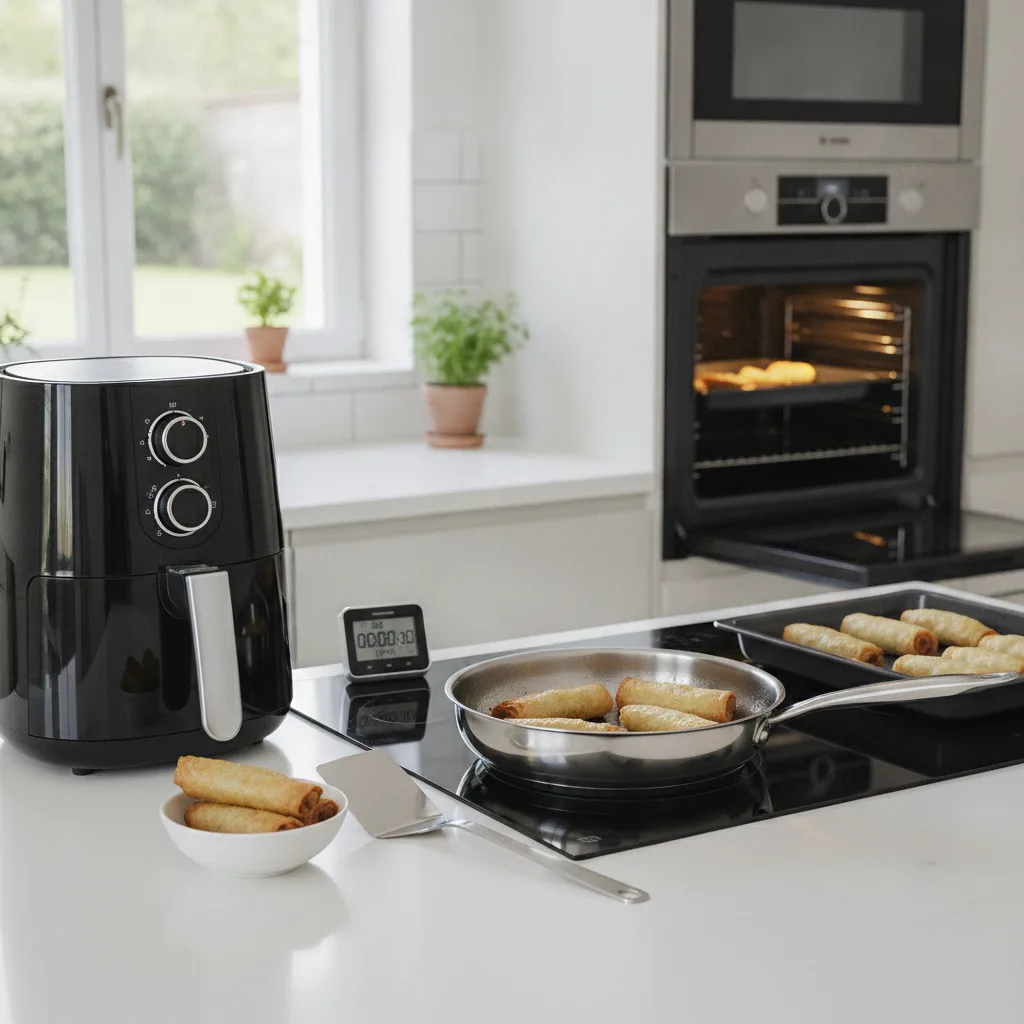
A traditional oven or a fan-assisted oven remains the best method. Preheat to 180 degrees Celsius. Place your spring rolls on a rack, rather than on a baking tray, to allow the heat to circulate beneath the rice wrapper. Allow between 8 and 12 minutes, depending on their thickness. Turn them over halfway through cooking. The result is very similar to that of deep-frying: the wrapper regains its crisp, golden texture, and the filling is piping hot right through.
A dry or lightly oiled frying pan
A dry or lightly oiled frying pan is ideal when you’re short of time. Heat a non-stick frying pan over a medium heat without adding any fat, or with just a tiny amount of neutral oil. Place the spring rolls in the pan and turn them regularly for 5 to 7 minutes. Direct heat quickly restores the crispiness to the surface. This method is particularly suitable if you only have two or three spring rolls left.
The hot-air fryer (air fryer)
The hot-air fryer has become the go-to solution for many fans of Asian takeaway food. Set it to 170 degrees, cook for 5 to 6 minutes, turning halfway through. The result is almost identical to the original deep-fried version, without any added fat. It’s quick, tidy, and the rice skin regains a truly satisfying texture.
To help you quickly choose the right method for your situation, here is a summary:
| Method | Recommended temperature | Approximate duration | Main benefit |
|---|---|---|---|
| Traditional oven / fan-assisted oven | 180 °C | 8 to 12 minutes | The result is very similar to the original deep-fried version, with a crispy, golden-brown skin |
| A dry or lightly oiled frying pan | Medium heat | 5 to 7 minutes | Quick and handy for making a small batch of spring rolls |
| Hot-air fryer (air fryer) | 170 °C | 5 to 6 minutes | A very satisfying crisp texture with no added fat |
Dos and don’ts
Here’s a handy summary so you don’t miss a thing:
Things to do
Take the spring rolls out of the fridge 10 minutes before reheating them, to avoid the thermal shock that causes condensation to form inside. Use a rack or place them on baking paper without covering them. Reheat at a moderate temperature rather than a high one to avoid burning the skin before the filling is hot. Eat immediately after reheating, as the crispiness does not last.
Things to avoid
Never use the microwave to reheat spring rolls. The damp heat it generates irreversibly softens the rice paper, leaving you with a rubbery texture that’s completely lacking in flavour. Also avoid covering your spring rolls with cling film whilst reheating them, even for just a few minutes: the trapped steam will destroy their crispiness. Do not stack them on top of one another in the dish; each spring roll must be in direct contact with the heat.
How to organise your takeaway order properly to get the most out of your meal
When you order Vietnamese food to take away, the way you organise your order has a direct impact on the quality of your meal at home. A few simple tips can make a real difference.
Sauces and side dishes
Always ask for the accompanying sauces to be served separately. For the crispy vegetable spring rolls According to Mây Bay, the vegetarian nuoc cham sauce should be poured over the dish just before eating, never beforehand. If it is poured into the container during transport, it will make the rice paper soggy within a few minutes.
Reheating sequence
Also bear in mind the order in which to reheat the dishes if you’ve ordered several. Spring rolls and crispy starters should be reheated last, just before sitting down to eat. Soups such as the Délice de Mây Bay, with its vegetable stock and tofu, can be reheated over a low heat in a saucepan in a few minutes and do not require any special attention. Start with these, then finish with the fried items.
Bun cha gio
If you have ordered a bun cha gio, the bowl of vermicelli with spring rolls: if possible, keep the spring rolls separate from the vermicelli whilst transporting them. Reheat the spring rolls using your chosen method, and assemble the bowl at the last minute. Rice vermicelli, on the other hand, reheat very well when steamed or placed in a little hot water for 2 minutes.
Ordering Vietnamese takeaway: some handy tips
Ordering Vietnamese takeaway allows you to enjoy carefully prepared dishes at home, provided you think about transport and reheating when you place your order. By keeping the sauces separate, keeping the spring rolls apart from the rice noodles, and following the recommended order for reheating the different dishes, you’ll best preserve their textures and flavours.
In practice, work out what time you’d like to eat, choose your dishes based on how much time you’ll have to reheat them, and make sure you have the necessary equipment (oven, frying pan, air fryer). These few details make the experience of ordering Vietnamese takeaway just as enjoyable as eating in.
FAQ
How long can you keep takeaway spring rolls before reheating them?
Spring rolls can be kept in the fridge in their original packaging for up to 24 hours. After that, the rice paper starts to go off and the filling loses its flavour. For best results, it is advisable to reheat them that same evening or the following day at lunchtime. Avoid leaving them at room temperature for more than an hour after taking them out of the fridge, particularly in summer.
Can you freeze takeaway spring rolls to eat later?
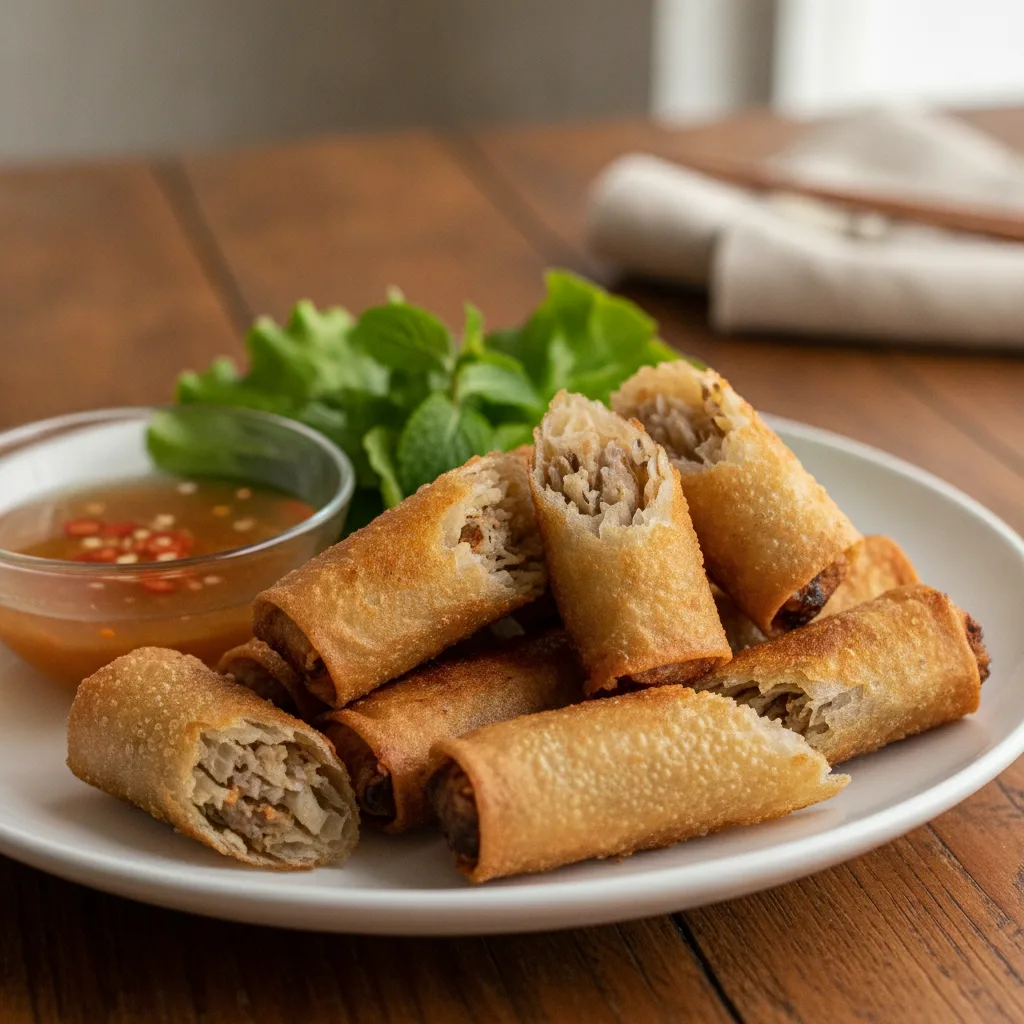
Yes, but with a few precautions. Let them cool completely before placing them in a freezer bag, removing as much air as possible. Freezing may slightly alter the texture of the rice crust, but the result is still very acceptable if you reheat them in the oven or air fryer straight from the frozen state, adding an extra 4 to 5 minutes’ cooking time. Avoid defrosting them in the fridge before reheating, as this creates too much moisture.
How do I place a takeaway order at Mây Bay?
The easiest way is to ring the restaurant directly and tell them what time you’d like to collect your order. You can also order online via the page to take away from the website. Your bag will be ready at the agreed time, so you won’t have to wait when you arrive. This service is particularly popular with regulars who are short of time between 12 noon and 2 pm.
How to reheat takeaway spring rolls without losing their crispiness
Mastering the art of reheating your Vietnamese takeaway meals means you can enjoy the same quality at home that you chose when you placed your order. A spring roll reheated correctly in the oven or an air fryer regains its crisp texture and fragrant filling, just as if it had been freshly made. The key is to avoid moisture, never use the microwave, and be patient for a few minutes to ensure the result lives up to your expectations.
To see all the dishes available for takeaway at Mây Bay, simply view the menu online and plan your next order at your leisure.