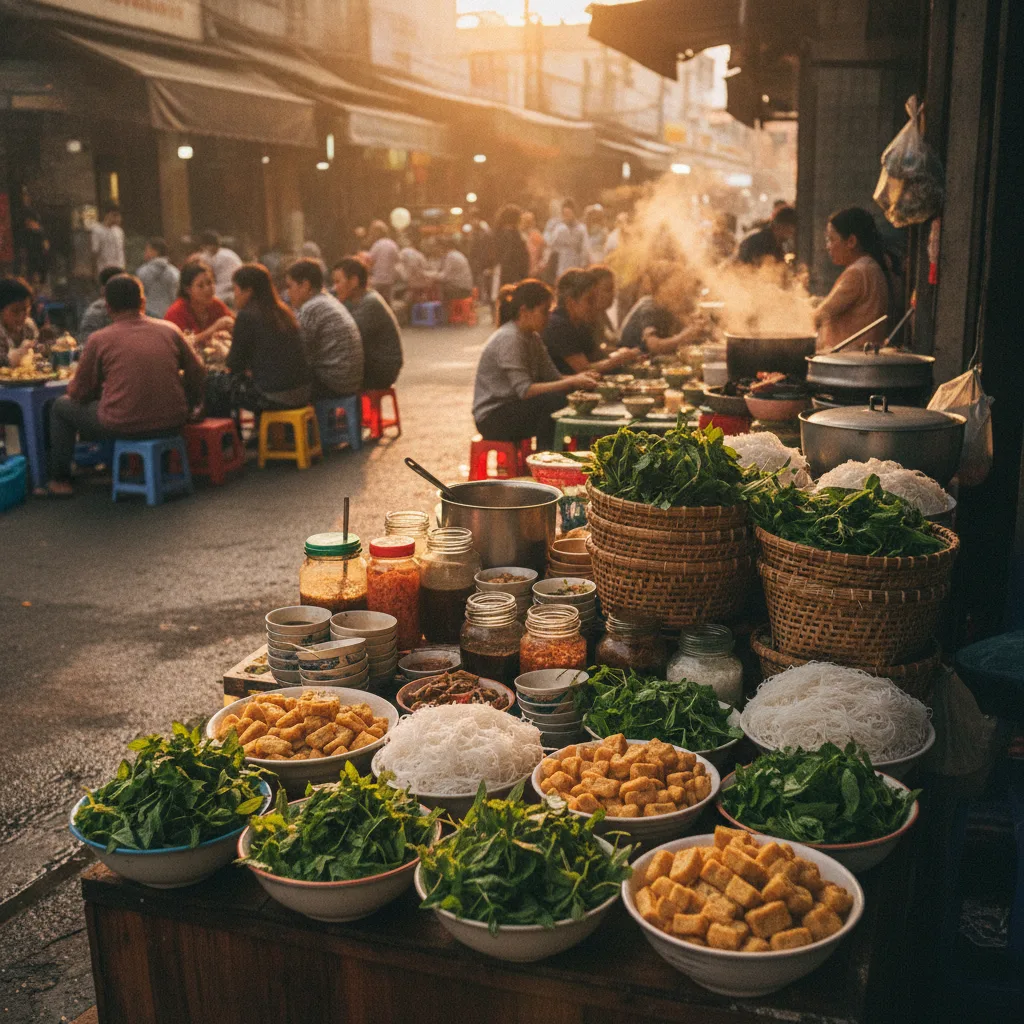
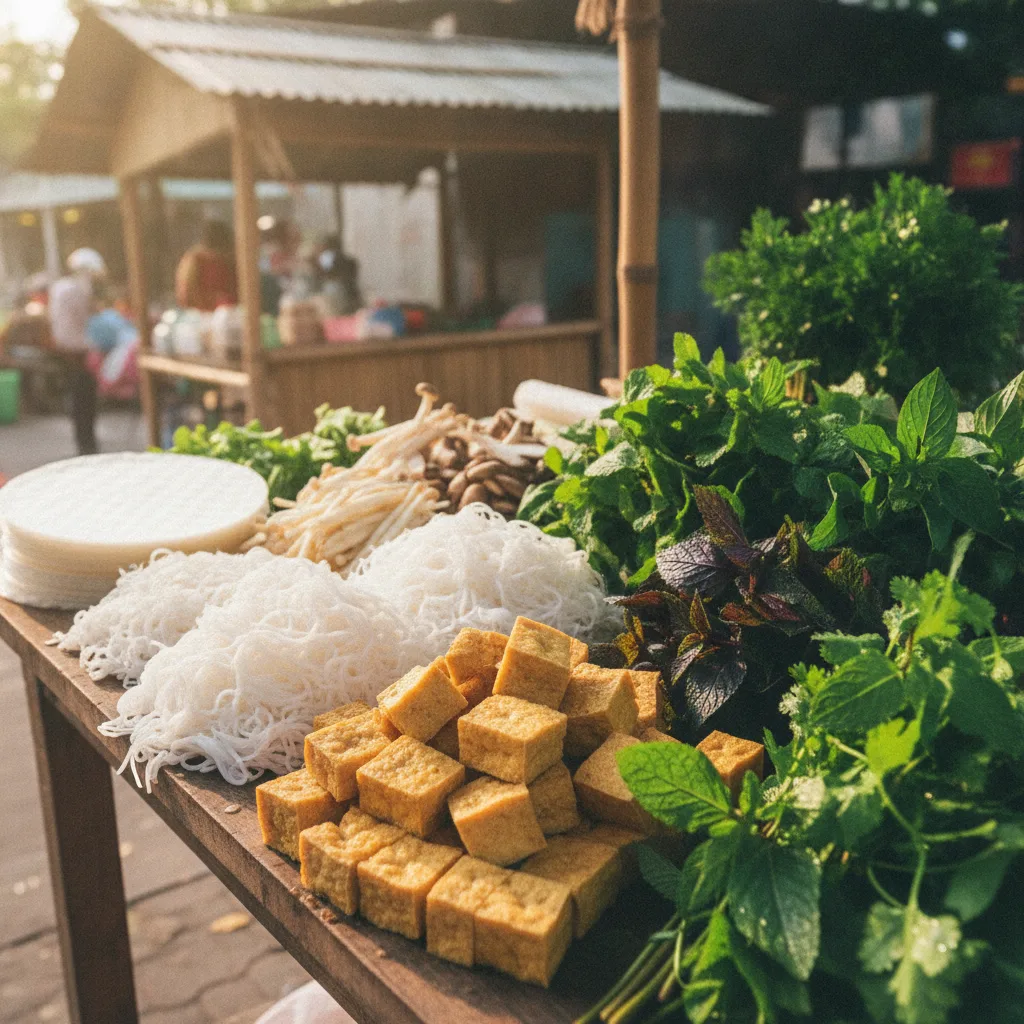
Vietnamese street food has a distinctive feature that few travellers realise before their first visit: a large part of its repertoire naturally excludes animal products. Rice cakes, vermicelli, fried tofu, fragrant mushrooms and an abundance of fresh herbs: the basis of this vegan Vietnamese street food has always been plant-based, a tradition inherited in particular from Vietnamese Buddhist cuisine.
Vegan Vietnamese street food is therefore not a modern adaptation driven by a food trend; it is an authentic part of the country’s culinary heritage. However, you still need to know how to read the menus, understand the word ‘chay’ and spot the sauces that make all the difference. Here are eight street food classics, some useful vocabulary and the pitfalls to watch out for.
Vegan Vietnamese street food: 8 street food classics
Reading time: ~10 mins
- What is vegan Vietnamese street food?
- Chay, thuần chay – what is the difference between vegetarian and vegan?
- Eight street food classics that are naturally vegan – or almost
- Tofu, mushrooms and herbs: the trio that makes it all work
- The hidden ingredients that make a dish non-vegan
- Ordering vegan food in Vietnamese: useful phrases
- Where to eat vegan in Hanoi, Ho Chi Minh City and Hoi An
- Street stall or quán chay – which to choose?
- Find this plant-based street food in Vincennes
- Taking Vietnamese vegan street food to the next level
- FAQ on vegan Vietnamese street food
What is vegan Vietnamese street food?
The term ‘Vietnamese vegan street food’ refers to dishes served on the street, at markets or in small stalls, prepared without meat, fish, seafood, eggs, dairy products or nuoc-mâm. This definition reflects a long-standing culinary tradition, as temples and quán chay – vegetarian canteens often located near pagodas – have been serving entirely plant-based dishes for generations.
On days when there is a full moon or a new moon, some people eat chay, which explains the high number of vegetarian restaurants in large cities.
The ingredients are simple and consistent: rice cakes, rice vermicelli, fried tofu, black mushrooms, fragrant mushrooms, soya bean sprouts, pickled daikon, and fresh herbs such as coriander, Thai basil and perilla. The seasonings are based on soya sauce, hoisin sauce, turmeric, star anise, cinnamon, ginger and roasted onions. In other words, the foundation of Vietnamese flavour holds up without any animal products, which is not the case for all Asian cuisines.
Chay, thuần chay – what is the difference between vegetarian and vegan?
The word ‘chay’ means ‘vegetarian’ in the broadest sense and refers to the Buddhist tradition. The Vietnam’s official tourism sources state this : A dish labelled ‘chay’ is prepared without meat or fish, but may contain eggs, milk, butter or mayonnaise, depending on the establishment. For a strictly vegan diet, the term ‘thuần chay’ – literally ‘purely chay’ – is more reliable and is closer in meaning to the word ‘vegan’ as it is understood in France.
In practice, the distinction hinges mainly on three elements: the stock, the sauce and the processed ingredients. A bowl of vermicelli may be impeccable in terms of its toppings but be served with a sauce containing fish sauce or prawn paste. Conversely, a restaurant clearly displaying ‘thuần chay’ or ‘quán chay’ generally applies a simple and clear rule across its entire menu.
Good to know
In Vietnamese vegetarian restaurants, meat substitutes made from plant-based proteins are often named after the original meat-based dish. The term appearing on the menu does not, therefore, mean that an animal product has been used.
Eight street food classics that are naturally vegan – or almost
Vegetarian spring rolls
These fresh spring rolls, wrapped in a rice paper sheet, contain vermicelli, lettuce, cucumber, carrot, tofu, mushrooms and a generous bunch of herbs. There are no animal products in this dish; the only thing to watch out for is the sauce, as the traditional version sometimes contains nuoc-mâm. Hoisin sauce, soya sauce or peanut sauce are all safe alternatives.
Vegetarian bánh mì
Bánh mì chay is probably the easiest dish to find. This sandwich, which takes its cue from the French baguette, is filled with fried tofu or mushrooms, marinated daikon and carrots, cucumber, coriander and a spicy sauce. The key things to watch out for are pâté and mayonnaise, two common additions that take the sandwich out of the vegetarian category.
Vegetarian pho
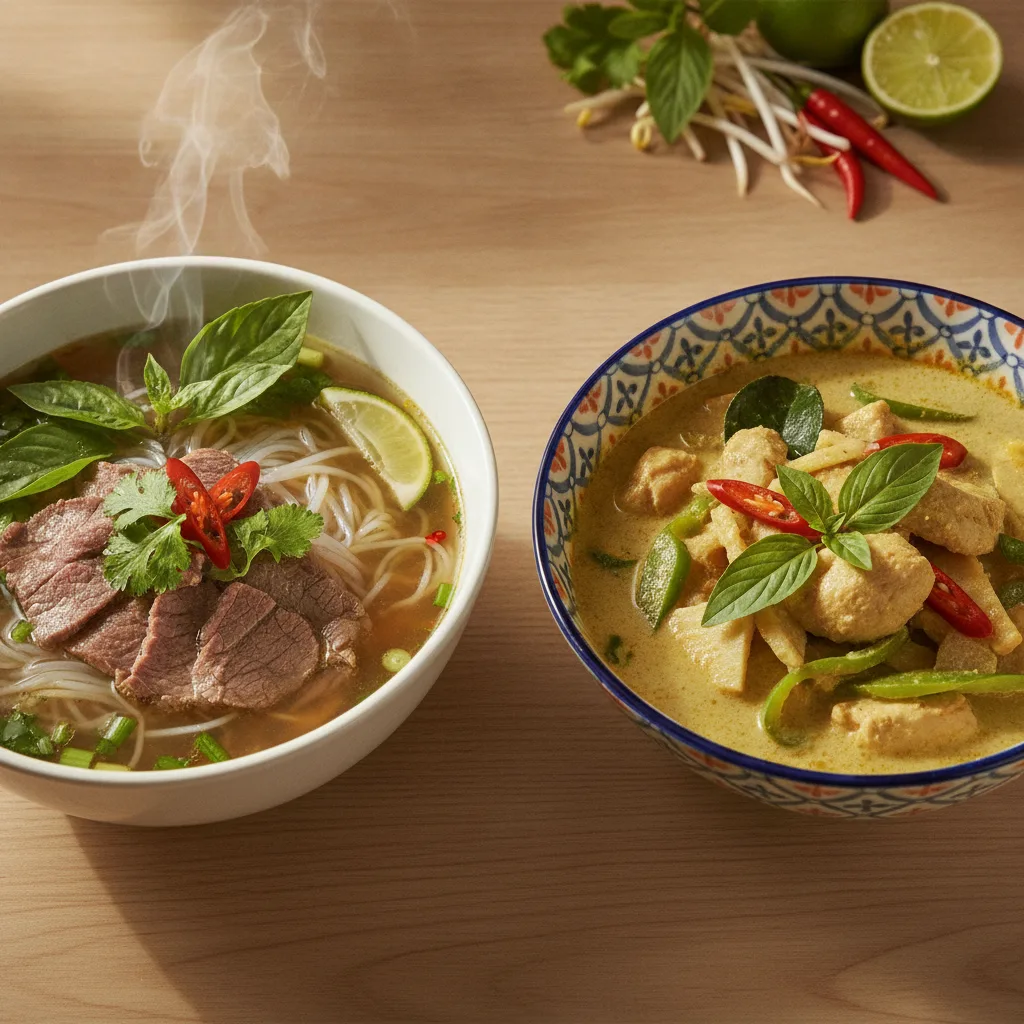
Vegetarian phở requires more care. Traditional phở is based on a long-simmered meat stock, so it is not plant-based, even when served with rice noodles and herbs. The vegetarian version derives its flavour from other ingredients: roasted onions, ginger, mushrooms, daikon, cinnamon, star anise, cloves and soya sauce. The result is rich and aromatic, but it’s best to order it from a restaurant that explicitly specialises in vegetarian cuisine rather than from a general food stall.
Vegan bánh xèo
This large, crispy pancake made from turmeric-coloured rice flour is topped with bean sprouts, mushrooms, tofu and onions, and then eaten wrapped in salad and herbs. The street-food version often contains seafood and a fish-based sauce, and the batter may include an egg depending on the family – two things to check before ordering.
Vegetarian bánh cuốn
Bánh cuốn chay consists of thin sheets of steamed rice dough, rolled around a filling of black mushrooms, fragrant mushrooms, tofu and fried onions. The dough itself is plant-based; the filling and accompanying sauce make all the difference. We serve this speciality in our plant-based version of bánh cuốn.
Vegetarian bún
Bún chay combines rice vermicelli, crunchy vegetables, fresh herbs, tofu and sometimes plant-based protein, all drizzled with a light sauce. It is the most versatile staple of street food, with endless regional variations. Its most indulgent version combines the noodles with crispy vegetable spring rolls, a combination you’ll find here known as bun cha gio.
Vegetable spring rolls
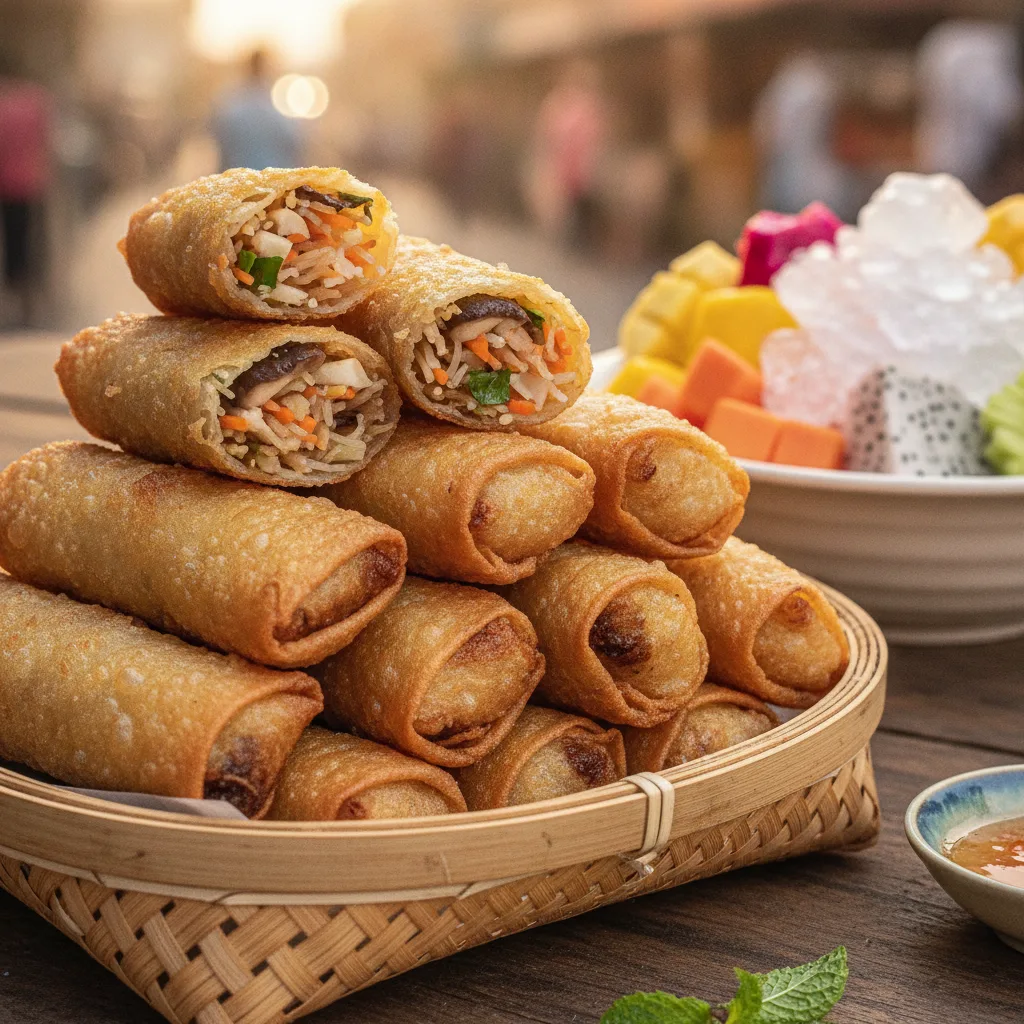
These deep-fried rolls, stuffed with mushrooms, vermicelli and shredded vegetables, are a staple of almost every street meal. The three key factors to look out for are the composition of the batter, the filling and the frying oil, which is often shared with other dishes at the stalls.
Fruit salad
This fresh fruit salad, served at the end of the meal, rounds off the meal. Bear in mind, however, that it is traditionally served with condensed milk or yoghurt. If you ask for it plain or with coconut milk, it becomes entirely plant-based.
Tofu, mushrooms and herbs: the trio that makes it all work
Tofu, known as đậu phụ or đậu hũ depending on the region, is the primary source of protein in this cuisine. Whether fried until golden brown, grilled, braised in tomato sauce or simply marinated, it absorbs the flavours without ever overpowering them. Mushrooms provide the umami flavour which, in traditional recipes, would otherwise come from animal products, in stocks, stuffings, stir-fried noodles and rice dishes.
Herbs form the third pillar of this culinary structure. Coriander, mint, Thai basil, perilla, soya sprouts and crunchy vegetables are not mere garnishes; they provide the balance between freshness, acidity and crunch in every mouthful. It is this trio, combined with the plant-based proteins and meat substitutes found in quán chay, that makes it possible to replicate the textures of traditional cuisine without using any animal products.
The hidden ingredients that make a dish non-vegan
A dish that appears to consist solely of vegetables may still not be vegetarian due to an unseen detail on the plate. Here are the most common points to watch out for, as highlighted by specialist travel guides and official tourism resources:
- animal-based stock, the main pitfall of noodle soups
- nuoc-mâm and prawn paste, which are found in many accompanying sauces
- eggs in crêpe batter and in certain fillings
- butter and mayonnaise, commonly found in sandwiches and street food
- condensed milk in desserts and coffees
- processed products and meat substitutes, which may contain egg or whey
- shared frying oil and cross-contamination on chopping boards and utensils
Ordering vegan food in Vietnamese: useful phrases
Just a few words are enough to confirm an order, especially if they are spoken slowly or shown in writing on a mobile phone. Vietnamese tourism authorities recommend to combine several formulations rather than relying on just one:
Useful phrases to know
- I am a vegetarian
- không thịt, meat-free
- không cá, no fish
- không nước mắm, without fish sauce
- không trứng, egg-free
- không sữa, milk-free
- không bơ, no butter
Key points
Asking for ‘no meat’, ‘no fish’ and ‘no fish sauce’ at the same time significantly reduces the risk of being served a dish containing an unnoticed animal-derived ingredient.
Where to eat vegan in Hanoi, Ho Chi Minh City and Hoi An
Eating vegan in Hanoi
In Hanoi, the Old Quarter offers a wealth of options, particularly around Hàng Bạc, Hàng Gai and Hàng Trống, ranging from flexible food stalls to dedicated vegetarian eateries. Vegetarian bánh mì, bún chay, mushroom bánh cuốn and green papaya salads are easy to find there.
Eating vegan in Ho Chi Minh City
Ho Chi Minh City boasts the country’s most established plant-based scene, with a high concentration of plant-based restaurants and cafés in Districts 1, 3 and 10.
Eating vegan in Hoi An
Hoi An, finally, offers a mix of vegetarian restaurants, plant-based local dishes and cookery classes, particularly around the historic centre and Nguyễn Duy Hiệu.
Community directories such as Vegan Vietnam lists these places, where timetables and route maps change frequently and should be checked before setting off.
Street stall or quán chay – which to choose?
The two options do not meet the same need; one prioritises the authenticity of the experience, whilst the other prioritises the predictability of what is served.
Compare the two options
| Criterion | Traditional street stall | Vegetarian restaurant |
|---|---|---|
| Authenticity | Excellent, everyday local cuisine | Forte, traditional vegetarian menu |
| Vegan reliability | Variable, non-standardised recipes | High, dishes containing neither meat nor fish |
| Choices | One or two specialities per stall | Extensive menu, starters, main courses, desserts |
| Communication | Often limited, essential vocabulary | Vegan requests are common |
| Point to watch out for | Stock, sauces, shared frying oil | Eggs and dairy products may be present |
Find this plant-based street food in Vincennes
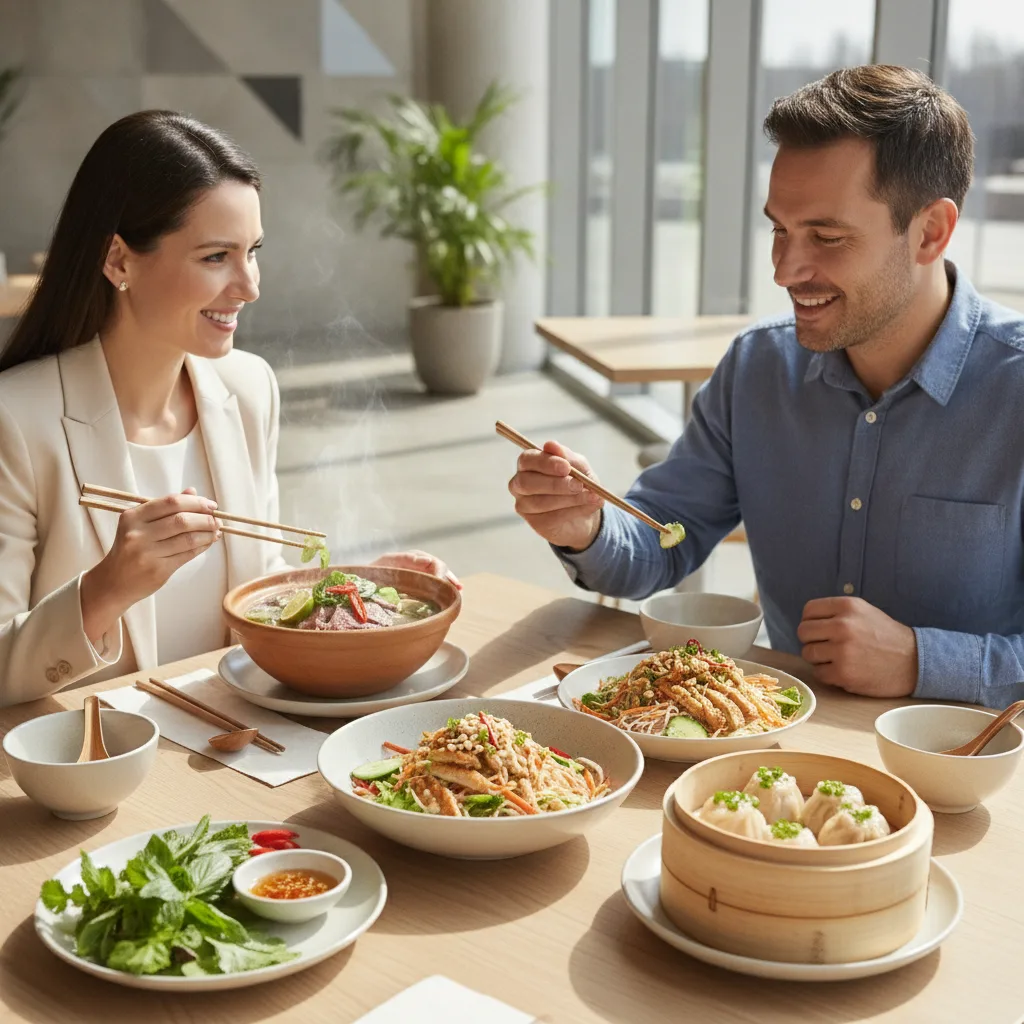
You don’t need to catch a flight to sample this menu. Our concept is based on combining a place where you can enjoy fresh, healthy dishes with a contemporary, relaxing setting, featuring a menu consisting entirely of vegetarian and vegan dishes. Vegetable chả giò, ha cao, goi Mây Bay salad and Mây Bay delicacies are inspired by the street food stalls of Hanoi and Saigon, with no ambiguity whatsoever regarding the ingredients, as neither nuoc mâm nor animal stock are used in our kitchens.
For a quick lunch between appointments, a dinner for two or a group meal, the full map is available online and Bookings can be made online. Takeaway orders, which are in high demand amongst those who pick up two or three dishes to take home for the evening, can be arranged via our order page.
Taking Vietnamese vegan street food to the next level
Vegan Vietnamese street food is not simply a substitute diet; it builds on a culinary tradition centred around rice, soya, mushrooms and fresh herbs. Understanding the word ‘chay’, distinguishing what is ‘thuần chay’, and recognising the sauces and broths is enough to open up a vast range of options, whether in Hanoi or Vincennes.
The rule can be summed up in one sentence: always look at the accompaniments before looking at the dish itself.
FAQ on vegan Vietnamese street food
Is the sticky rice sold on the street plant-based?
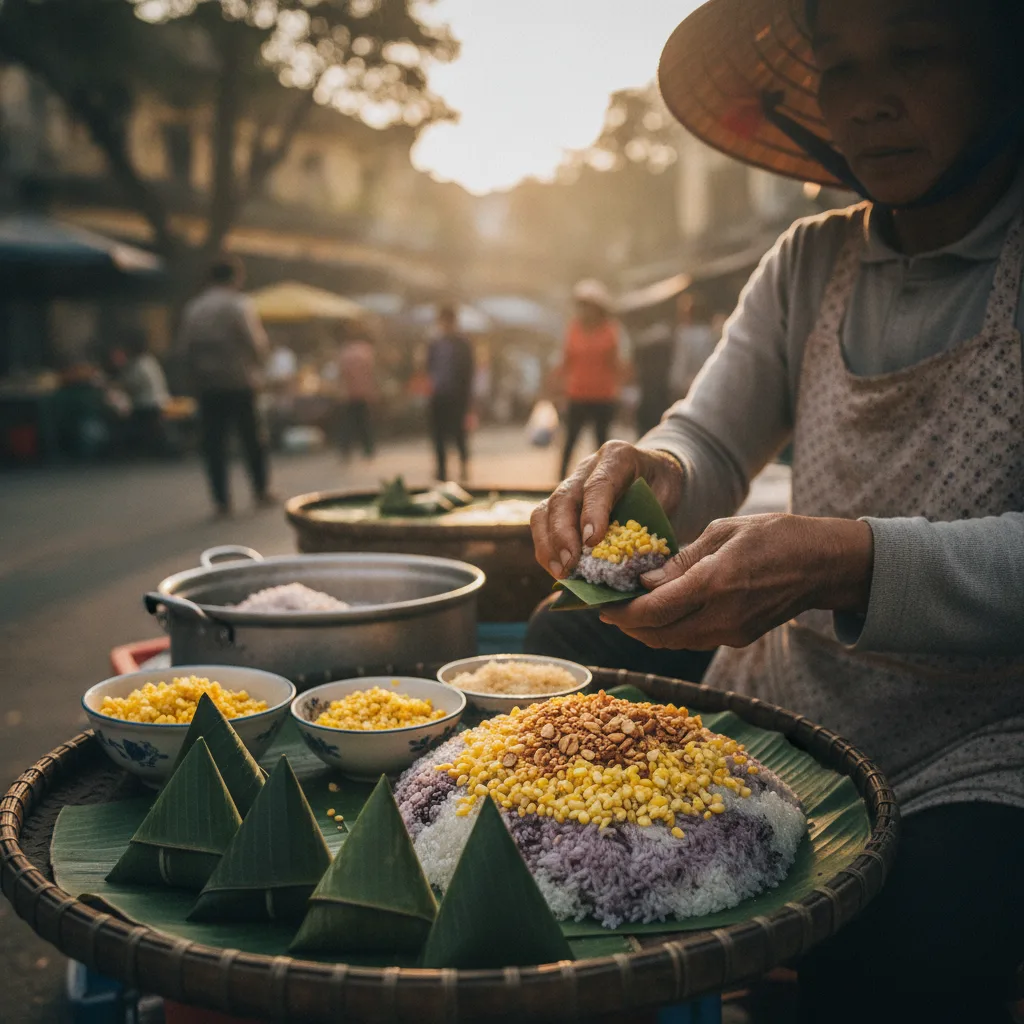
Plain xôi, often served for breakfast, is made from sticky rice and various toppings. Versions with mung beans, sweetcorn or peanuts are suitable, whilst those topped with pâté, floss or egg are not.
Is Vietnamese soya sauce always vegan?
Traditional soya sauce, known as nước tương, is plant-based. However, some shop-bought sauces or homemade preparations may be mixed with nuoc-mâm to enhance the flavour, so it is worth asking.
How can you tell if a stall is genuinely vegetarian?
Signs saying ‘chay’ or ‘thuần chay’, or the Buddhist symbol displayed on the shopfront, are the most reliable indicators. Checking the ingredients on display and observing the local clientele often confirms this information.
Is Vietnamese coffee suitable for a vegan diet?
Plain filter coffee is made without milk, but the traditional version with milk uses sweetened condensed milk. Alternatives made with coconut milk, which are common in Vietnam and feature on our menu, meet this need.
Is it possible to eat vegan at a Vietnamese business lunch?
Yes, Vietnamese vegetarian menus offer a full range of starters, main courses and desserts, which means you can entertain guests without having to explain any dietary requirements, as everyone can put together their own meal as they please.