Introduction
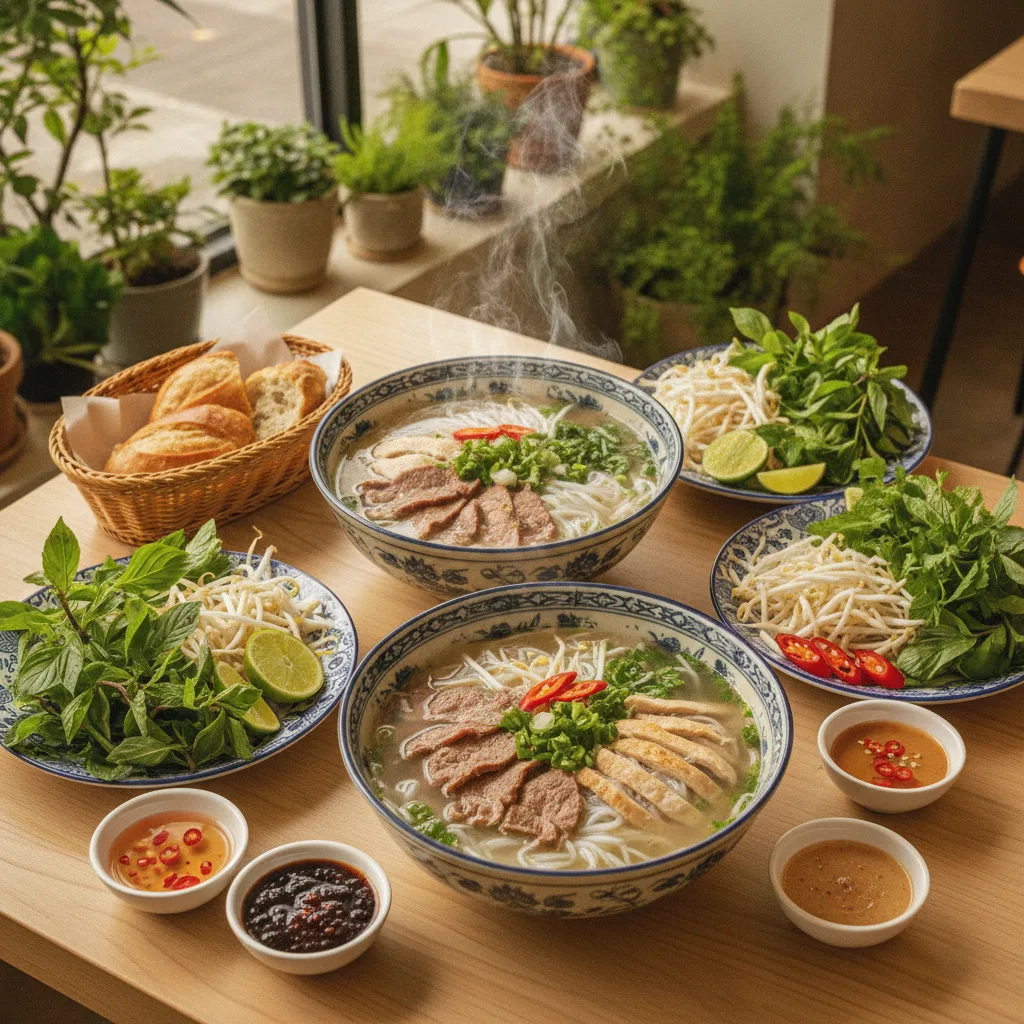
Vietnamese cuisine is often seen as light, fresh and plant-based, and gluten-free Vietnamese cuisine fits naturally into this tradition. What is less well known is that the vast majority of Vietnamese dishes are also naturally compatible with a gluten-free diet. At Mây Bay, a 100% vegetarian and vegan Vietnamese restaurant in Vincennes, we pay particular attention to our customers’ dietary needs. This guide will help you understand which dishes are safe, which ingredients require caution, and how to fully enjoy a gluten-free Vietnamese meal that is both worry-free and delicious.
Our Guide to Naturally Gluten-Free Vietnamese Dishes at Mây Bay: gluten-free Vietnamese cuisine
Reading time: ~6 mins
- Vietnamese cuisine is naturally suitable for a gluten-free diet
- Gluten-free options on the Mây Bay menu
- Sauces and ingredients to watch out for
- Dos and don’ts at a gluten-free Vietnamese restaurant
- How to order from Mây Bay if you have a gluten intolerance
- FAQ
- Eating gluten-free Vietnamese food is not only possible, but also delicious
Vietnamese cuisine is naturally suitable for a gluten-free diet
The natural strengths of Vietnamese cuisine
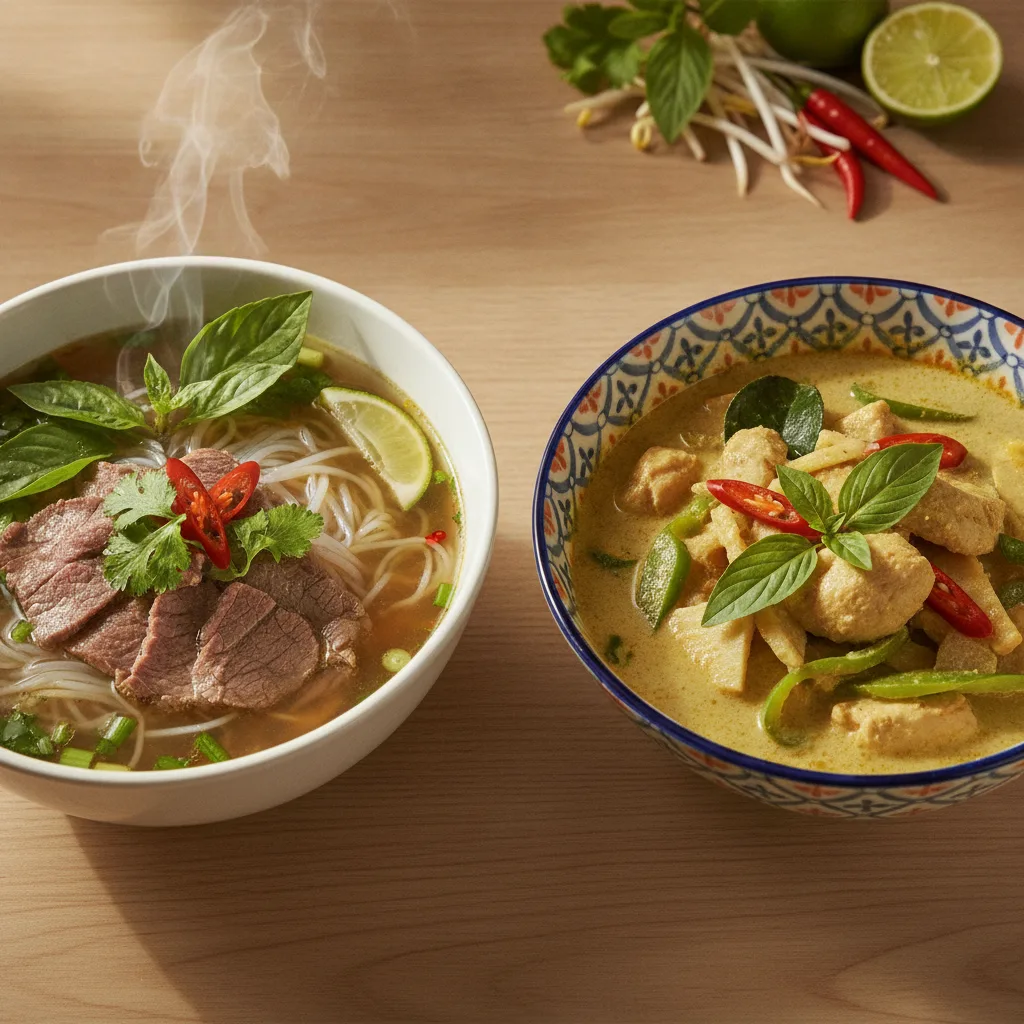
The foundation of Vietnamese cuisine is rice, in all its forms: plain rice, rice noodles, rice paper and rice flour. Because rice is so ubiquitous, many dishes are naturally gluten-free, without the need for any special adaptations. Unlike French or Italian cuisine, wheat flour is not a staple of traditional Vietnamese cuisine.
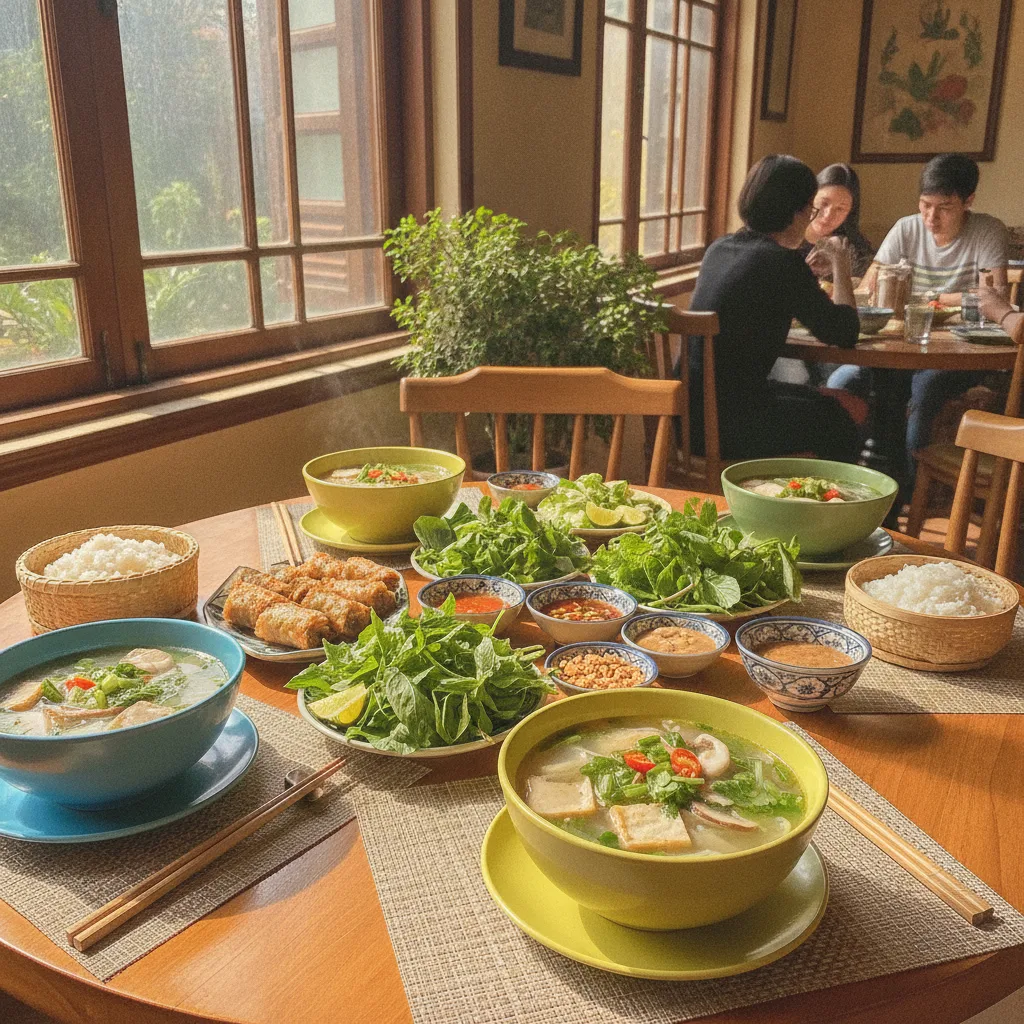
That does not, however, mean that everything is risk-free. Seasoning sauces, ready-made stock and certain marinades may contain gluten, depending on the brands or recipes used. Cross-contamination in the kitchen is also a real concern in non-specialist establishments. At Mây Bay, our dishes are prepared using fresh, homemade ingredients, which allows us to control every ingredient that goes into our recipes.
Gluten-free options on the Mây Bay menu
Some examples of gluten-free dishes
Several dishes on our menu are naturally gluten-free or can be served without any potentially problematic sauces.
Our Bún Chả Giò, rice vermicelli served with crispy vegetable spring rolls, is served on a bed of rice noodles, which are naturally gluten-free. Rice vermicelli (bún) is one of the safest staples in Vietnamese cuisine, provided you check the accompanying sauce.
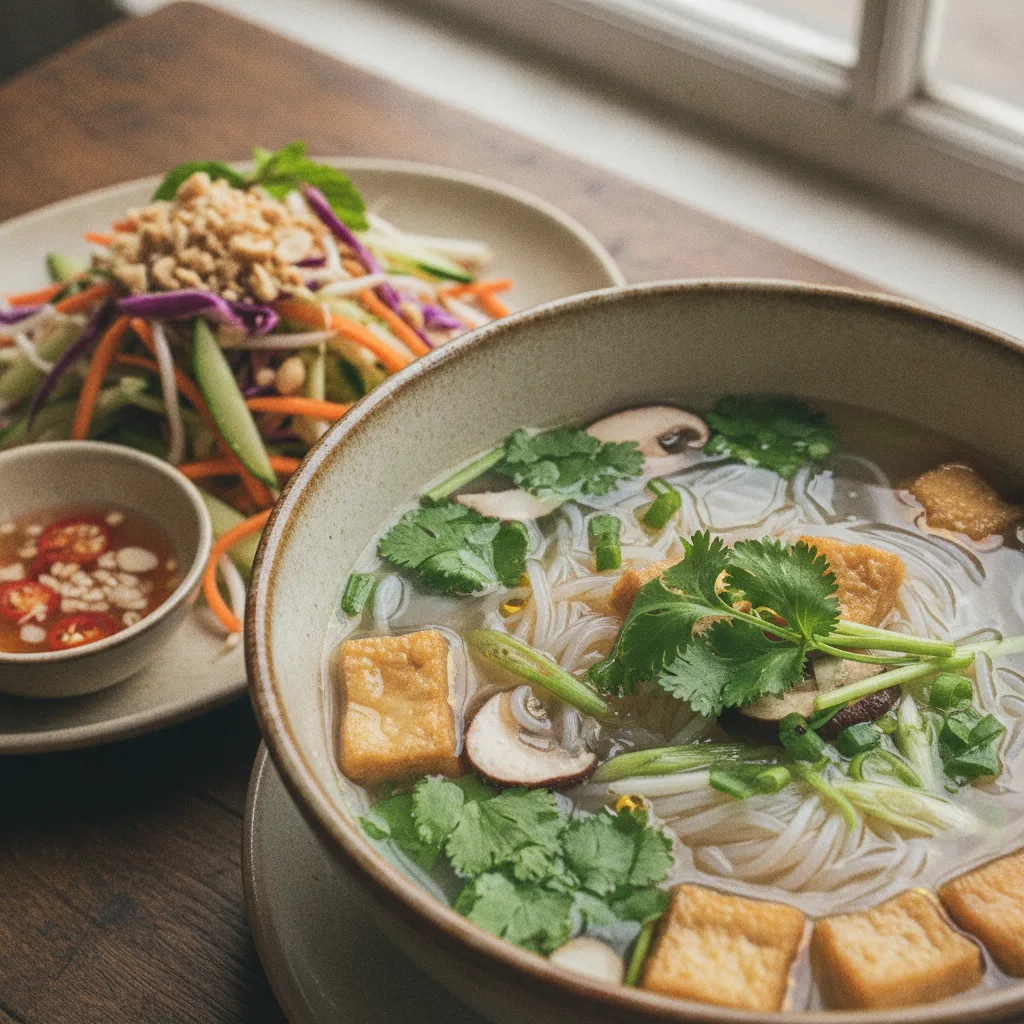
Our homemade soup, the Mây Bay Delight, is made with homemade vegetable stock, rice noodles, tofu and shiitake mushrooms. This comforting dish perfectly encapsulates the spirit of our cuisine: simple, healthy and traceable ingredients, without the use of industrial sauces containing gluten.
The Hủ Tiếu Mây Bay, another soup made with rice noodles, follows the same principle. Rice noodles (hủ tiếu) are a staple in southern Vietnam and offer a naturally gluten-free alternative to wheat noodles.
Our Gỏi Mây Bay, a fresh, crunchy vegetable salad, is also a suitable option, provided you ask for the dressing on the side so you can check what it contains.
As for desserts, the Banana Cake, bananas with tapioca pearls, coconut milk and peanuts, is naturally gluten-free. Tapioca, which is made from cassava, does not contain gluten. This traditional Vietnamese dessert is also one of the most popular dishes on our menu.
Sauces and ingredients to watch out for
Condiments and preparations to check
The main thing to watch out for in Vietnamese cuisine is not the dish itself, but the condiments that accompany it. Standard soya sauce, oyster sauce, hoisin sauce and some shop-bought fish sauces may contain gluten, depending on their ingredients.
At Mây Bay, our sauces are prepared in-house and we are happy to provide details of their ingredients. Please do let us know when you place your order if you would like your sauce served separately or without any fermented condiments.
The Bánh Cuốn, a Vietnamese pancake made from rice flour, is another dish that is naturally suitable, provided it is made using only rice flour and not a mixture containing wheat. Here, we make it from scratch using the traditional recipe.
The Hà Cảo, vegetable ravioli, should be checked on a case-by-case basis depending on the ingredients used in the dough. Please feel free to ask us about this directly when you visit or place your order.
Dos and don’ts at a gluten-free Vietnamese restaurant
| Things to do | Things to avoid |
|---|---|
| Ask whether the sauces are homemade or made from shop-bought products. | Don’t assume that all Asian dishes are gluten-free by default. |
| Please specify any gluten intolerance or allergy when placing your order, including for stock. | Don’t forget to mention your dietary restrictions even when it comes to desserts, as some may contain wheat-based thickeners. |
| Give priority to dishes made with rice, rice noodles or rice paper. | Please feel free to ask any questions about the crispy coatings, which may sometimes contain breadcrumbs or wheat flour. |
| Ask for the sauce on the side so you can control the amount. | |
| Check that the spring rolls are fried in oil that has not been used for any other dishes containing wheat. |
How to order from Mây Bay if you have a gluten intolerance
Plan ahead for your gluten-free order
Whether you’re coming in for lunch or placing an order to take away Whether you’re booking a table for a group meal or not, our team is on hand to help you. You can contact us directly via our Booking and contact page to let us know your dietary requirements in advance.
For business meals or group lunches, please let us know about any dietary requirements when you book, so that our team can ensure your visit goes as smoothly as possible. Many of our dishes can be adapted to suit your needs, and we always prefer to plan ahead rather than improvise.
FAQ
Is Vietnamese cuisine suitable for people with coeliac disease?
Generally speaking, yes, provided you choose the right dishes and check the sauces. Vietnamese cuisine is based on rice, fresh herbs and vegetables, which makes it naturally suited to a gluten-free diet. However, people with coeliac disease must be careful with sauces and fried dishes, as these may have been cooked in the same oil as foods containing gluten.
Is phở gluten-free?
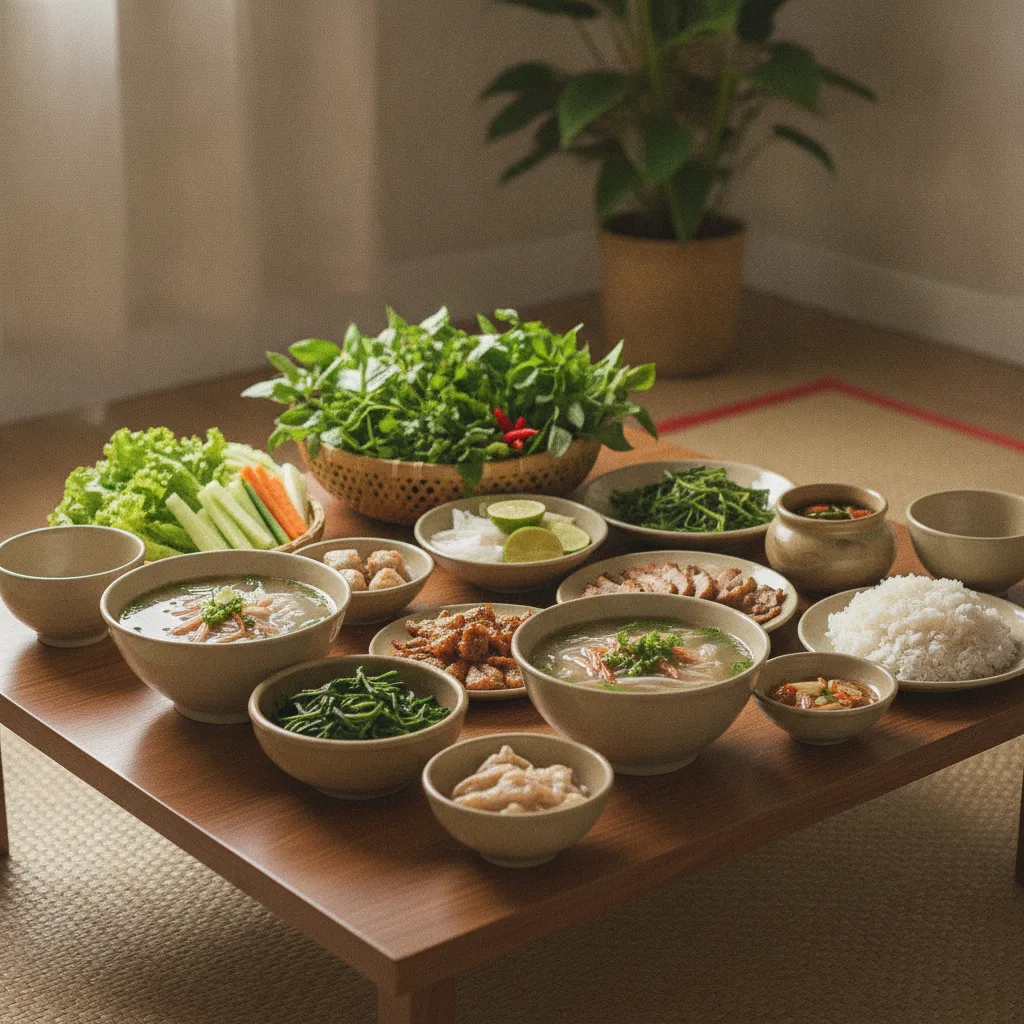
Traditional phở is made with rice noodles and a long-simmered stock. In theory, it is suitable for a gluten-free diet. In practice, however, care must be taken with the stock (some use shop-bought concentrates which may contain gluten) and with the sauces added at the table, such as hoisin sauce or soya sauce. At Mây Bay, our stocks are homemade, which allows us to control their ingredients.
Is it possible to eat gluten-free when ordering takeaway?
Yes. When placing a takeaway order, we recommend that you specify any dietary requirements when placing your order, either by telephone or directly on our online order page. We can adapt certain recipes and advise you on the dishes best suited to your situation.
Are Vietnamese desserts gluten-free?
Most traditional Vietnamese desserts are made from sticky rice, tapioca, coconut milk or fruit, which makes them naturally gluten-free. Our Banana Cake or our Fruit Cocktail, seasonal fruit salad, are good examples of this. It is still advisable to check the ingredients of the desserts of the day.
Eating gluten-free Vietnamese food is not only possible, but also delicious
Gluten-free Vietnamese cuisine is not a constraint; it often reflects the most authentic aspects of Vietnamese cuisine: fresh ingredients, simple cooking methods, homemade stocks and aromatic herbs. At Mây Bay, our 100% vegetarian and vegan approach is underpinned by a genuine focus on the quality and traceability of every ingredient. If you’d like to explore our full menu before your visit, please take a look at our online menu and please do not hesitate to contact us if you have any questions about allergens or possible adjustments.