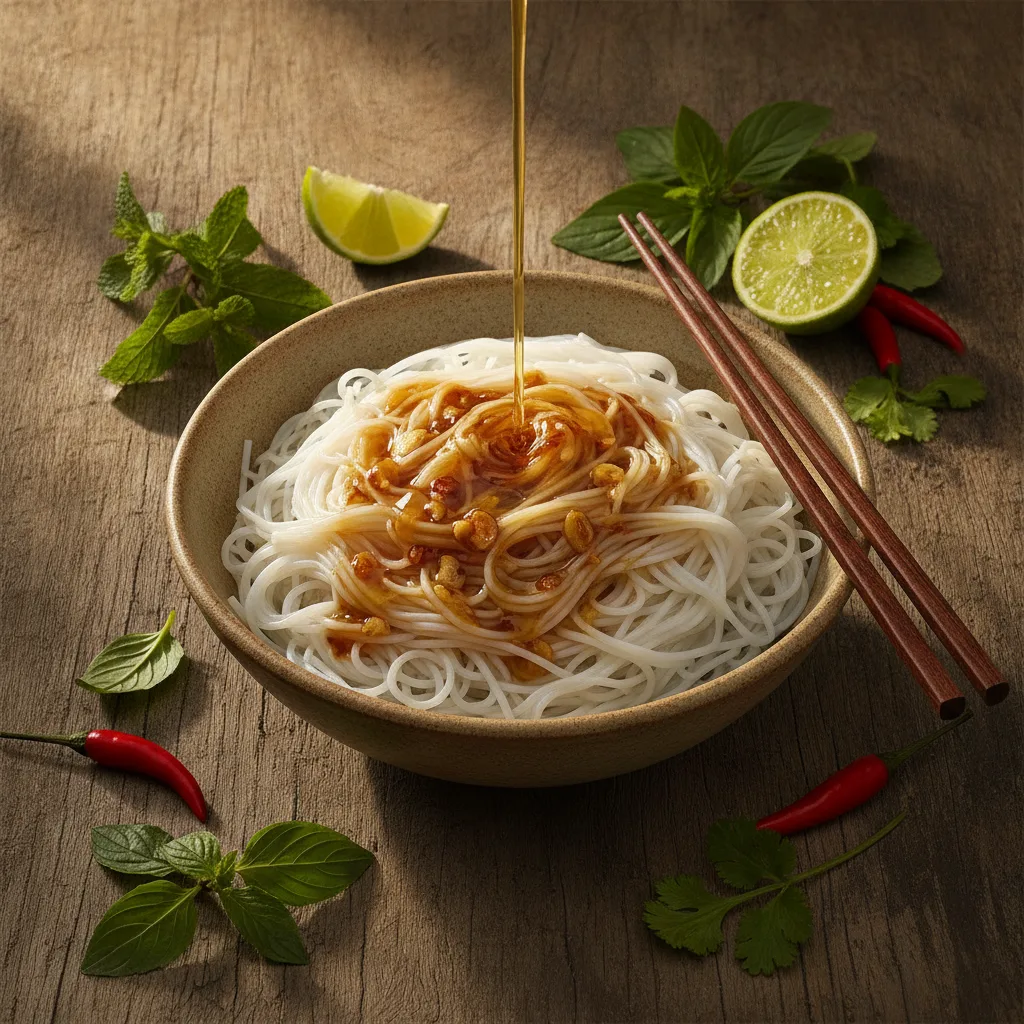
Nuoc mam sauce is far more than just a condiment. It is the liquid soul of Vietnamese cuisine, the ingredient that transforms a bowl of vermicelli into a complete sensory experience. Behind this amber-coloured, salty liquid lies the history of nuoc mam sauce, which dates back several millennia, has spanned empires and oceans, and is now being reinvented in vegan versions that are as ingenious as they are delicious.
At Mây Bay, a 100 % vegetarian and vegan Vietnamese restaurant in Vincennes, this question is not merely theoretical: it lies at the heart of our day-to-day cooking.
The history of nuoc mam sauce and a vegan version
Reading time: ~9 mins
- In brief
- What is nuoc mam sauce?
- Its ancient origins and the parallel with Roman garum
- Nuoc mam in Vietnam: Champa, the coast and traditions
- How is traditional nuoc mam made?
- Artisanal or industrial nuoc mam: what are the differences?
- Vegetarian nuoc mam: recreating umami in a vegan version
- Why is nuoc mam central to Vietnamese cuisine?
- Extend the nuoc mam adventure
- FAQ on nuoc mam and its vegan alternative
In brief
Here are the key points to remember about the history of nuoc mam sauce and its vegan version:
- The origins of nuoc mam date back to ancient times and form part of a global tradition of fermented fish sauces.
- Vietnam, and in particular its coastal regions, has developed a unique tradition of craftsmanship that is recognised throughout the world.
- There is a significant difference between traditional and industrial nuoc mam, both in terms of taste and nutritional value.
- Plant-based ingredients such as shiitake, kombu and soya sauce make it possible to recreate the umami flavour of nuoc mam without using any animal products.
- Nuoc mam chay, the vegan version of this sauce, is an alternative that stays true to the authentic flavours of Vietnamese cuisine.
What is nuoc mam sauce?
A definition of nuoc mam sauce
Nuoc mam is a fermented fish sauce made by macerating small fish, most commonly anchovies, in a brine made from sea salt. The mixture is placed in large jars or wooden vats, where it ferments for several months, sometimes up to two years for the most meticulously crafted artisanal varieties. The liquid that drains off after filtration is raw nuoc mam: it has a deep mahogany colour, a remarkable concentration of amino acids and an aromatic intensity that has no direct equivalent in Western cuisine.
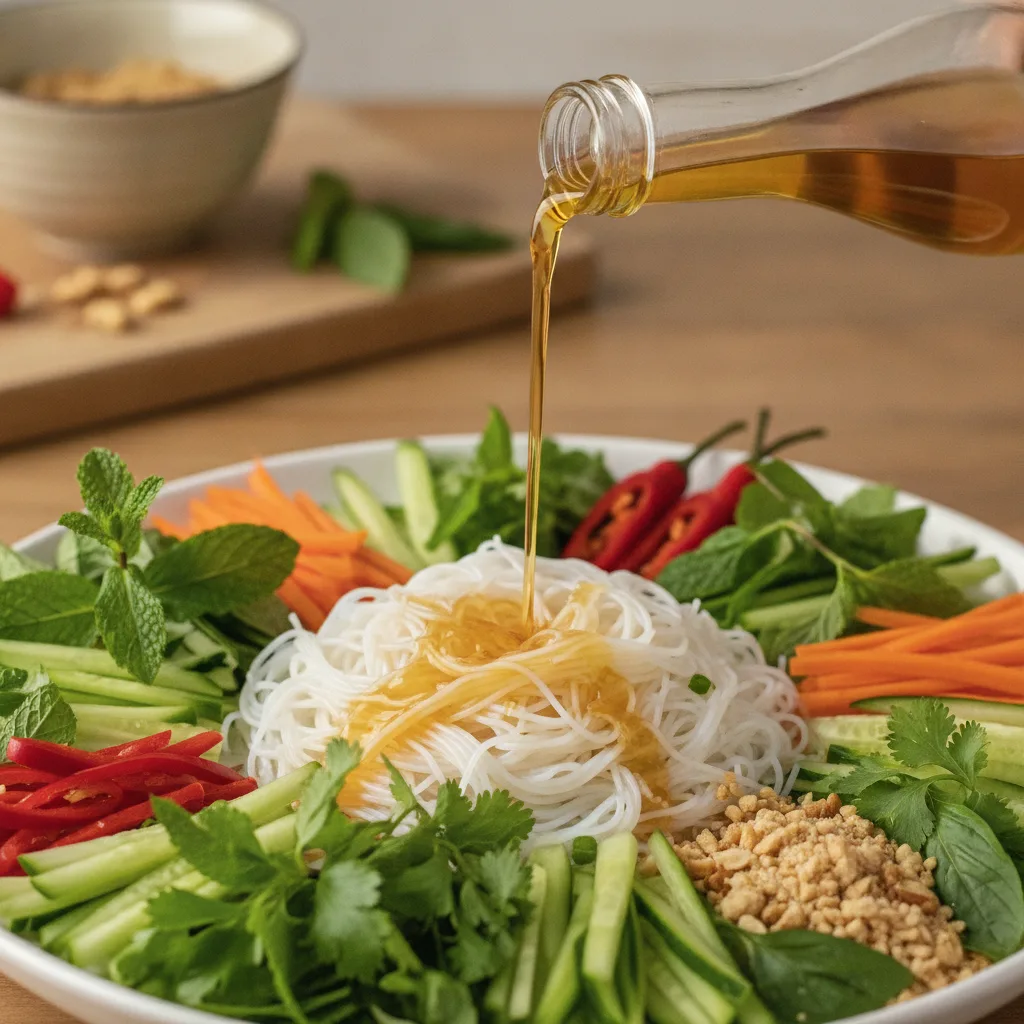
What makes nuoc mam so special is its high natural glutamate content. This compound, produced by the breakdown of fish proteins through fermentation, is the main source of umami, the fifth taste, which is often translated as «savoury» or «rich flavour ». It is this depth of flavour that explains why just a few drops of nuoc mam are enough to enhance an entire dish.
Its ancient origins and the parallel with Roman garum
Fish sauces across civilisations
The history of nuoc mam sauce dates back to well before Vietnam as we know it today. Researchers and specialist journalists, including those from the newspaper *Le Monde*, have highlighted the link between nuoc mam and garum, a fermented fish sauce produced in large quantities in the Roman Empire. Garum was made from whole fish or their innards, mixed with salt and left to ferment in the sun. It was used as a universal seasoning in Roman cuisine, in much the same way as nuoc mam is used in Vietnamese cuisine.
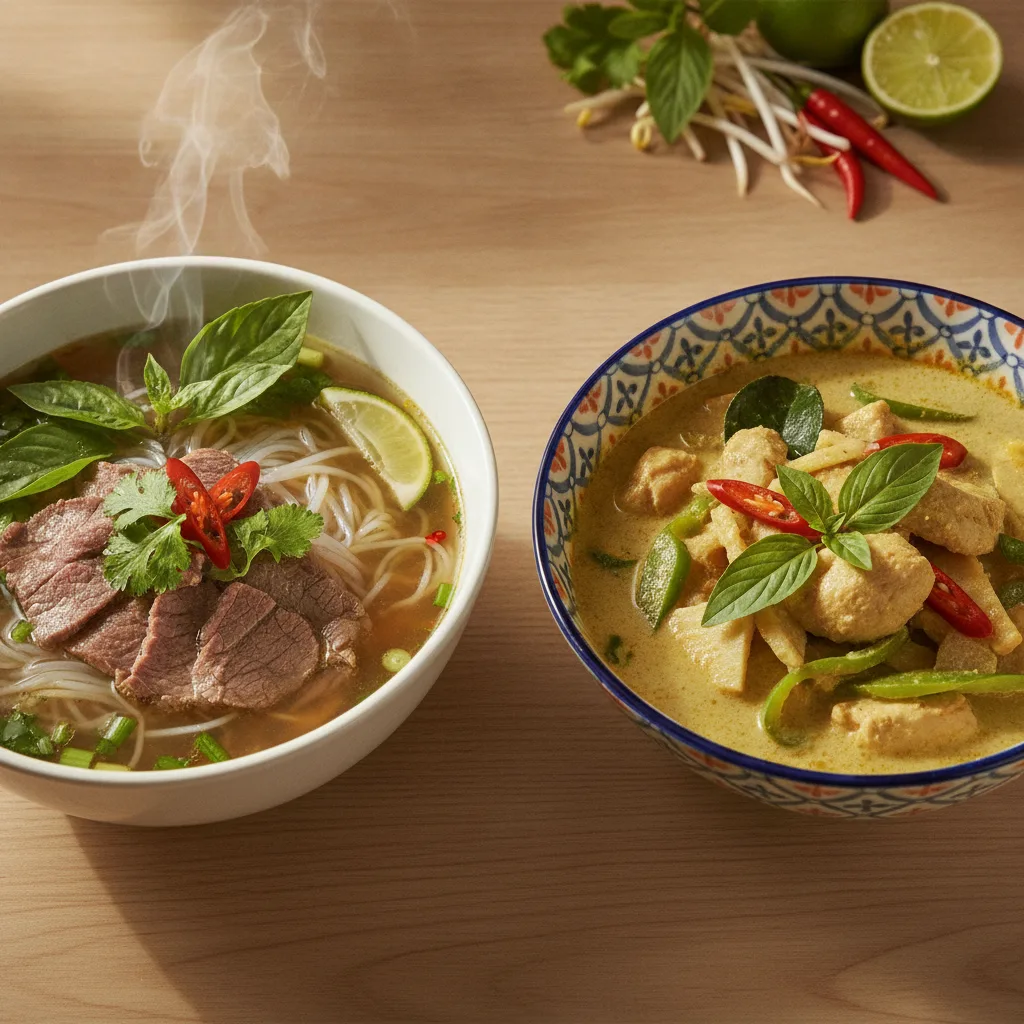
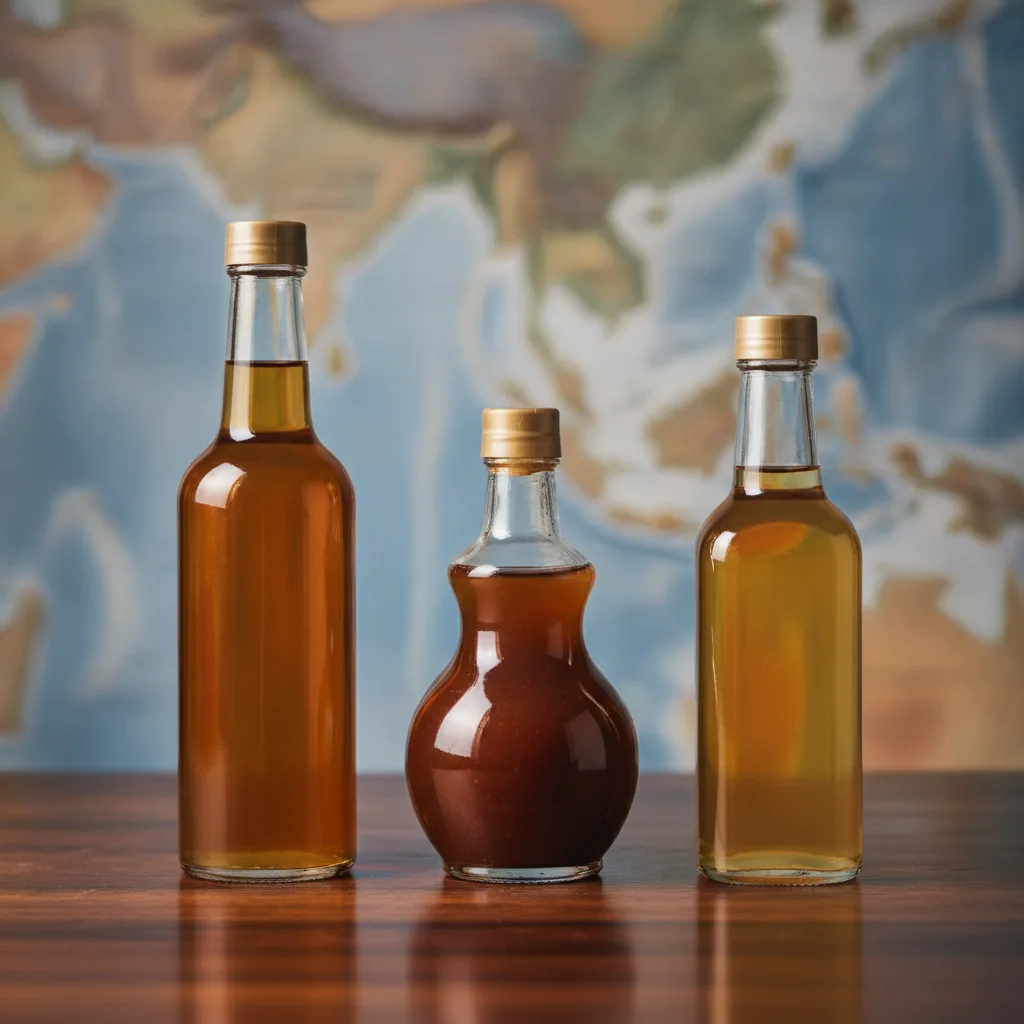
This similarity is no coincidence. It reflects a universal human intuition: fermenting fish in salt produces a liquid sauce that is rich in flavour, keeps well and can transform any dish. Similar sauces exist throughout South-East Asia. Nam pla in Thailand and teuk trey in Cambodia belong to the same family, with nuances in production and flavour specific to each culture.
The question of whether Roman garum influenced Asian fish sauces via ancient trade routes remains a matter of debate. Some historians suggest that trade may have taken place between the Mediterranean world and Asia as early as the first centuries AD. Others believe that these traditions developed independently, in response to the same needs for preservation and seasoning. What is certain is that the fermentation of fish is a very ancient human practice, and that Vietnam has made it one of its most distinctive culinary traditions.
Good to know — The The first Western description of nuoc mam dates from 1621. It is attributed to the Jesuit missionary Cristoforo Borri, who spent time in Vietnam and mentioned this sauce in his writings. It is one of the oldest written references to this dish from outside Vietnam.
Nuoc mam in Vietnam: Champa, the coast and traditions
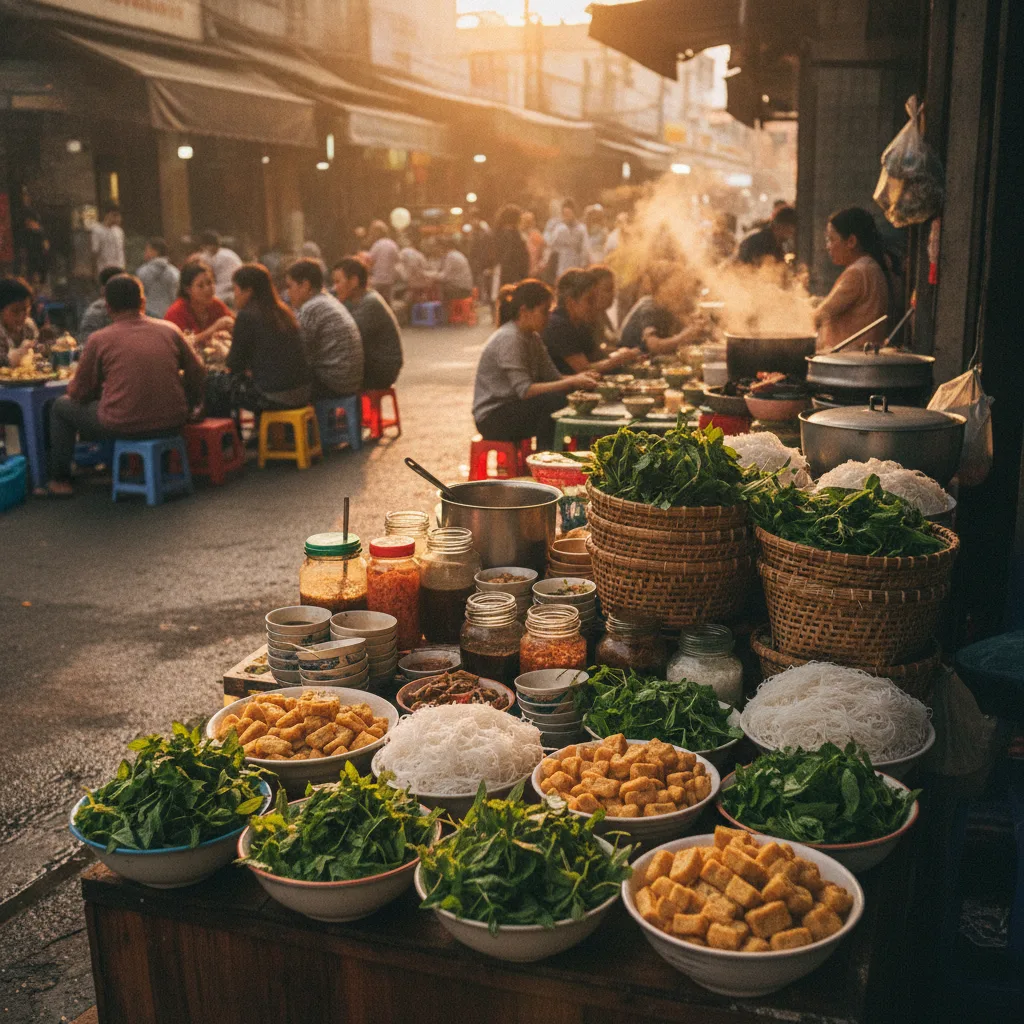
In Vietnam, the production of nuoc mam sauce is closely linked to the coastline. Historical and ethnographic sources mention the Cham people, heirs to the Kingdom of Champa, as one of the possible groups responsible for spreading or codifying this practice in the region. Champa was a maritime kingdom that occupied the central and southern parts of present-day Vietnam for several centuries, and whose inhabitants were experienced fishermen and traders.
The most renowned production regions today are Phú Quốc, an island off the coast of Cambodia that is part of Vietnam, and Phan Thiết, a coastal town in the south of the country. Both areas are renowned for the quality of their anchovies and sea salt, two ingredients that largely determine the quality of the final product. Phú Quốc’s nuoc mam enjoys an international reputation and is protected by a geographical indication.
This expertise is passed down orally within families. Artisanal producers pass on their techniques from generation to generation, with subtle variations in the proportions of fish and salt, the duration of fermentation or the filtration methods. It is this diversity that explains why two bottles of nuoc mam can have very different flavour profiles, even if they bear the same label.
How is traditional nuoc mam made?
The traditional production of nuoc mam follows a rigorous process that cannot be rushed without compromising its quality. Here are the main stages of this production process:
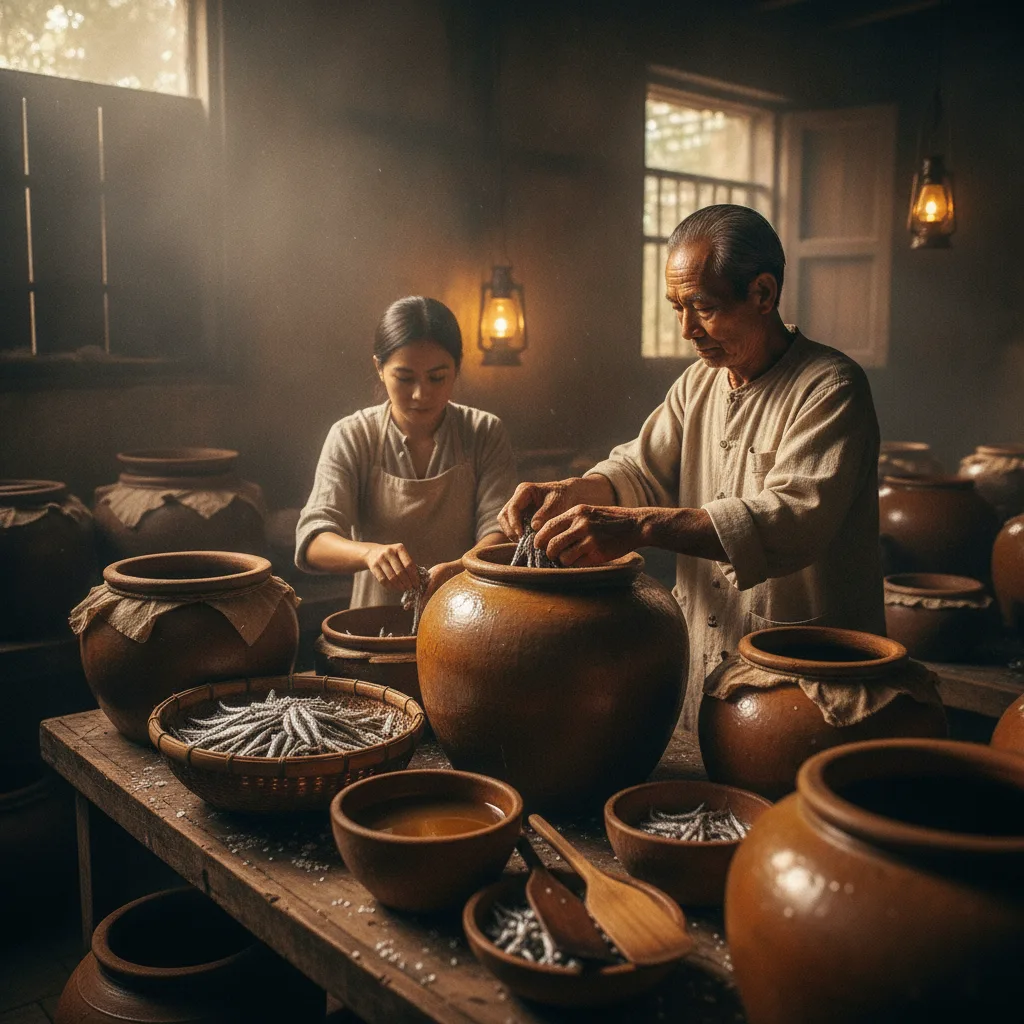
- Freshly caught anchovies are mixed with sea salt in proportions that vary depending on the producer, generally between three and four parts fish to one part salt.
- The mixture is placed in large, airtight wooden or ceramic vats and left to ferment at room temperature for between twelve and twenty-four months.
- During this period, the enzymes naturally present in the fish break down the proteins into amino acids, gradually releasing the aromas and the characteristic umami flavour.
- The liquid is then extracted by gravity or by pressing, and filtered several times to produce a clear, stable liquid.
- First-press nuoc mam, which is the most concentrated and aromatic, is reserved for the most demanding culinary applications.
Artisanal or industrial nuoc mam: what are the differences?
The nuoc mam market is currently divided between high-quality artisanal production and mass industrial production. The following table summarises the main differences between these two approaches.
| Criterion | Artisanal nuoc mam | Industrial nuoc mam |
|---|---|---|
| Fermentation time | 12 to 24 months | A few weeks to a few months |
| Ingredients | Anchovies and sea salt only | Additives, flavour enhancers, water |
| Protein content | High (30 to 40 g/l) | Variable, often lower |
| Colour | Dark amber to mahogany | Brighter, sometimes artificially coloured |
| Taste | Complex, deep, with pronounced umami | More uniform, less nuanced |
| Price | Higher | More accessible |
The rise in industrial production has led to problems of counterfeiting and a decline in quality. Artisanal producers in Phú Quốc and Phan Thiết are fighting to defend their expertise against products that sometimes bear the same name without adhering to the traditional methods.
Vegetarian nuoc mam: recreating umami in a vegan version
Plant-based ingredients that enhance umami
When it comes to vegan Vietnamese cuisine, such as that served at Mây Bay, the issue of nuoc mam is key. How can we replicate that depth of umami without resorting to fermented fish? The answer lies in a combination of plant-based ingredients that are naturally rich in glutamate.
Kombu, a seaweed used in Japanese cuisine, is one of the plant-based sources with the highest concentration of glutamic acid. Shiitake, a dried mushroom, releases significant amounts of glutamate and other amino acids when cooked, which contribute to the umami flavour. Soy sauce, miso and tamari, meanwhile, provide a fermented depth comparable to that of traditional nuoc mam. Finally, nutritional yeast adds a cheesy, umami note that rounds off the flavour profile.
A well-crafted vegetarian nuoc mam combines several of these ingredients in balanced proportions, often with lemon or lime juice to provide the characteristic acidity of the diluted sauce. The result is not identical to fish-based nuoc mam, but it replicates its essential flavour functions: to enhance, balance and add depth. It is this approach that we apply to our dishes, from Bun Cha Gio at the Goi Mây Bay, including our homemade soups.
Key points — Nuoc mam chay is not merely an imitation. It is a plant-based reinterpretation that utilises the same biochemical processes — fermentation and the concentration of amino acids — but using plant-based ingredients. The result is a sauce that stays true to the spirit of Vietnamese cuisine whilst being accessible to everyone.
Why is nuoc mam central to Vietnamese cuisine?
A key seasoning in many dishes
In Vietnamese cuisine, nuoc mam is not just another condiment. It is the common thread that ties the dishes together, the basic seasoning that gives this cuisine its instantly recognisable character. It is used in marinades, accompanying sauces, stocks and salad dressings.
It is diluted with water, lemon, sugar and chilli to make nuoc cham, the dipping sauce served with the crispy vegetable spring rolls, spring rolls or vermicelli.
To understand the history of nuoc mam sauce is to understand why Vietnamese cuisine is what it is: a cuisine characterised by balance, precision and depth. It is also to understand why its vegan version, nuoc mam chay, is much more than just a substitute. It is a new chapter in this story, written with the same values of authenticity and respect for flavours.
Continue the nuoc mam adventure at Mây Bay
From Roman garum to the artisanal vats of Phú Quốc, via the vegan kitchens of eastern Paris, nuoc mam sauce tells a universal story: that of human ingenuity in the pursuit of flavour. Its vegan version, nuoc mam chay, is not a betrayal of this tradition but its natural extension, adapted to the demands of a cuisine that is more respectful of animals and the environment. It is in this spirit that we cook every day at Mây Bay.
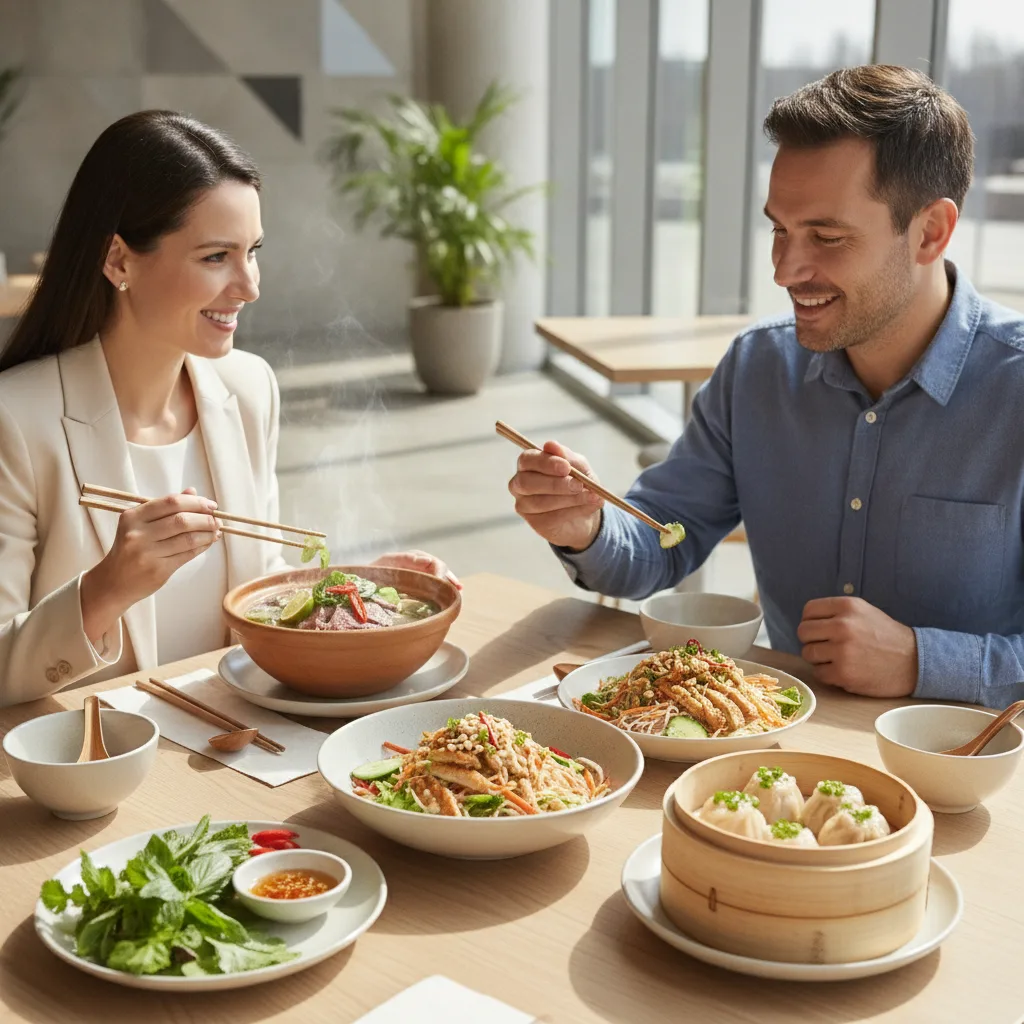
We invite you to discover the full richness of this cuisine in Vincennes, in a contemporary and relaxing setting. Take a look at our full map or Book your table directly online.
FAQ on nuoc mam and its vegan alternative
What is the difference between Vietnamese nuoc mam, Thai nam pla and Cambodian teuk trey?
These three sauces belong to the same family of fermented fish sauces from South-East Asia. They are all made from fish and salt, but differ in the species of fish used, the proportions of salt, the duration of fermentation and their final flavours. Vietnamese nuoc mam is often considered the most concentrated and complex, particularly the artisanal varieties from Phú Quốc.
Does vegetarian nuoc mam really taste the same as fish-based nuoc mam?
Not an exact replica, but very similar in function. Vegetarian nuoc mam replicates the umami and aromatic depth thanks to plant-based ingredients rich in natural glutamate, such as kombu, shiitake and tamari. It fulfils the same culinary roles — enhancing, balancing and adding flavour — without any animal products.
What is umami and why is it so important in Vietnamese cuisine?
Umami is the fifth basic taste, alongside sweet, salty, sour and bitter. It is associated with a sensation of depth and roundness on the palate. In Vietnamese cuisine, it is mainly provided by nuoc mam, slow-simmered stocks and dried mushrooms. It is what gives dishes their enveloping and memorable character.
Can you make vegetarian nuoc mam at home?
Yes. A simple version involves steeping dried kombu and shiitake mushrooms in hot water, then adding soya sauce or tamari, lime juice and a pinch of salt. The mixture can be adjusted to taste. It doesn’t keep as long as traditional nuoc mam, but it can be made in small batches and used up quickly.
How can you tell if a nuoc mam is a high-quality, artisanal product?
A high-quality, artisanal nuoc mam can be recognised by its dark amber to mahogany colour, its short list of ingredients (anchovies and salt only) and its high protein content, which is usually stated on the label. The higher the protein content, the longer the fermentation process has been and the greater the concentration of amino acids. Products from Phú Quốc benefit from a Protected Geographical Indication, which guarantees their origin.