Vietnamese sticky rice holds a special place in Vietnamese cuisine. Serving as an everyday staple, a festive dish and a component of ritual offerings, it has endured through the centuries and across regions without ever losing its identity.
Whether served for breakfast in a backstreet in Hanoi, prepared for Têt, or featured in a Michelin-starred fine-dining restaurant, xôi embodies a rare cultural depth. This article explores its origins, its variations, its preparation techniques and its place in contemporary cuisine.
Vietnamese sticky rice – xôi, variations and techniques
Reading time: ~9 mins
- Nếp and xôi: two words for the same type of Vietnamese sticky rice
- The main varieties of xôi: an overview of the different ways it is prepared
- How to steam Vietnamese sticky rice
- Xôi in Vietnamese culture: festivals, rituals and street food
- Vietnamese sticky rice in the catering industry: challenges and opportunities
- Taking Vietnamese sticky rice to the next level
- Frequently asked questions about Vietnamese sticky rice
Nếp and xôi: two words for the same type of Vietnamese sticky rice
In Vietnamese, sticky rice has two names depending on its state. The sticky rice refers to unprocessed grain, a variety of rice with a very high amylopectin content, the molecule responsible for the a characteristic sticky and elastic texture after cooking. The xôi, on the other hand, refers to that same rice once it has been steamed, whether it is prepared as a savoury or sweet dish.
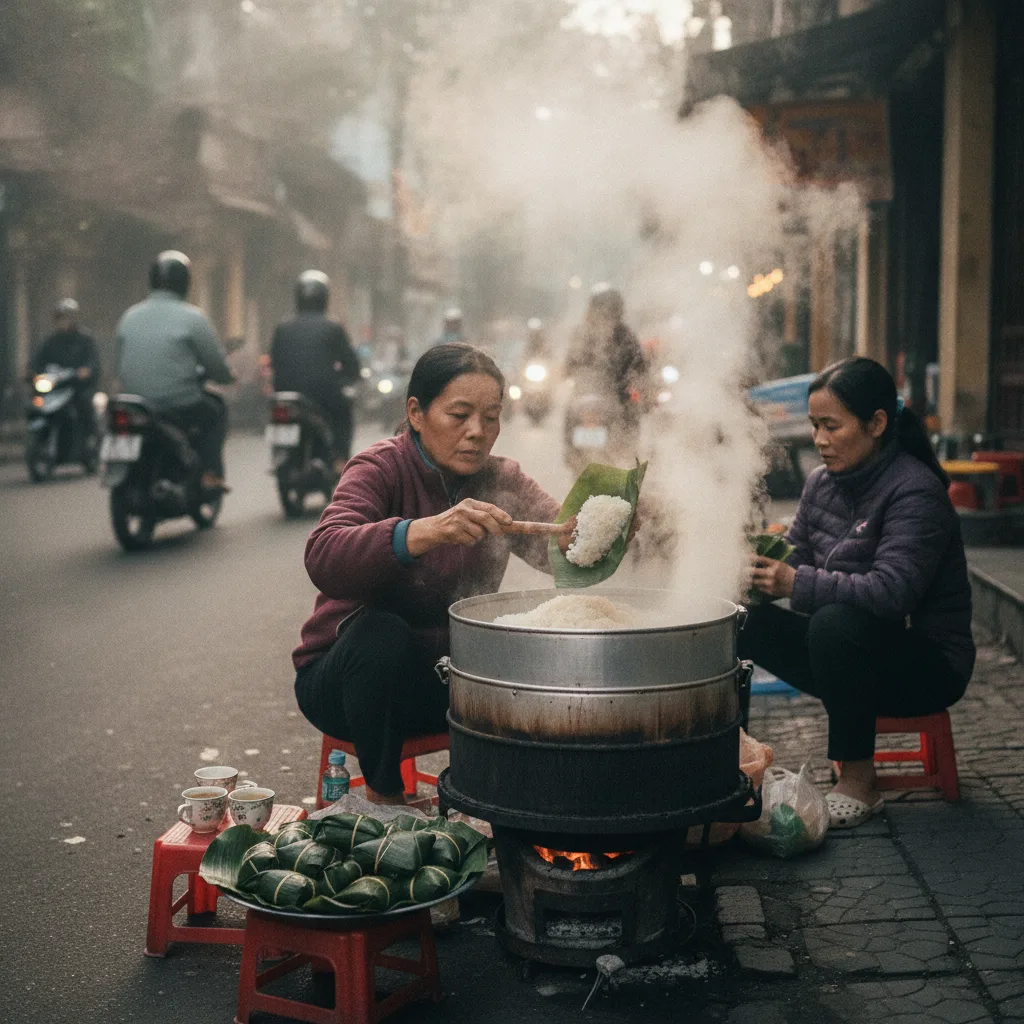
This terminological distinction reflects the importance attached to each stage of the product’s processing in Vietnamese culinary culture.
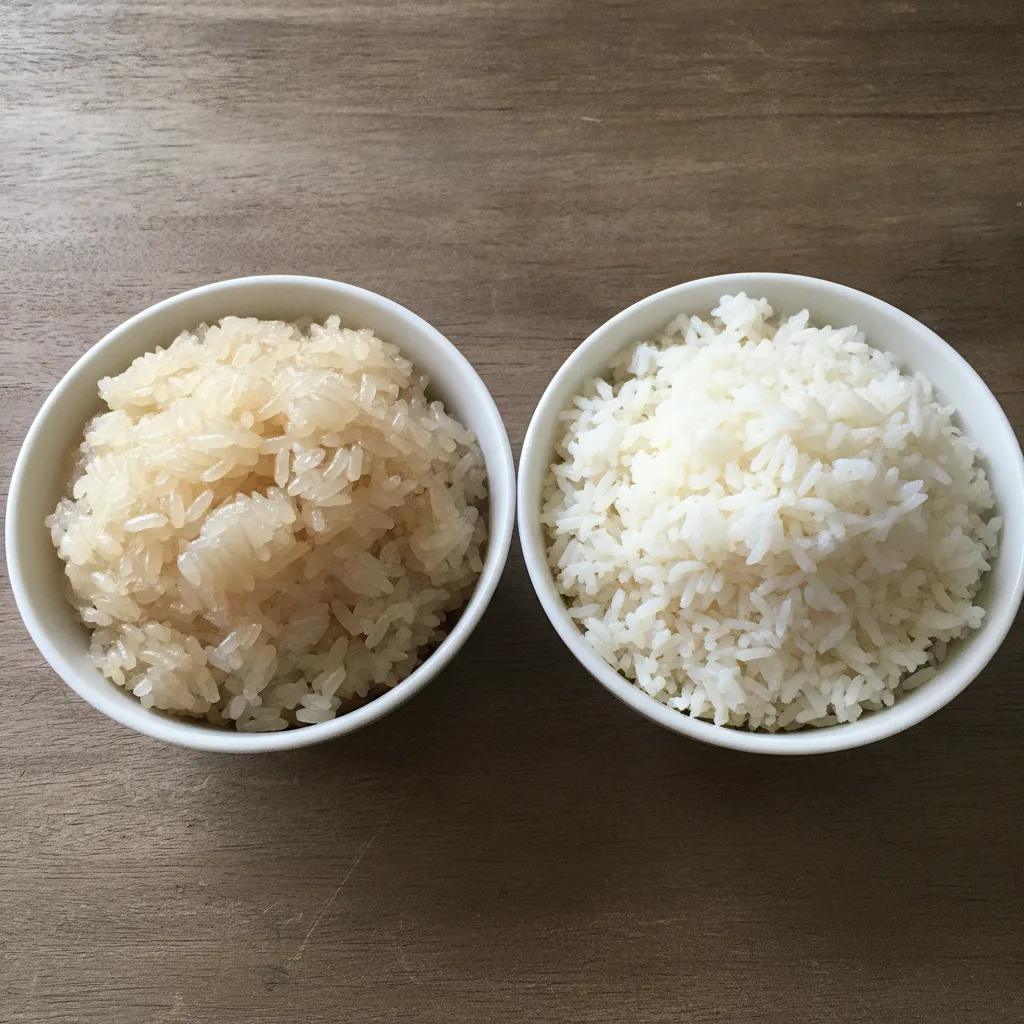
The difference between glutinous rice and ordinary rice is fundamental from a technical point of view. Whilst conventional white rice contains a significant proportion of amylose, glutinous rice contains almost none. It is precisely this composition that, when steamed correctly, results in grains that hold together without turning to mush. The desired texture is sticky and slightly elastic, with the grains still distinct when chewed.
The main varieties of xôi: an overview of the different ways it is prepared
Iconic varieties of Vietnamese sticky rice
Xôi falls into two main categories – savoury and sweet – each of which is further subdivided into dozens of regional variations. Here is an overview of the most typical varieties.
The xôi xéo is one of Hanoi’s iconic specialities. It combines steamed sticky rice with a layer of mashed mung beans, lightly flavoured with melted chicken fat, and then garnished with fried chives. The golden-yellow colour comes from the turmeric added whilst the rice is soaking, which also gives it a subtle, warm aroma.
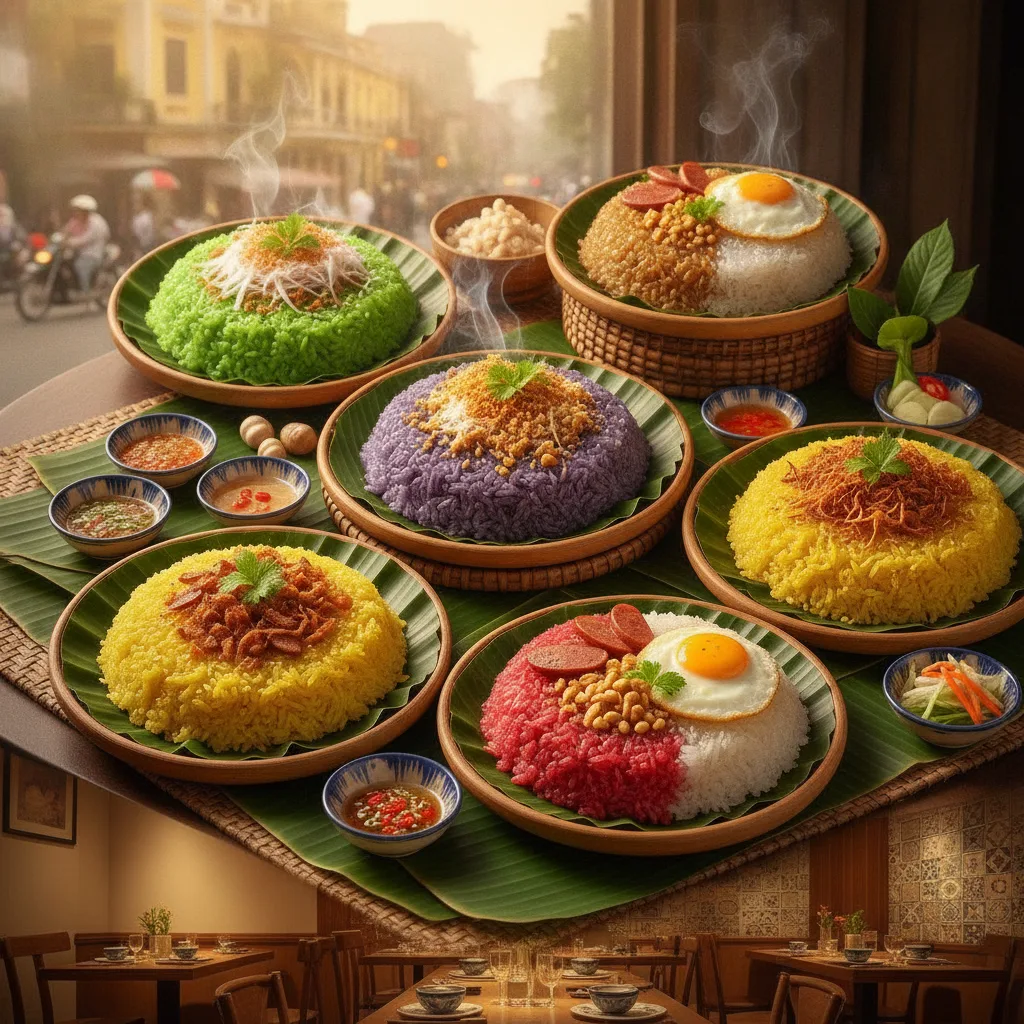
The xôi ngu sắc, or five-colour sticky rice, is a festive preparations associated with ceremonies and special occasions. Each colour is derived from a different natural dye: turmeric for yellow, and local plants for green, purple or red. This xôi is particularly popular during Têt, the Vietnamese New Year, and is often included amongst the offerings placed on household altars.
The savoury sticky rice, or savoury sticky rice, is a heartier version intended as a main meal or a substantial breakfast. It is topped with a variety of protein-rich ingredients: dried prawns, dried pork, Chinese sausages known as lap cheong, and fried chives. It is served with soya sauce and constitutes a complete meal in itself.
Other variants are also worth mentioning:
- Xôi dừa, made with coconut milk
- Xôi đậu xanh, with whole mung beans
- Xôi côm, made from unripe green rice, is an autumn speciality in Hanoi
| Variant | Family | Key ingredient | Main occasion |
|---|---|---|---|
| Xôi xéo | Salty | Mung beans, turmeric, chicken fat | Breakfast, snack |
| Colourful sticky rice | Festive | Natural colourings (turmeric, plants) | Têt, religious ceremonies |
| Savoury sticky rice | Salty | Dried prawns, dried pork, lap cheong | Main meal, street food |
| Coconut sticky rice | Sweet | Coconut milk | Dessert, offering |
| Sticky rice | Sweet / festive | Unripe green rice | Autumn, full moon |
How to steam Vietnamese sticky rice
Key steps for preparing Vietnamese sticky rice
The success of xôi depends on two crucial steps: soaking and steaming. Neither can be overlooked without compromising the final texture.
Soaking the rice is an essential step. The glutinous rice must be soaked in cold water for at least four hours, ideally between six and twelve hours. This soaking time allows the grains to absorb enough water to cook evenly. Soaking for too short a time results in rice that is undercooked at the centre; soaking for too long can weaken the grains and make them mushy.
The rice is steamed in a couscous pot or a suitable casserole dish. The drained rice is spread in an even layer in the steamer basket, with a hole left in the centre to allow the steam to circulate. Cooking time varies between thirty and fifty minutes, depending on the quantity. It is recommended that you stir the rice every fifteen to twenty minutes using a spatula or a wooden spoon to prevent any areas from becoming too compact and to ensure an even texture.
Good to know : To make yellow xôi, as in xôi xéo, simply dissolve some turmeric powder in the soaking water. The colour gradually seeps into the grains, giving them a natural golden hue without the use of artificial colourings.
The desired result is rice with separate grains that are nevertheless slightly sticky to one another, which holds its shape in portions without falling apart, and which remains tender when chewed. If the grains turn into a compact mass and stick to the bottom of the steamer basket, this is often a sign of excess moisture or the heat being too high. If the rice remains firm and grainy, it was not soaked for long enough.
Xôi in Vietnamese culture: festivals, rituals and street food
Sticky rice is closely linked to the key moments in Vietnamese life. During full moons, family celebrations and religious ceremonies, xôi is among the first offerings placed on the altars. Its presence symbolises abundance, family unity and respect for ancestors. Tết, the Vietnamese New Year, is the perfect occasion to prepare the most elaborate variations, such as the five-coloured xôi ngu sắc.
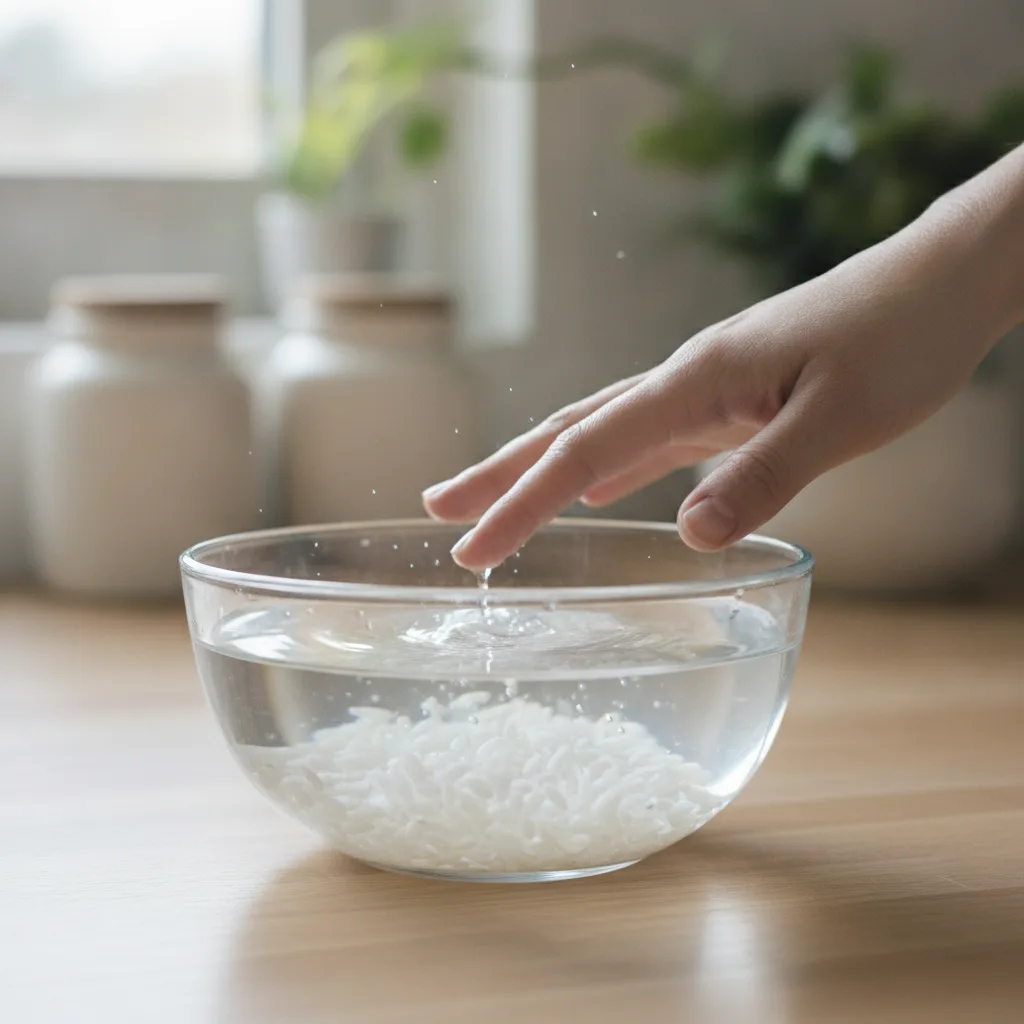
But xôi isn’t just for special occasions. It’s also one of Vietnam’s most popular street foods, eaten from the crack of dawn by millions of people, particularly in breakfast. In Hanoi, the Xôi Yến restaurant at 35B Nguyễn Hữu Huân, in the Old Quarter near Hoan Kiem Lake, is regularly cited as a go-to spot for authentic sticky rice. Open from 5 am until 1 am, it perfectly illustrates the versatility of the dish throughout the day.
In Ho Chi Minh City, the Xôi Bát restaurant in Binh Thanh District has been awarded a Michelin Guide distinction, demonstrating sticky rice’s ability to feature in a high-end gastronomic offering. A few kilometres away, Xôi Gà Number One in District 1 offers a popular and affordable version, open from 6.30 am to 8.30 pm, attracting a steady stream of city-dwelling customers.
Key points : the Xuân La craft village, on the outskirts of Hanoi, is the only village in northern Vietnam that specialises in making figurines from glutinous rice paste, known as tò hè. These small, colourful sculptures demonstrate that glutinous rice extends beyond the culinary sphere to form part of the country’s artisanal and cultural heritage.
Vietnamese sticky rice in the catering industry: challenges and opportunities
The positioning of Vietnamese sticky rice in the catering sector
For a restaurant owner, xôi offers several practical advantages. It can be prepared in large quantities with a well-organised set-up, it works well when served in bowls or trays, and it lends itself naturally to takeaway. Its versatility in terms of toppings means you can put together combination menus suited to different times of the day: breakfast, a quick lunch or an afternoon snack.
Examples of specialist restaurants in Vietnam illustrate three possible market positions. The first is that of high-volume street food, with extended opening hours and affordable prices. The second is that of the tourist or neighbourhood restaurant, which focuses on authenticity and generous portions. The third is contemporary fine dining, which focuses on presentation, natural colourings and the quality of ingredients to appeal to a discerning clientele.
In any case, consistent quality of the raw material is crucial. High-quality glutinous rice can be recognised by the uniformity of its grains, its ability to absorb water without falling apart, and how it holds its shape after cooking. Natural colourings such as turmeric, used in a range of festive variations, also provide a strong marketing selling point at a time when consumers are paying ever greater attention to what is on their plates.
Taking Vietnamese sticky rice to the next level
Vietnamese sticky rice is much more than just a starchy food. It reflects a culinary culture that values technique, patience and a sense of ritual. From Hanoi’s xôi xéo to xôi ngu sắc served at major festivals, and including savoury versions topped with generous helpings of toppings, each dish tells a story and serves a specific purpose.
To understand this product is to understand an essential part of the Vietnamese soul. For lovers of authentic Vietnamese cuisine in the Paris region, the Mây Bay restaurant in Vincennes offers vegetarian and vegan dishes rooted in these traditions, with home-cooked meals made from fresh ingredients. You can find out more at our menu or book your table directly online.
FAQ – Frequently asked questions about Vietnamese sticky rice
What is the difference between sticky rice and jasmine rice?
Sticky rice, or nếp, contains a very high proportion of amylopectin and virtually no amylose, which gives it a sticky, elastic texture after steaming. Jasmine rice, on the other hand, contains a significant amount of amylose, which gives it separate grains and a lighter texture. The two are not interchangeable in Vietnamese recipes.
Is it possible to steam sticky rice without a couscous pot?
Yes, it is possible to use a casserole dish fitted with a perforated insert or a bamboo steamer placed over a saucepan of simmering water. The key is that the rice should not be in direct contact with the water and that the steam should circulate freely around the grains. The lid must fit snugly to prevent excessive steam loss.
Can xôi be prepared in advance and reheated?
Xôi can be kept for a few hours at room temperature, wrapped in a clean cloth or aluminium foil to keep it moist. It can be reheated by steaming for five to ten minutes. It can be reheated in the microwave, but this tends to dry out the grains. For catering purposes, steaming in small batches is the method that best preserves the texture.
Is Vietnamese sticky rice suitable for vegetarian and vegan diets?
Whether sweet or colourful, xôi is naturally vegan. Some traditional savoury versions contain animal fat, dried prawns or meat. It is entirely possible to offer vegetarian and vegan versions by substituting these ingredients with toppings made from vegetables, tofu or mushrooms, as suggested by the vegetable salad from the Mây Bay restaurant, without compromising the authenticity of the dish.
Is sticky rice suitable for takeaway?
Yes, xôi is one of Vietnam’s most popular street foods precisely because it is easy to carry around. It is served in a bowl or tray, stays warm and soft for one to two hours if properly wrapped, and requires no special cutlery to eat. It is a product that is naturally suited to takeaway formats.