Where can you find protein when eating plant-based? This is the question we are asked most often, whether it comes from an athlete, a curious person or a sceptical guest invited by a colleague. Plant proteins in restaurants are neither a myth nor a compromise. They are based on specific foods, familiar combinations and nutritional guidelines published by health authorities.
In this article, we explain how these proteins work, what the official recommendations say and where they can be found in the dishes on our 100 % vegetarian and vegan Vietnamese menu.
Reading time: ~7 minutes
Plant-based proteins at restaurants: our menu decoded
- Plant proteins in restaurants: what are we talking about?
- Vegetarian, vegan, flexitarian: how to read a menu properly
- How do you put together a balanced vegetarian dish at a restaurant?
- What portion of protein is there in a plant-based dish?
- Where is the protein in Mây Bay’s dishes?
- Why plant proteins are gaining ground in the food service industry
- Can plant proteins replace meat in restaurants?
- Going further with plant-based proteins
- FAQ
Plant proteins in restaurants: what are we talking about?
Plant-based proteins are proteins derived from foods of plant origin. In cooking, they come from raw products such as pulses, traditional preparations such as tofu, or processed products.
The main families of plant-based proteins
According to the OléoProtéines Observatory run by Terres Univia, the main families studied in human nutrition number seven: lentils, peas, soya, chickpeas, field beans, dried beans and lupin.
These pulses are joined by other useful sources for a chef: quinoa and certain cereals, seeds and nuts (peanuts, sesame, almonds), seitan made from wheat gluten, tempeh and textured soya protein. Each has a different texture, taste and nutritional profile.
The question is therefore not whether there are proteins without meat, but how to choose and combine them to create a complete and flavoursome protein-rich dish.
Vegetarian, vegan, flexitarian: how to read a menu properly
On a menu, words matter. A vegetarian dish excludes meat and fish but may contain eggs or dairy products. A vegan dish excludes all products of animal origin. Flexitarianism, finally, refers to a diet that reduces meat without eliminating it completely.

Confusing vegetarianism and veganism is one of the common mistakes in catering, as is failing to mention allergens.
This distinction has a direct impact on protein. A vegetarian dish can rely on egg or cheese to supplement its protein intake. A protein-rich vegan menu must rely solely on pulses, soya, cereals, seeds and nuts. This is the case with all our cooking at Mây Bay, since our menu is entirely plant-based.
How do you put together a balanced vegetarian dish at a restaurant?
The key lies in one simple idea: complementarity. Proteins are made up of amino acids, some of which are said to be essential because the body cannot produce them. Cereals and pulses have complementary amino acid profiles. Combined, they better cover all nutritional needs.
The nutritional recommendations for collective catering, published by the Ministry of the Economy based on the work of the Collective Catering and Nutrition Market Study Group (GEM-RCN), are in line with this. They specify that a vegetarian dish without animal proteins must combine, in sufficient proportions, several sources of plant proteins, notably cereals and pulses, in order to complement the essential amino acids.
Building a balanced plant-based plate
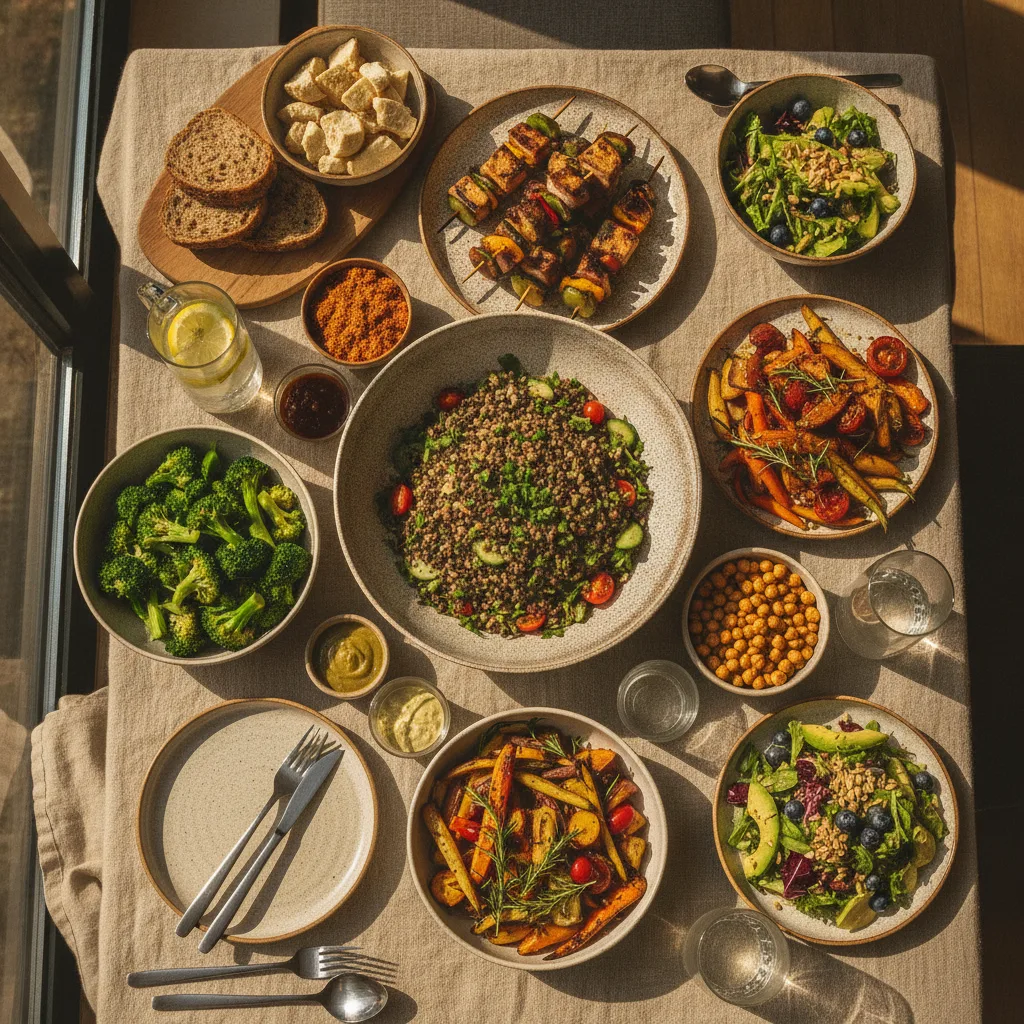
To build a complete plant-based plate, we use the following components:
- a protein source, such as tofu, lentils, chickpeas, kidney beans or split peas
- a carbohydrate source, such as rice, vermicelli or rice noodles, wheat or bread
- a variety of raw and cooked vegetables, for fibre, vitamins and minerals
- a quality fat and carefully prepared seasoning, because a plant-based dish should be just as delicious as any other
This logic explains why so many traditional cuisines around the world naturally combine cereals and pulses: rice and soya in Asia, couscous and chickpeas in the Maghreb, maize and beans in Latin America. Vietnamese cuisine is a fine example, with rice omnipresent and soya prepared in many different forms.
Key points
A balanced plant-based meal should be considered on the scale of the whole day and the entire meal, not just a single ingredient. A well-chosen starter, main course and dessert complement one another in terms of protein.
What portion of protein is there in a plant-based dish?
In collective catering, the concept of a protein portion is regulated. The GEM-RCN recommendations adopted by the Ministry of the Economy indicate that a dish based on plant proteins may be considered a protein dish when it provides at least 70 % of the reference protein portion intended for meat, fish or eggs. To calculate the portion of a plant-based dish, canteen cooks therefore start from this reference and adjust the quantities of pulses, soya and cereals.
In commercial catering, these quantities are not compulsory, but they provide a useful benchmark. A common mistake is to replace meat with a simple vegetable garnish, resulting in a light dish that is low in protein.
As regards health, Anses points out that vegetarian adults can meet their protein needs with a suitable diet, while highlighting the need for particular vigilance for certain groups, including pregnant women, older people and very active people.
Beyond protein, a strictly plant-based diet requires attention to vitamin B12, iron, calcium and omega-3s. B12, in particular, requires supplementation for vegans, which is a matter for individual monitoring rather than a restaurant meal.
Where is the protein in Mây Bay’s dishes?
Moving from theory to the plate is the purpose of this section. Our concept is based on combining a venue serving fresh, healthy dishes with a contemporary setting for relaxation. Our recipes are plant-based, and each uses different sources of protein. The table below presents our main dishes, the protein sources identifiable from their composition and how to complement them.
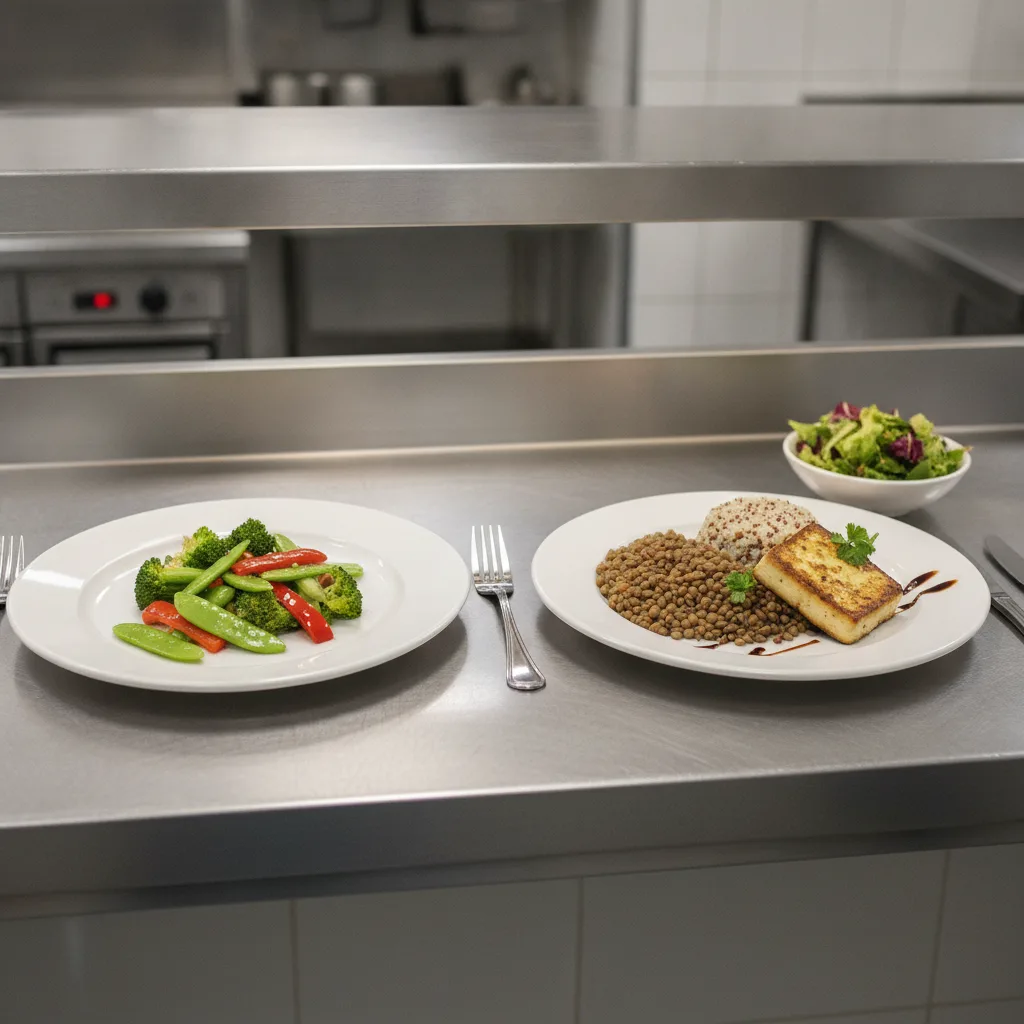
Examples of dishes rich in plant-based protein
| Dish from our menu | Identified sources of protein | Cereal base | How to complete |
|---|---|---|---|
| Mây Bay Delight, homemade satay soup | Tofu, shiitake | Rice noodles | Soy and cereal combination already present, the most protein-rich dish on the menu |
| Bun Cha Gio, vermicelli with spring rolls (our vegetarian Bo Bun) | Crispy vegetable noodles | Rice vermicelli | Add a soy-based starter or a peanut dessert |
| Ba Dung stew, Vietnamese-style curry | Vegetable garnish for the curry | Plain rice | Complete with Ha Cao or a Goi Mây Bay salad |
| Hu Tieu Mây Bay | Vegetable garnish for the soup | Rice noodles | Pair with a starter for a more complete meal |
| Che Chuoi, bananas in coconut milk | Peanuts | Tapioca pearls | Dessert providing an extra serving of nuts |
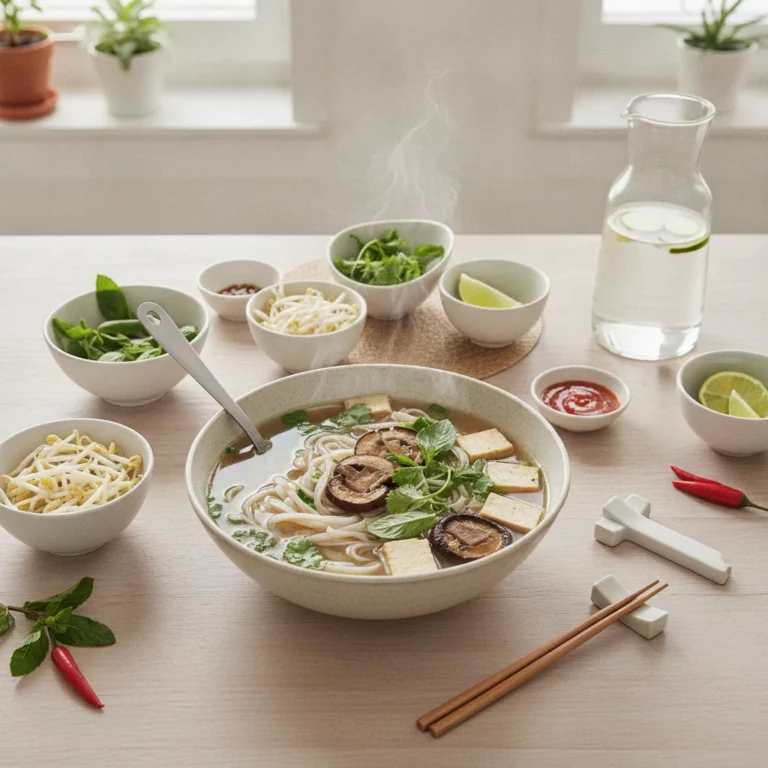
Le Délice de Mây Bay perfectly illustrates the complementary nature of cereals and pulses: tofu, made from soya, meets rice noodles in a fragrant vegetable broth. For an athlete or diner primarily looking for a plant-based dish rich in protein, this is our top recommendation. The recipe details are available on our menu.
The Bun Cha Gio, which many customers call our vegetarian Bo Bun, combines rice vermicelli, raw vegetables, fresh herbs and crispy vegetable spring rolls. It is a fresh and generous dish, which we recommend accompanying with a starter or dessert to boost the meal's protein content. Our starters, such as Ha Cao vegetable dumplings, Banh Cuon Vietnamese pancake or Cha Gio, enable you to put together a complete meal.
Finally, dessert is not to be overlooked. The Che Chuoi combines bananas, tapioca pearls, coconut milk and peanuts: the nuts provide protein and healthy fats. Our starter, main course and dessert formula makes perfect sense here.
Good to know
The exact composition of our dishes of the day and starters of the day varies according to the market. Our team will be happy to tell you about the protein sources and allergens in each recipe when you order.
Why plant proteins are gaining ground in the food service industry
The role of plant proteins in catering is no longer marginal. The 2018 EGAlim law and then the 2021 Climate and Resilience law introduced measures in favour of vegetarian meals in collective catering, including one weekly vegetarian meal in school catering, as FranceAgriMer points out. These legal obligations have encouraged collective kitchens to train in the use of pulses and in the composition of balanced plant-based dishes.
The figures from the 2025 Terres Univia OléoProtéines Observatory confirm this trend. Collective catering accounts for 82 % of purchases of tinned pulses, compared with 18 % for commercial catering. Purchases of plant-based alternatives in out-of-home catering have tripled in five years. Tinned and frozen pulses are also gaining ground, as they meet the time constraints of professional kitchens.
This growth is accompanied by a note of caution: excessive reliance on ultra-processed products can undermine the nutritional quality of a vegetarian menu. In our kitchens, food is made from scratch, allowing us to control the texture and seasoning of plant-based dishes, two criteria that make the difference between a substitute dish and a genuine speciality.
Can plant proteins replace meat in restaurants?
From a nutritional perspective, the answer is yes, provided you follow the principles described above: a sufficient portion, a combination of complementary sources and a varied diet throughout the day. This is precisely what Anses and the GEM-RCN recommendations emphasise.
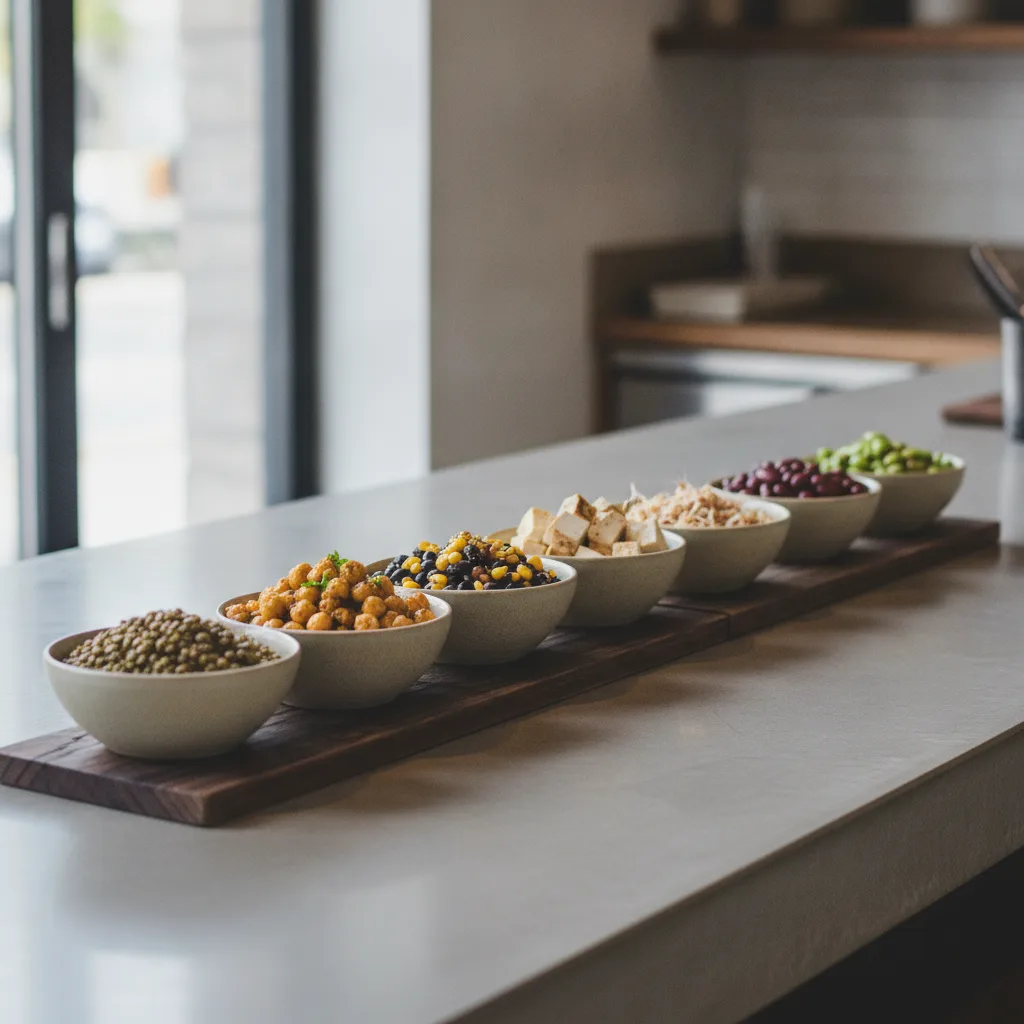
How can you replace meat at a restaurant satisfactorily? By choosing a dish whose protein is clearly identified, such as tofu, and accompanying it with a cereal.
From a taste perspective, Vietnamese cuisine has an advantage: it is based on a balance of flavours, fresh herbs, long-infused broths and contrasts between crisp and melting textures. Plant-based food is not a substitute there; it is part of the tradition, particularly Buddhist cuisine. This enables many flexitarians to have lunch with us without feeling that they are giving anything up.
Going further with plant-based proteins
Finding your protein from plant-based foods does not require complex knowledge. You simply need to identify the right sources—pulses, soya, cereals, seeds and nuts—and combine them intelligently.
Official recommendations for collective catering provide clear guidelines, and commercial catering can draw on them to offer complete protein-rich dishes. At Mây Bay, every dish on our menu is assessed through this lens, and our team will help you put together a meal suited to your needs, whether you are an athlete, a flexitarian or simply curious.
You can view our menu or book your table.
FAQ
Which pulses are most commonly used in catering?
Lentils, chickpeas, dried beans, split peas and soya are the most common. Fava beans and lupin, which are less well known, are also among the seven reference pulses identified by Terres Univia. They are available dried, tinned or frozen.
Is tofu a good source of protein?
Yes. Made from soya, tofu is one of the most widely used plant-based sources for creating a protein-rich dish. Its neutral texture absorbs marinades and broths well, making it a central ingredient in plant-based Vietnamese cuisine.
Should cereals and pulses be combined in the same meal?
This is recommended for a dish without animal products, according to the GEM-RCN recommendations. The combination can be made in the same dish or across the meal, for example with a complementary starter and main course.
Can an athlete eat plant-based food at a restaurant?
Yes, provided they prioritise dishes whose protein source is clearly identified and put together a complete meal. Anses nevertheless points out that very active people must pay particular attention to their intake, which may justify seeking professional advice.
Are your dishes suitable for vegans?
Our menu is 100 % vegetarian and vegan. For any questions about allergens, such as soya, gluten or peanuts, our team can provide information about the composition of each dish.