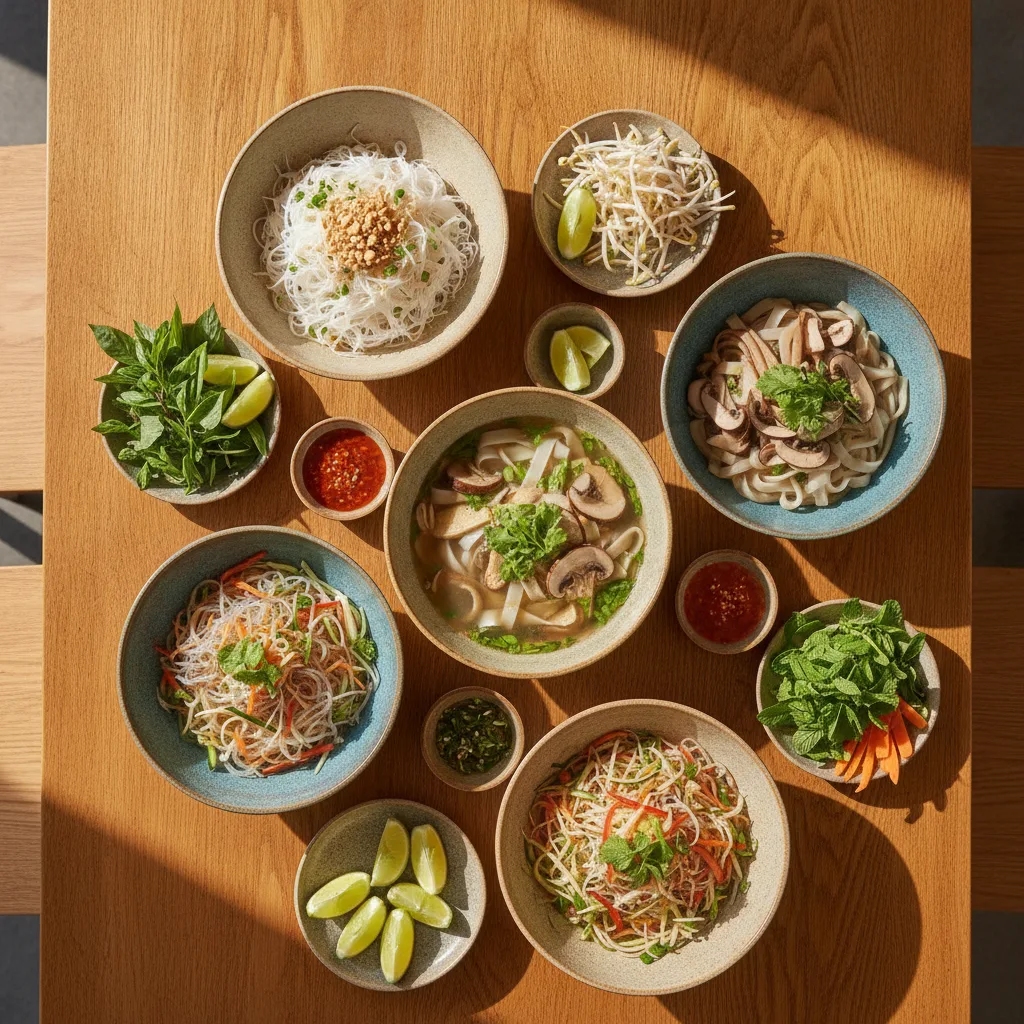
Vietnamese rice vermicelli occupies a central place in Vietnamese cuisine, from north to south. Yet behind this generic term lie several families of noodles, with very different diameters, textures and uses: bún, phở and miến are not cooked in the same way and do not tell the same culinary story.
At Mây Bay, a 100 % vegetarian and vegan Vietnamese restaurant in Vincennes, these noodles shape a large part of the menu. Here is a complete guide to recognising them, cooking them correctly and understanding how they are showcased in our dishes.
Vietnamese rice vermicelli, cooking and guide 2026
Reading time: ~8 mins
- Bún, phở, miến: three families of noodles not to be confused
- Composition and production of rice vermicelli
- Cooking, soaking and texture: how to prepare vermicelli successfully
- Quantity per person and nutritional guidelines
- Vermicelli in Mây Bay's plant-based cuisine
- Choosing and managing rice vermicelli in food service
- Going further with Vietnamese rice vermicelli
- FAQ
Bún, phở, miến: three families of noodles not to be confused
The word bún in Vietnamese refers to thin, round vermicelli made from soaked rice that is ground and then transformed into strands. They are most often served cold or lukewarm, in mixed salads, vermicelli bowls or fresh spring rolls.
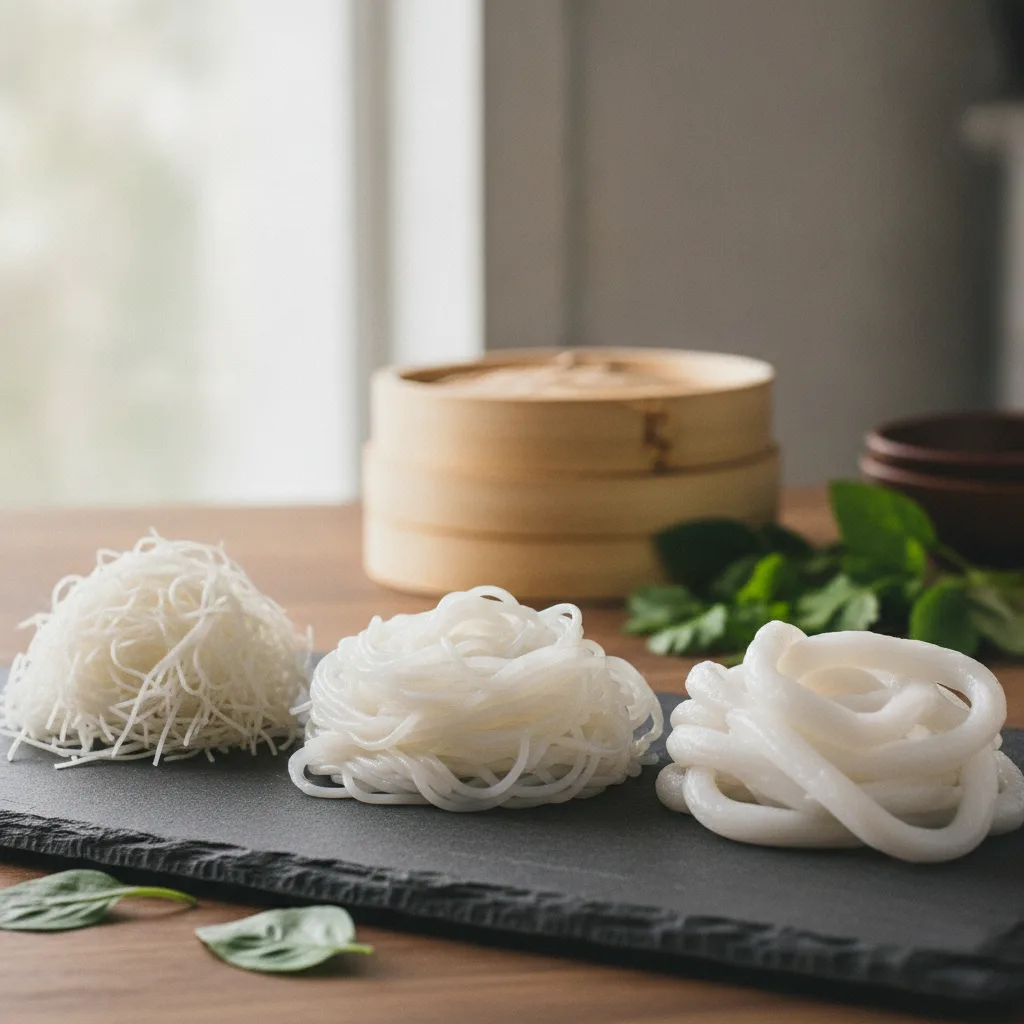
The noodles of phở, on the other hand, are flat, wider and intended for broth: their surface catches the aromatics and soaks up liquid without breaking down too quickly. The miến, finally, is not rice vermicelli: it consists of translucent noodles, often made from mung beans or tubers, with a more elastic and slippery texture. This distinction is important, as many French product descriptions use the terms rice noodles, rice vermicelli and bún interchangeably.
To these three families can be added two recognisable variants. The bánh hỏi takes the form of extremely fine strands woven into small mats, served lukewarm with fresh Vietnamese herbs. The bún bò Huế, specialty originating from the imperial city of Huế, on the other hand, uses noticeably thicker vermicelli, capable of holding up in a rich broth without going soft. Understanding the difference between bún, phở and miến is already understanding why the same broth will never produce the same dish depending on the noodle chosen.
| Type of noodle | Base | Shape and diameter | Main use | Common preparation |
|---|---|---|---|---|
| Bún | Rice flour, water | Round, thin | Vermicelli bowls, salads, fresh rolls | Soaking or cooking for 3 to 5 minutes |
| Bún bò Huế | Rice flour | Round, thick | Spicy Huế broth | Longer cooking, firm texture desired |
| Phở | Rice flour | Flat, wide | Soup, clear broth | Brief rehydration, add to the bowl when serving |
| Bánh hỏi | Rice flour | Very thin, woven | Warm dishes with herbs | Steaming |
| Miến | Mung bean or tubers | Thin, translucent | Soups, stir-fried dishes | Soaking in hot water |
Composition and production of rice vermicelli
The composition of a good vermicelli remains simple: rice flour, water, sometimes a little salt and, in some products sold in France, tapioca starch to improve firmness and elasticity. Some product descriptions thus indicate a recipe based on 90 % rice flour supplemented with tapioca starch. The shorter the ingredient list, the more predictable the product’s behaviour during cooking.
Traditional production follows a series of precise steps. The rice is washed and then soaked for a long time, up to 36 hours in a process described by a study devoted to the production of bún from brown rice. This is followed by wet grinding, which transforms the grains into a suspension with a controlled moisture content. The dough passes through food extrusion, which forms the strands, and then through steaming at around 100 °C. This is when starch gelatinisation occurs, the stage that gives vermicelli its characteristic suppleness and transparency. Cooling and drying complete the cycle.
The noodle diameter, starch content and drying quality then explain why two apparently identical packets do not behave in the same way on a plate.
Good to know
Properly made vermicelli should remain supple without disintegrating, hold a sauce and retain its texture after cooling. That is precisely what is sought for a bowl of vermicelli served warm.
Cooking, soaking and texture: how to prepare vermicelli successfully
The question that comes up most often concerns the method: should rice vermicelli be soaked or cooked? Both approaches exist and depend mainly on the thickness of the product. For fine vermicelli intended for fresh spring rolls or a salad, soaking is sufficient. Some products recommend a bath of about ten minutes in almost boiling water, while others recommend soaking for five to seven minutes in cold water followed by a brief dip in very hot water. Tang Frères recommends covering the vermicelli with boiling water for three minutes, and only two minutes when they are then intended for an Asian stir-fried dish.
Cooking and soaking methods
For classic cooking, the procedure consists of a few simple steps that we carry out daily in the kitchen:
- Bring a large volume of water to the boil, as too little water concentrates the starch and encourages sticking.
- Plunge the rice vermicelli in and cook for three to five minutes depending on their thickness, tasting before the stated time is up.
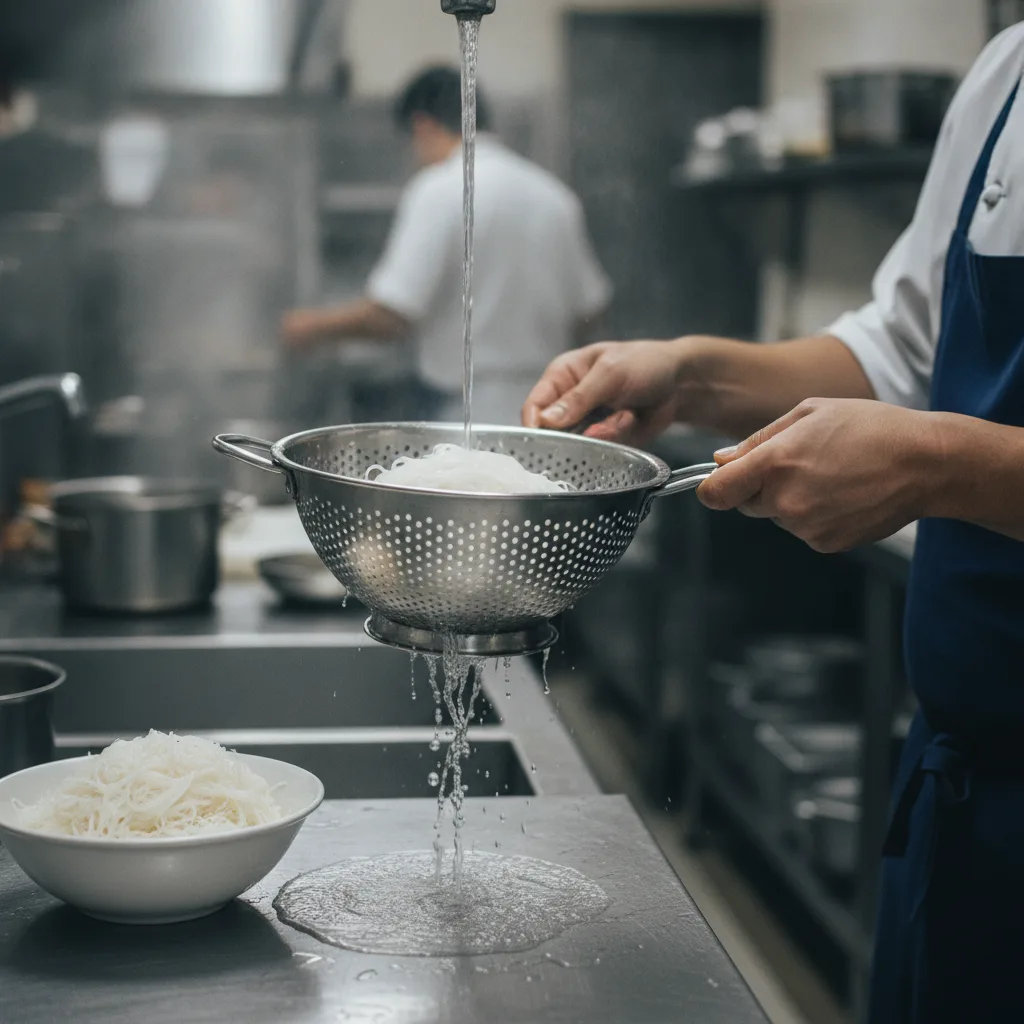
- Drain immediately, then rinse with cold water to stop the cooking and remove surface starch.
- Allow to drain completely for several minutes before serving, and never store noodles while still hot in a compact block.
The problem of sticky rice vermicelli almost always comes down to one of these points: cooking for too long, insufficient water, not rinsing or inadequate draining is enough to turn a light bowl into a compact mass. Conversely, vermicelli that is too firm indicates soaking for too short a time or a diameter thicker than expected. When the noodles are to be reheated in a broth or stir-fried afterwards, it is better to slightly reduce the time stated on the packaging.
Quantity per person and nutritional guidelines
Portions and nutritional information
The quantity of rice vermicelli per person depends on the dish. An indicative basis of 50 g of dry product per person appears on several commercial information sheets. In practice, allow 50 to 80 g for a generous bowl of vermicelli, 40 to 60 g for a soup in which the broth and garnishes take up space, and 40 to 50 g as an accompaniment. It is important to bear in mind the difference between a dry portion and a rehydrated portion: the noodles multiply their weight by absorbing water, which explains the striking differences between the values displayed on labels.
As for rice vermicelli calories, product information sheets available in France state approximately 354 kcal per 100 g of dry product, with nearly 87 g of carbohydrates, 1.4 g of protein and virtually no fat. Brown rice vermicelli, for its part, contains approximately 351 kcal, 72 g of carbohydrates, 7.2 g of protein and 4.6 g of fibre per 100 g. Some information sheets mention much lower values, around 56 kcal per 100 g, which correspond to a hydrated product. These figures therefore vary according to the brand and the method of calculation, and should never be read as an official standard.
| Product | Calories | Carbohydrates | Protein | Other |
|---|---|---|---|---|
| Standard rice vermicelli | 354 kcal | 87 g | 1.4 g | Negligible fat |
| Brown rice vermicelli | 351 kcal | 72 g | 7.2 g | 4.6 g of fibre |
Above all, remember that vermicelli is a food consisting mainly of carbohydrates, low in fat, and does not constitute a complete meal without vegetables, herbs and a source of plant protein.
The question of gluten-free rice vermicelli often comes up, particularly among our customers who pay close attention to their diet. Rice does not contain gluten, and most products made from rice flour and tapioca starch are therefore suitable for a gluten-free diet. Nevertheless, caution is still required: only the manufacturer's label can be relied upon, as cross-contamination with allergens can occur during production or packaging. The allergen labelling rules, highlighted by Anses and governed internationally by the Codex Alimentarius, require careful reading of every package. In the dining room, we always ask our customers to inform us of any intolerances before ordering.
Vermicelli in Mây Bay's plant-based cuisine
Examples of vermicelli dishes at Mây Bay
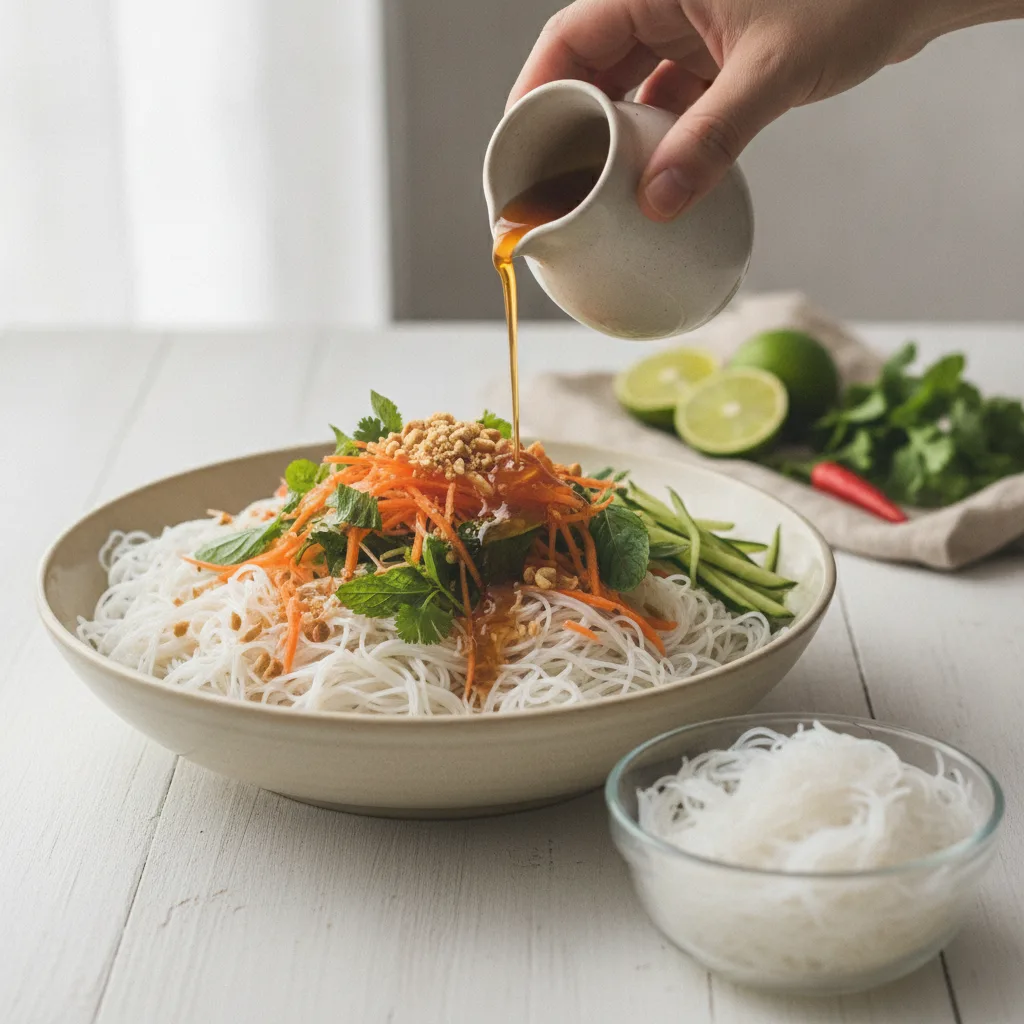
In a completely vegetarian and vegan restaurant, the noodle ceases to be merely a vehicle. It becomes the element that carries the freshness, herbs and sauce. Our Bún chả giò, vermicelli with crispy vegetable spring rolls, is the plant-based version of the famous bò bún that many people know. It has the same structure: a bed of warm vermicelli, raw vegetables, fresh Vietnamese herbs, golden spring rolls and a clear plant-based sauce that replaces the traditional nuoc-mâm.
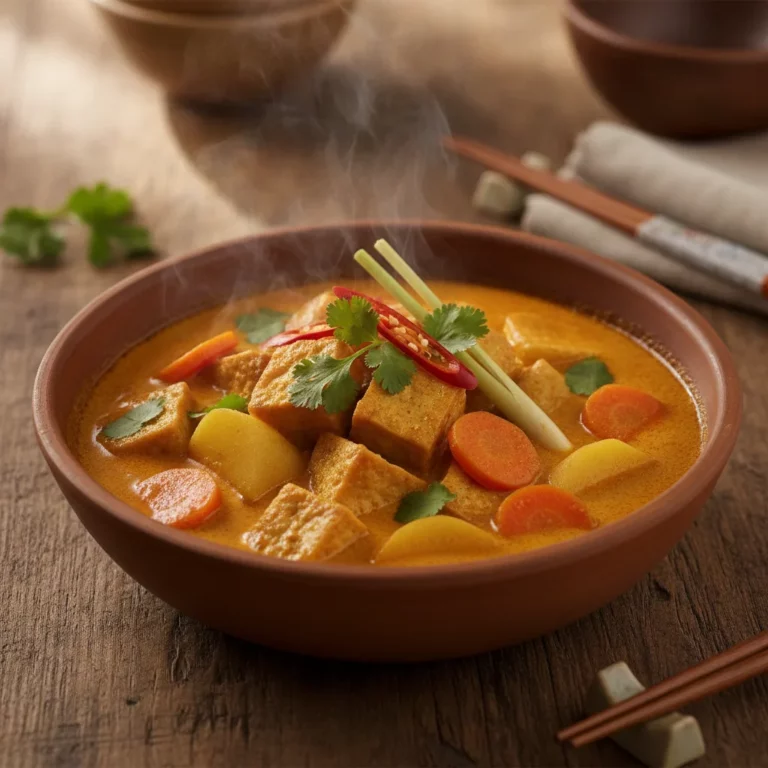
The Hủ tiếu Mây Bay, on the other hand, features rice noodles served in broth, while the Mây Bay Delight combines a homemade vegetable stock with satay, rice noodles, tofu and shiitake.
These noodles also converse with other rice-flour preparations, such as Bánh cuốn, our steamed Vietnamese crêpe, or Hà cảo, vegetable dumplings. The same raw ingredient, prepared differently, produces textures that are worlds apart. Our dishes are also available to take away for those who wish to enjoy them at home or at the office, a very common lunchtime practice in Vincennes.
Key points
The plant-based version of a vermicelli dish is not about removing an ingredient, but about rebuilding the balance between acidity, saltiness, crunch and fresh herbs.
Choosing and managing rice vermicelli in food service
For professional use, choosing rice vermicelli for a restaurant depends on several criteria. The composition should be short and consistent from one batch to the next. The noodle diameter must be regular, otherwise cooking will be uneven. The country of manufacture, often Vietnam for the most authentic references, should be checked, as should allergens, the batch number, the best-before date and the availability of professional packaging. A product may produce a perfect result when prepared to order and become sticky after twenty minutes of mise en place, hence the importance of testing it under actual service conditions.
In terms of organisation, a few simple rules prevent most problems. It is better to cook in small quantities, cool quickly, drain thoroughly, portion individually and never leave the noodles submerged in water. The sauce should not be mixed in advance with the entire batch. Once rehydrated, vermicelli becomes a ready-to-eat food and is subject to the same precautions as any cooked preparation, including maintaining the cold chain, separating raw and cooked products, and ensuring traceability. No universal statutory duration exists specifically for cooked vermicelli, so each establishment's own HACCP procedures apply.
Going further with Vietnamese rice vermicelli
Mastering Vietnamese rice vermicelli means understanding a simple but demanding raw ingredient, whose success depends on a few minutes of cooking and thorough rinsing. Bún, phở, miến and bánh hỏi are not interchangeable, and every Vietnamese dish relies on choosing the right noodle.
At Mây Bay, this care is reflected in an entirely plant-based menu where bún, phở noodles and rice noodles are prepared daily in Vincennes, on the edge of the Bois. You can enjoy these dishes on site or order them to take away, with reservations available for group lunches.
FAQ
Can cold rice vermicelli be eaten?
Yes. They are commonly served cold or lukewarm in Vietnamese salads and vermicelli bowls. After cooking and rinsing in cold water, they can be kept refrigerated for a few hours, covered, and loosened when plating with a drizzle of sauce.
What is the difference between rice vermicelli and mung bean vermicelli?
The former are made from rice flour and become opaque white when cooked. The latter, often called glass noodles, remain translucent and have a more elastic, slippery texture. They cannot be substituted for one another in a recipe.
How can already-cooked vermicelli be reheated without damaging it?
The safest way is to plunge it into hot stock or simmering water for a few seconds, then drain it immediately. The microwave tends to dry it out in places and make it rubbery.
Is rice vermicelli suitable for children?
Its soft texture and neutral flavour make it easy to accept. Simply cut it slightly and serve the sauce separately so that the child can adjust the seasoning themselves.
Can cooked rice vermicelli be frozen?
This is not recommended. Thawing degrades the starch structure and makes the strands brittle. It is better to cook as needed, in small quantities, and store the dry packet in a dry place at room temperature.