Vegan Vietnamese curry, called cà ri chay, is one of the most accessible dishes in Vietnamese plant-based cuisine. Less spicy than a Thai curry and less thick than an Indian curry, it relies on lemongrass, full-fat coconut milk and the sweetness of root vegetables.
At Mây Bay, a 100 % vegetarian and vegan Vietnamese restaurant in Vincennes, it is a dish we serve all year round, in its long-simmered version. Here is what really sets it apart, how it is made and how to get it right at home.
Vegan Vietnamese curry, the mild and fragrant vegetarian curry
Reading time: ~8 mins
- What is cà ri chay, the vegan Vietnamese curry?
- The difference between Vietnamese, Thai and Indian curry
- The essential ingredients for a Vietnamese curry with coconut milk
- How to thicken and balance the sauce
- Variations and substitutions for an easy vegan Vietnamese curry recipe
- What to serve with a Vietnamese curry?
- Allergens, gluten and storage
- A seasonal dish, in Vincennes and at home
- FAQ
What is cà ri chay, the vegan Vietnamese curry?
The term cà ri chay literally translates as vegetarian curry. The word chay refers to the practice of ăn chay, plant-based eating rooted in the Vietnamese Buddhist tradition, which excludes animal products and, in its strict form, alliums.
This cuisine is not a modern adaptation to the plant-based trend; it has existed for centuries in pagodas and is still practised today for several days each month in many families. Vegan Vietnamese curry is one of its most generous expressions.
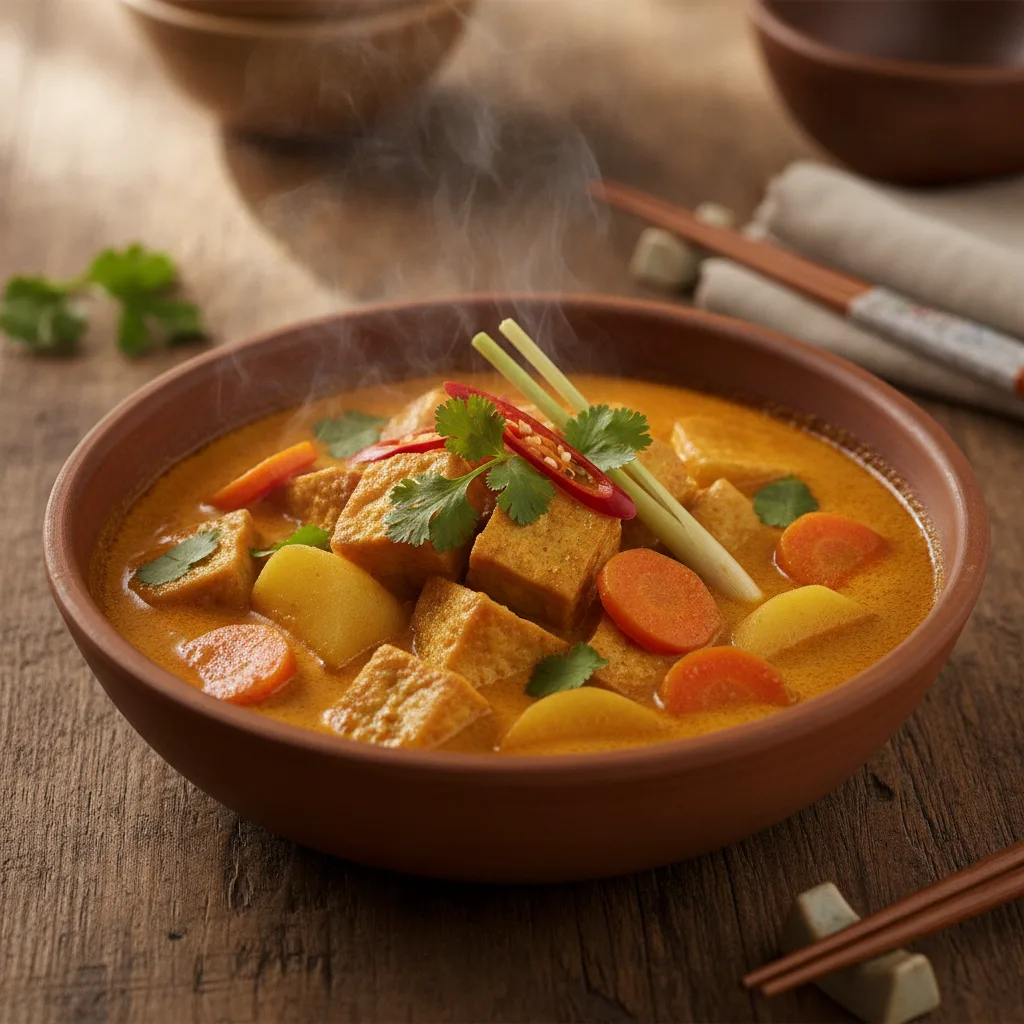
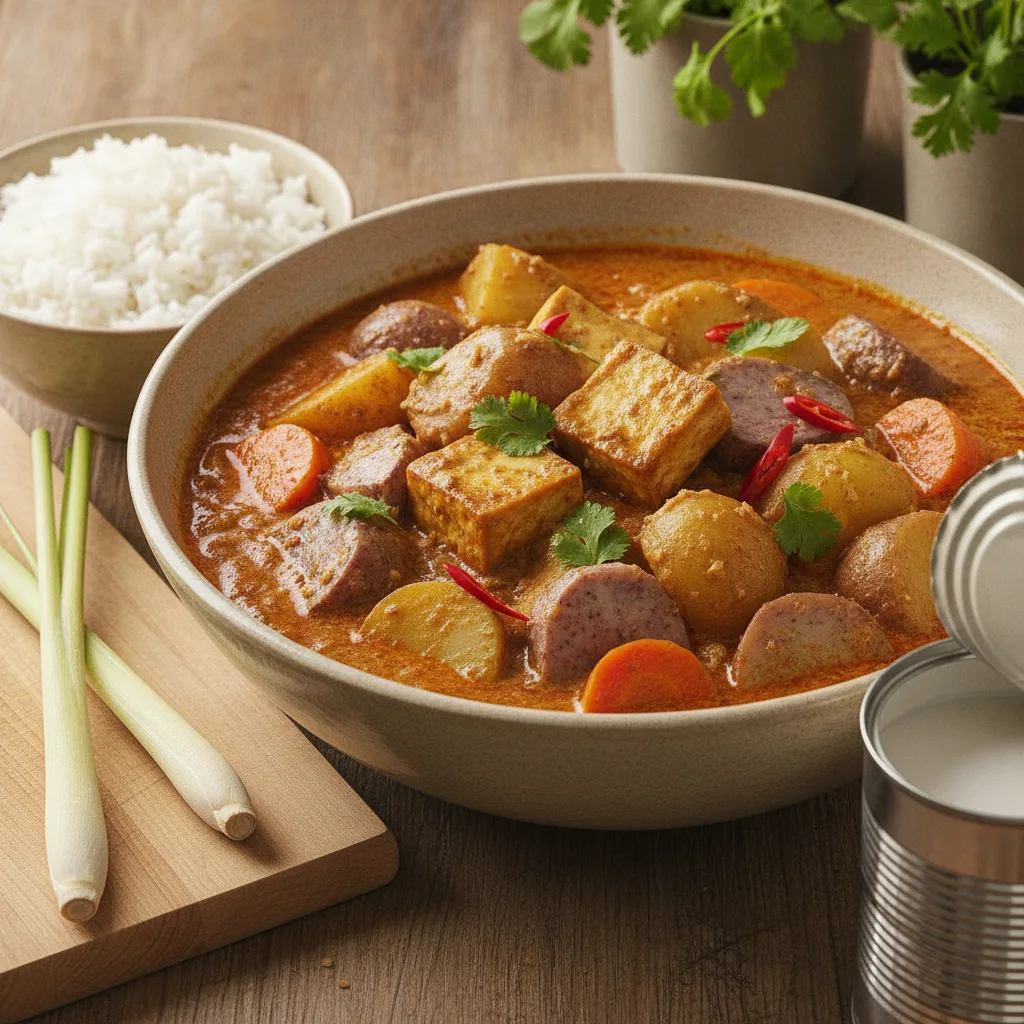
Concretely, it consists of simmering vegetables and plant-based proteins in a coconut milk broth flavoured with lemongrass, ginger, garlic, shallot, curry powder and turmeric. The sauce remains thin, almost silky, halfway between a soup and a stew.
It traditionally contains potatoes, sweet potato, carrots, sometimes taro, and firm or fried tofu. The desired flavour profile is a sweet-savoury-sour balance, finished with a drizzle of lime juice.
The difference between Vietnamese, Thai and Indian curry
This is the question that comes up most often, and the answer comes down to three elements: the aromatic base, the texture and the intensity. Thai curry starts with a pounded paste, green or red, loaded with fresh chillies, galangal and shrimp paste in its classic version, resulting in a distinctly spicy dish with intensely concentrated flavours.
Indian curry is based on a masala, a blend of roasted and ground spices, often bound with onions, tomatoes or dairy products, with a thick sauce. Vietnamese curry, on the other hand, uses a mild curry powder inherited from exchanges with India through colonial trade, diluted with coconut milk and water or vegetable stock.
The result is noticeably milder and more fragrant than powerful. Lemongrass plays the leading role, chilli is optional, and the sauce is thin enough to mop up with bread or pour over rice. It is precisely this mildness that makes it an easy sharing dish to serve at a mixed table, including to guests who do not usually eat plant-based food.
| Criterion | Vietnamese curry (cà ri chay) | Thai curry | Indian curry |
|---|---|---|---|
| Aromatic base | Lemongrass, garlic, shallot, ginger, curry powder, turmeric | Pounded curry paste, galangal, fresh chillies, kaffir lime | Roasted spice masala, onion, tomato |
| Sauce texture | Fluid, creamy, coconut milk diluted with stock | Smooth to thick, very concentrated | Thick, bound |
| Chilli intensity | Mild, chilli optional | High | Variable, often medium to high |
| Typical accompaniment | Sweet potato, potato, carrot, taro, tofu | Thai aubergine, bamboo, Thai basil | Legumes, vegetables, paneer |
| Side dish | Fragrant rice, vermicelli, bread | Jasmine rice | Basmati rice, leavened breads |
The essential ingredients for a Vietnamese curry with coconut milk
The success of a Vietnamese tofu or vegetable curry depends on the quality of just three ingredients. First, full-fat coconut milk, which provides creaminess without the need for a thickener. Next, lemongrass, crushed with the back of a knife to release its essential oils, then removed before serving. Finally, curry powder, briefly fried in oil with the turmeric to awaken the aromas before adding the liquids.
Here are the components of a reliable base for four people, to be adjusted according to the season and your preferences:
- 400 ml full-fat coconut milk and 300 ml vegetable stock
- 400 g firm tofu or fried tofu
- Three potatoes, one sweet potato and three carrots
- 200 g mushrooms
- Two lemongrass stalks, three garlic cloves, two shallots and a piece of ginger
- Two tablespoons of curry powder and one teaspoon of turmeric
- Two tablespoons of soy sauce or tamari and one tablespoon of sugar
- One lime, vegetable oil, salt and chilli to taste
The method remains simple. Brown the cubed tofu, then set it aside. Fry the shallots, garlic, ginger and lemongrass, add the curry, turmeric and, if desired, chilli, pour in the coconut milk and stock, then add the vegetables that take longest to cook.
Cover and simmer for about twenty minutes, then add the mushrooms and tofu, continue cooking until the vegetables are tender, then adjust the seasoning with soy sauce, sugar and lime juice. Remove the lemongrass and garnish with fresh coriander, Thai basil and spring onion.
Good to know
The sweet potato and potato release starch during simmering, which naturally thickens the sauce without adding flour or cornflour.
How to thicken and balance the sauce
Thickening a Vietnamese curry sauce
A sauce that is too thin is the most common flaw. The simplest solution is to limit the amount of water from the outset, use only full-fat coconut milk and finish cooking uncovered to allow it to reduce. Mashing two or three pieces of potato directly into the sauce provides an immediate, completely natural thickener.
Conversely, if the dish seems too rich, replace some of the coconut milk with vegetable stock, accepting a less creamy texture.
Balancing the flavours of vegan Vietnamese curry
The final balance depends on three elements: soy sauce for umami and salt, sugar to round it out, and lime for acidity that lifts the whole dish. Always taste after adding these three ingredients, never before.
Variations and substitutions for an easy vegan Vietnamese curry recipe
Cà ri chay adapts very well, making it an ideal dish for cooking with whatever you have. Firm tofu can give way to tempeh for a denser texture and more pronounced flavour, or to chickpeas for a fibre-rich version. Mushrooms, particularly shiitake, are a less processed alternative to plant-based protein substitutes and provide an interesting chew.
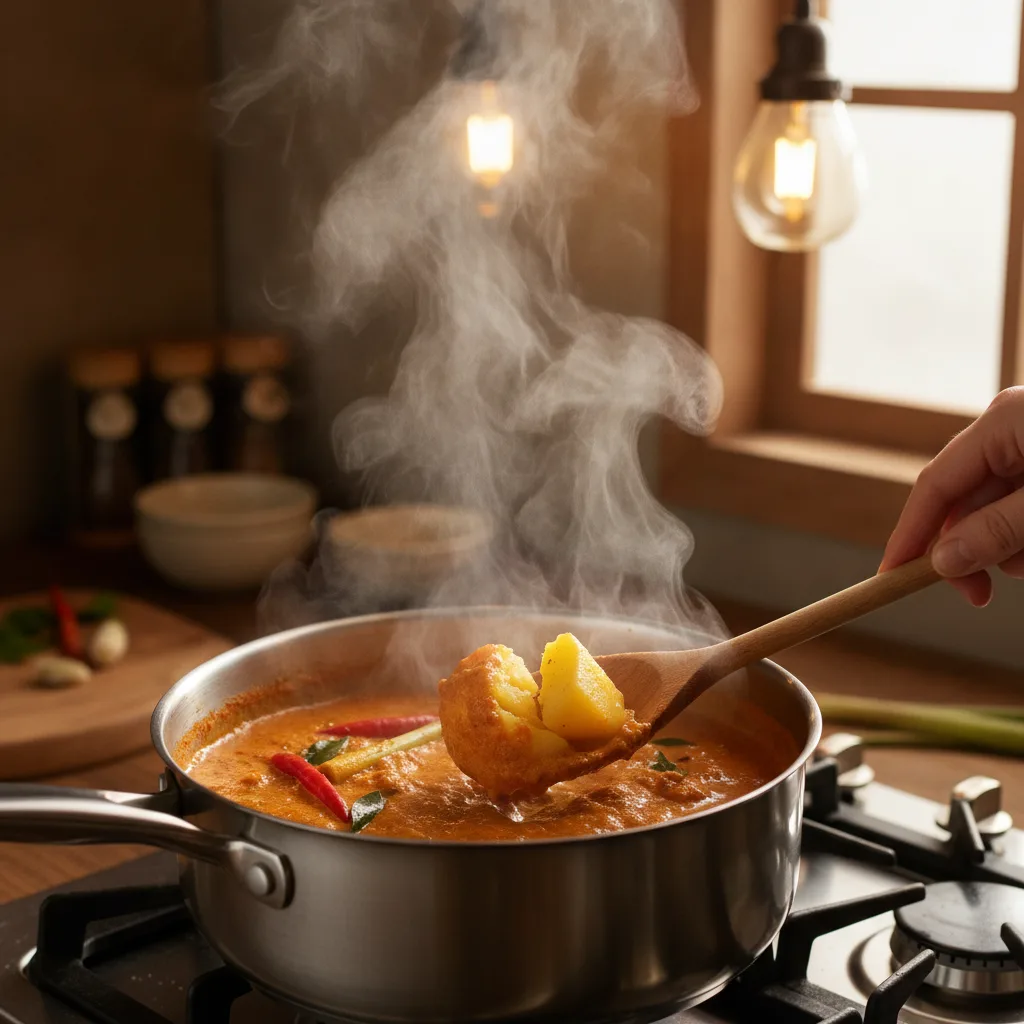
The potato can be replaced with taro, which is softer and slightly sticky, and widely used in southern versions.
As for seasoning, coconut sugar or brown sugar add caramelised notes, brown rice replaces white rice for more fibre, and a hotter curry powder is enough to increase the intensity without changing the recipe. So yes, it is entirely possible to prepare a vegetarian Vietnamese curry without tofu, provided you maintain a source of protein through pulses, mushrooms or cashew nuts as a garnish.
What to serve with a Vietnamese curry?
The traditional accompaniment remains fragrant rice, particularly jasmine rice, whose floral notes complement the lemongrass and coconut milk. Rice vermicelli work very well for a lighter version, as does a baguette for dipping, a direct legacy of the French period in Vietnam.
A fresh salad as a starter balances the meal, such as our Gỏi Mây Bay, a crisp and tangy vegetable salad.
At Mây Bay, we serve our version of the dish under the name Bà Dung’s Pot, Vietnamese-style curry served with plain rice. The the rest of the menu is also available, and the dish is also offered to take away, a popular choice for quick lunches and evening meals.
Allergens, gluten and storage
Most common allergens in a vegan Vietnamese curry
A vegan dish is not automatically gluten-free. To make a Vietnamese curry gluten-free, tamari is the most common alternative, provided you check the label, as not all products are gluten-free.
- Soy, found in tofu, soy sauce and most plant-based substitutes, with some soy sauces containing wheat
- Gluten, potentially present in some unchecked soy sauces
- Tree nuts, if cashews are added as a garnish
Storing and reheating the curry
In food service, allergen information is governed by European Regulation 1169/2011, and vigilance regarding cross-contamination is part of the good hygiene practices recommended by ANSES.
In the refrigerator, cà ri chay keeps in an airtight container and should be reheated gently over medium heat, adding a little stock if the sauce has thickened. Freezing is possible, but coconut milk may separate slightly when defrosted, which can be corrected by stirring while reheating. Potatoes do not freeze as well as sweet potatoes and sometimes become floury.
Key points
Nutritional values vary greatly depending on the recipe. Fact sheets published by plant-based recipe websites report approximately 413 kcal per serving without rice, and approximately 691 kcal for a 400 g serving served with rice.
A seasonal dish, in Vincennes and at home
Vegan Vietnamese curry perfectly illustrates what we stand for in Vincennes: plant-based cuisine that does not seek to imitate anything else, but draws on an existing, deep and perfectly coherent repertoire. Cà ri chay has never needed meat to exist.
It only needs seasonal vegetables, good coconut milk and a carefully prepared aromatic base. Whether you prepare it at home or come and try it in our dining room, Book your table.
FAQ
Can fresh lemongrass be replaced in a cà ri chay?
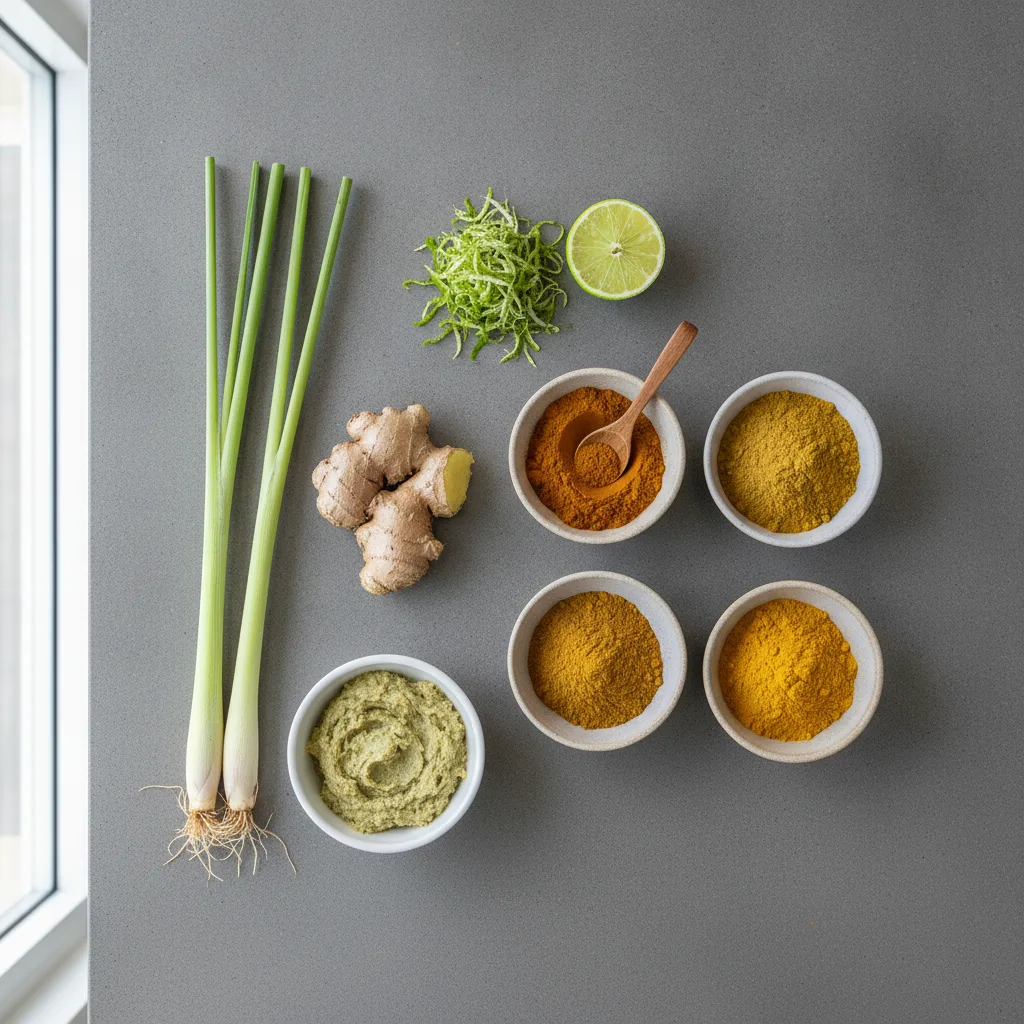
Yes, frozen lemongrass or lemongrass paste works, using one teaspoon of paste for one fresh stalk. Lime zest combined with a little ginger gives an acceptable approximation, but the flavour will be less persistent during cooking.
Which curry powder should you choose for an authentic Vietnamese curry?
Vietnamese blends, often sold under the name cà ri, are milder and contain more turmeric than Indian blends. Failing that, a supermarket mild curry powder works very well, with a slight increase in the amount of turmeric.
Is vegan Vietnamese curry suitable for children?
In its chilli-free version, yes. The mildness of the coconut milk and sweet potato makes it one of the easiest Vietnamese dishes for young palates to accept, served with plain rice.
How long should the curry simmer?
Allow around twenty minutes for the root vegetables cut into evenly sized pieces, then a further ten minutes after adding the tofu and mushrooms. Longer simmering concentrates the sauce but makes the vegetables excessively soft.
Can the curry be prepared the day before?
It is even recommended. The flavours of lemongrass and curry develop while resting in the fridge, and the dish gains depth. Add the fresh herbs and lime juice only when serving.