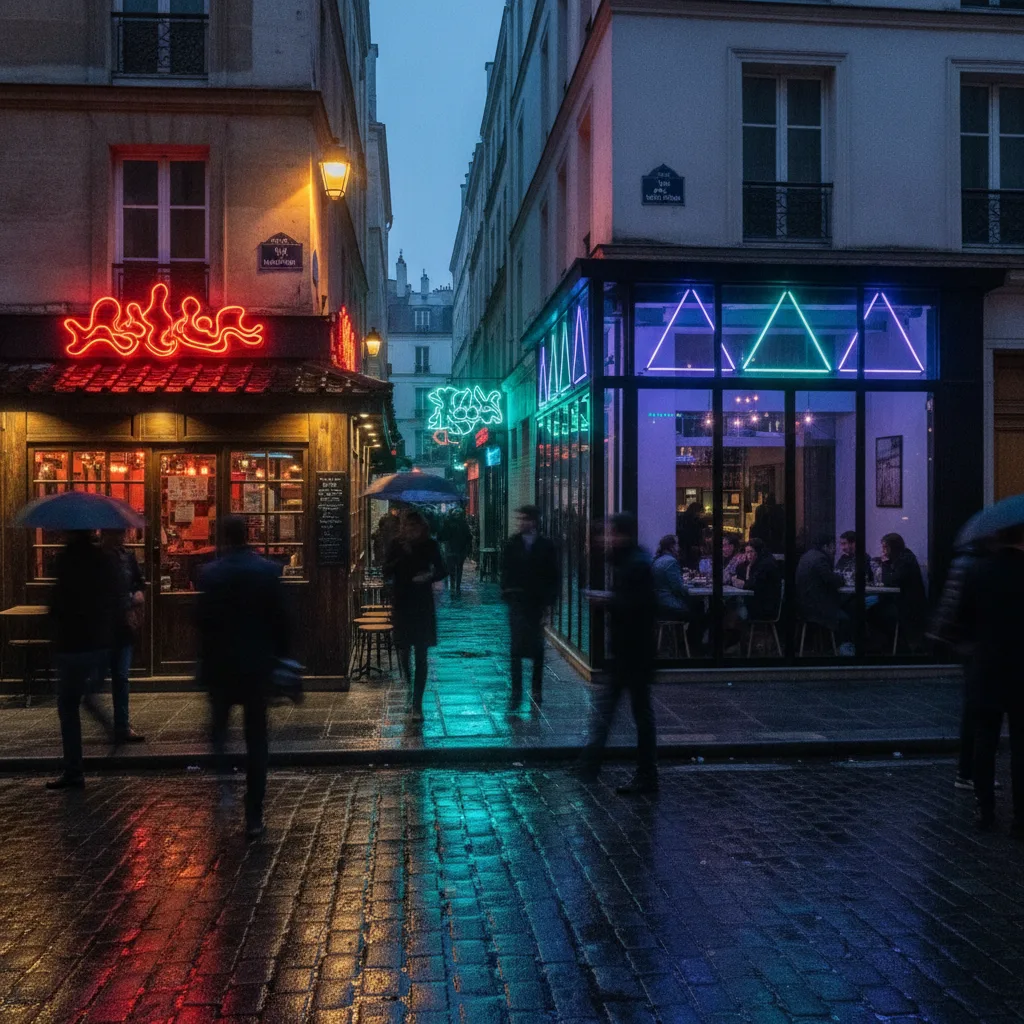
Vietnamese cuisine in Paris – particularly in the 19th arrondissement – has been experiencing a real boom for several years now. From neighbourhood eateries tucked away in the 19th arrondissement to contemporary bistros in the 11th, and including the pho hotspots of the 13th arrondissement, the range of options has grown, diversified and improved in quality.
Yet, behind this apparent abundance, one question remains: where can you find Vietnamese cuisine that is authentic, plant-based and truly rooted in eastern Paris? It is precisely to this question that Mây Bay, a 100% vegetarian and vegan Vietnamese restaurant based in Vincennes, offers a unique and committed response.
Vietnamese cuisine in eastern Paris | Guide 2026
Reading time: ~9 mins
- A brief summary
- The geography of Vietnamese cuisine in eastern Paris
- The signature dishes you’d expect to find in a Vietnamese restaurant in eastern Paris
- How to tell an authentic Vietnamese restaurant from a fusion restaurant
- Vietnamese cuisine and Parisian restaurant guides
- Vietnamese cuisine in eastern Paris: a comparative study
- Mây Bay: a unique position within this landscape
- Explore Vietnamese plant-based cuisine further in Vincennes
- FAQ
A brief summary
- The geography of Vietnamese cuisine in Paris: from the historic 13th arrondissement to the up-and-coming neighbourhoods of the north-east, the choice extends far beyond Chinatown alone.
- The great iconic dishes: pho, bún bò, bánh cuốn, bún chả giò and spring rolls – each one tells the story of a region and a tradition.
- How to spot an authentic Vietnamese restaurant: the key criteria for distinguishing between authentic and fusion cuisine.
- Vietnamese cuisine and food guides: recognition is still limited but on the rise.
- Mây Bay’s positioning: a plant-based, contemporary concept that occupies a culinary and thematic niche that remains largely unexplored in eastern Paris.
The geography of Vietnamese cuisine in eastern Paris
From the 13th arrondissement to the up-and-coming neighbourhoods
When it comes to Vietnamese cuisine in eastern Paris, the 13th arrondissement is naturally the place to start. For decades, Avenue de Choisy, Avenue d’Ivry and Rue Baudricourt have been home to a dense concentration of popular, often family-run eateries, a legacy of the gradual settlement of the Vietnamese – and, more broadly, the Asian – diaspora in this neighbourhood.
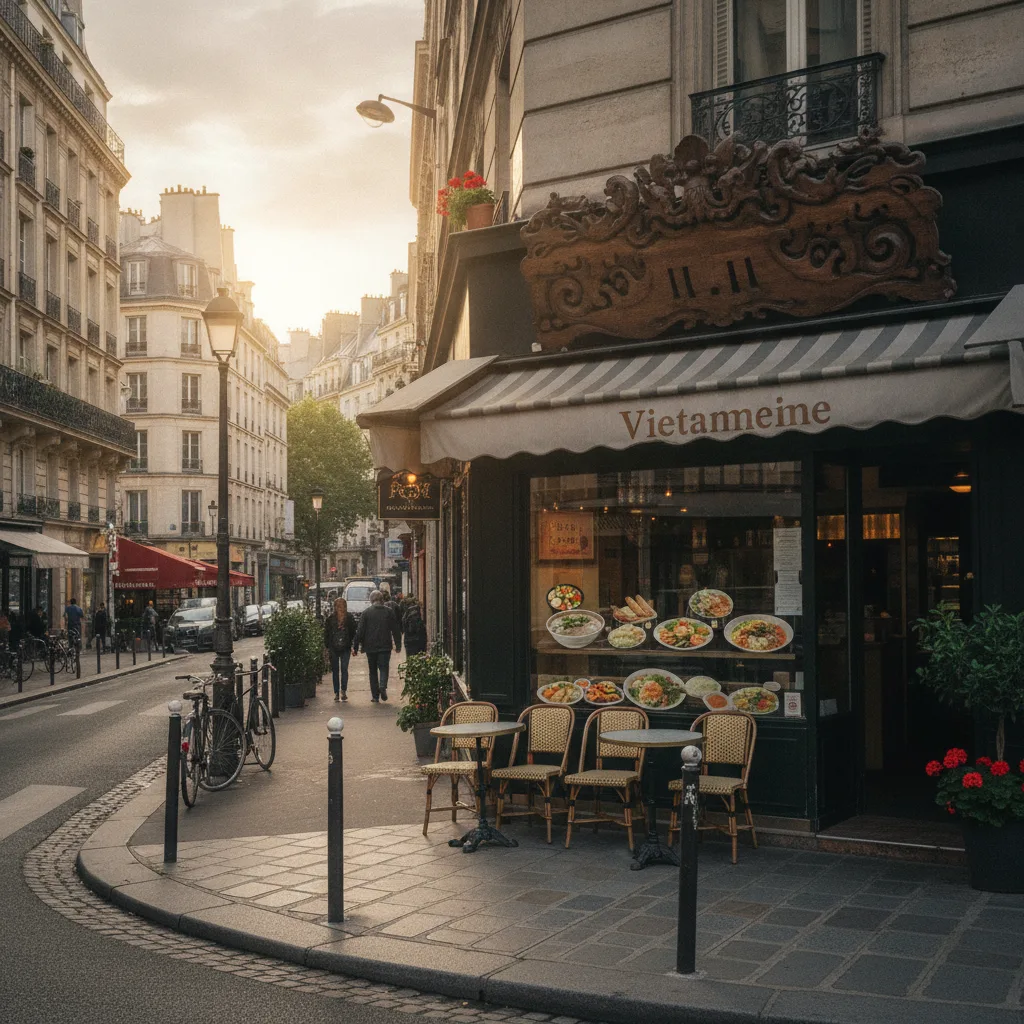
Here you’ll find canteens open early in the morning for pho lovers, specialist food shops, and no-frills eateries where the pho broth has been simmering since dawn. It is a historic hub, recognised as such by all the reputable food guides, from Fooding to Time Out and Les Tables d’Asie.
But the range of Vietnamese cuisine on offer in Paris has expanded considerably. The 11th arrondissement, a neighbourhood that has been undergoing rapid change for the past fifteen years or so, is now home to several Vietnamese restaurants or those heavily inspired by Vietnamese cuisine, often with a more contemporary twist. On Rue Amelot, Rue du Général Guilhem and around Père Lachaise, you’ll find establishments highly praised by lifestyle media such as Vogue and Le Fooding, which champion a reimagined Vietnamese cuisine – sometimes fusion – that always prioritises the quality of its ingredients.
Further north, in the 19th and 20th arrondissements, there are options available, though they are few and far between. A handful of neighbourhood eateries, often little-known, offer affordable and welcoming Vietnamese cuisine, much like what Le Bonbon Paris lists these as local spots on Rue de la Mouzaïa or Rue Étienne Dolet. These areas remain under-represented in editorial content, which is precisely why they present an opportunity for any business wishing to establish itself as the go-to destination for Vietnamese cuisine in eastern Paris.
The signature dishes you’d expect to find in a Vietnamese restaurant in eastern Paris
Soups, noodles and must-try specialities
To understand what a local resident or businessperson in eastern Paris is looking for when they walk into a Vietnamese restaurant, one must first understand the dishes that define this cuisine in the collective imagination.
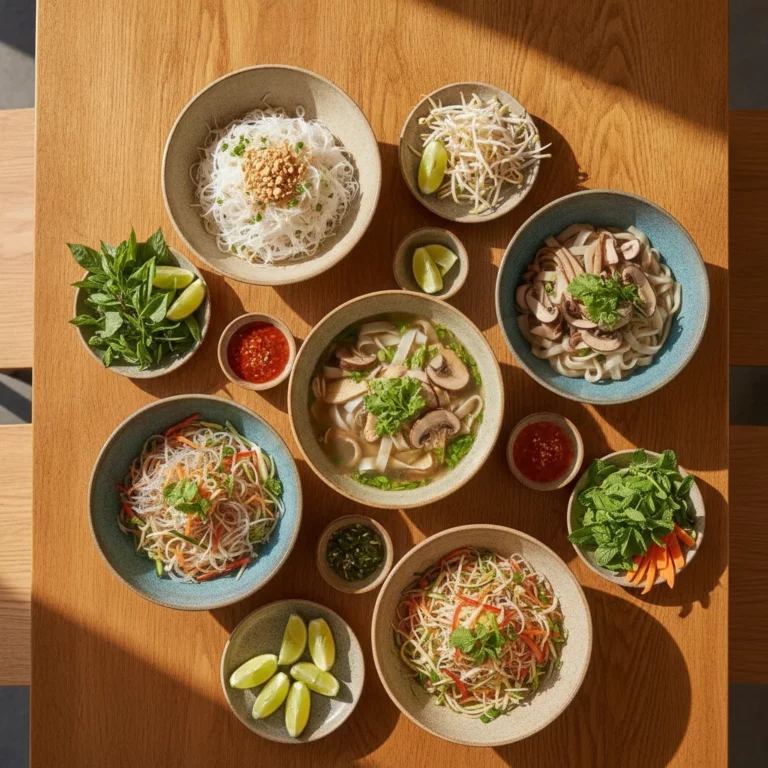
Pho is undoubtedly the best known. This rice noodle soup in a slowly simmered broth, garnished with fresh herbs, bean sprouts and condiments such as hoisin sauce or nước chấm, has become a staple of Vietnamese street food in Paris. A good pho can be recognised by the depth of its broth, the quality of its herbs and the generous portion of its toppings. Bún bò Huế, which is spicier and originates from central Vietnam, attracts a more discerning crowd, keen to discover the regional variations of Vietnamese cuisine.
The bánh cuốn, a stuffed steamed rice pancake, which you can try in its vegetarian version, the bún chả giò, vermicelli served with crispy spring rolls, fresh spring rolls, or hâ cáo – vegetable dumplings – form the basis of an authentic Vietnamese menu. Alongside these classics are noodle soups such as hủ tiếu, crisp vegetable salads and desserts made with coconut milk, tapioca or tropical fruits.
Good to know
Vietnamese cuisine differs from Chinese cuisine in its much greater use of fresh herbs, a reduced reliance on heavy sauces, and a preference for gentle cooking methods such as steaming or simmering in broth. This is one of the reasons why it is appealing to a public that is increasingly health-conscious.
How to tell an authentic Vietnamese restaurant from a fusion restaurant
This is a question often asked by lovers of Asian cuisine in Paris: how can you tell if a Vietnamese restaurant is truly authentic, or whether it serves a watered-down version adapted to Western tastes? There are a few pointers to help you find your way.
An authentic restaurant usually offers a concise but well-curated menu, focusing on specific regional dishes rather than a generalised selection mixing sushi, pad thai and spring rolls. Fresh herbs are on display in the dining room, served on the side or incorporated into the dishes. The stock is homemade, not reconstituted from an industrial concentrate. The ingredients reflect a genuine understanding of the cuisine of Northern or Southern Vietnam – two distinct culinary traditions that good restaurants know how to distinguish between.
A fusion restaurant, on the other hand, may offer high-quality cuisine, but it freely reinterprets culinary conventions. This is not a flaw in itself, provided that the messaging is clear. The problem arises when the label «Vietnamese» is used to describe a menu that is Vietnamese in name only.
Vietnamese cuisine and Parisian restaurant guides
Institutional recognition of Vietnamese cuisine in Paris remains limited. The MICHELIN Guide lists only a very small number of Vietnamese restaurants in Paris, including Bếp Việt, Rue Caillaux in the 13th arrondissement, which serves Vietnamese cuisine, including vegetarian options, and Mắm From Hanoi, Rue de Cléry in the 2nd arrondissement, specialising in contemporary cuisine inspired by Hanoi. This under-representation in recognised gourmet circles highlights a paradox: Vietnamese cuisine is one of the most popular in Paris, yet it is still perceived as a form of everyday cuisine rather than haute cuisine.
Le Fooding, which is more open to world cuisines and creative bistros, gives greater prominence to Vietnamese restaurants, highlighting in particular their value for money and atmosphere. TripAdvisor, for its part, offers a more comprehensive overview, with rankings based on customer reviews, which help identify the most popular establishments by district.
Key points
Vietnamese cuisine is one of the few Asian cuisines to enjoy a dual legitimacy in Paris: a popular legitimacy, fuelled by the Vietnamese diaspora’s decades-long presence, and a lifestyle legitimacy, championed by cultural and gastronomic media that highlight its freshness and lightness.
Vietnamese cuisine in eastern Paris: a comparative study
To gain a better understanding of the Vietnamese culinary scene in eastern Paris, here is a brief overview of the different neighbourhoods and what they have to offer.
| Borough | Job profile | Signature dishes | Listed in guidebooks |
|---|---|---|---|
| 13th (Choisy, Ivry, Baudricourt) | A historic hub, family-run and popular eateries | Pho, bún bò, rice noodles, stews | Highly rated (MICHELIN, Fooding, Time Out) |
| 11th arrondissement (Amelot, Père Lachaise) | Contemporary bistros, innovative cuisine, a trendy clientele | Bobun, creative banh mi, spring rolls | Forte (Vogue, Fooding, Restoaparis) |
| 19th (Mouzaïa) | Neighbourhood canteens, a low-key, community-based offering | Pho, daily specials, home-style cooking | Limited (Le Bonbon) |
| 20th (Étienne Dolet) | Small, local organisations that receive little media coverage | General Vietnamese cuisine | Very limited |
| Vincennes (east Paris, Val-de-Marne) | Contemporary plant-based concept, 100% vegetarian and vegan | Vegan pho, bánh cuốn, vegetarian bún chả giò, hủ tiếu | In development (TripAdvisor, GEO) |
Mây Bay: a unique position within this landscape
A Vietnamese plant-based restaurant in east Paris
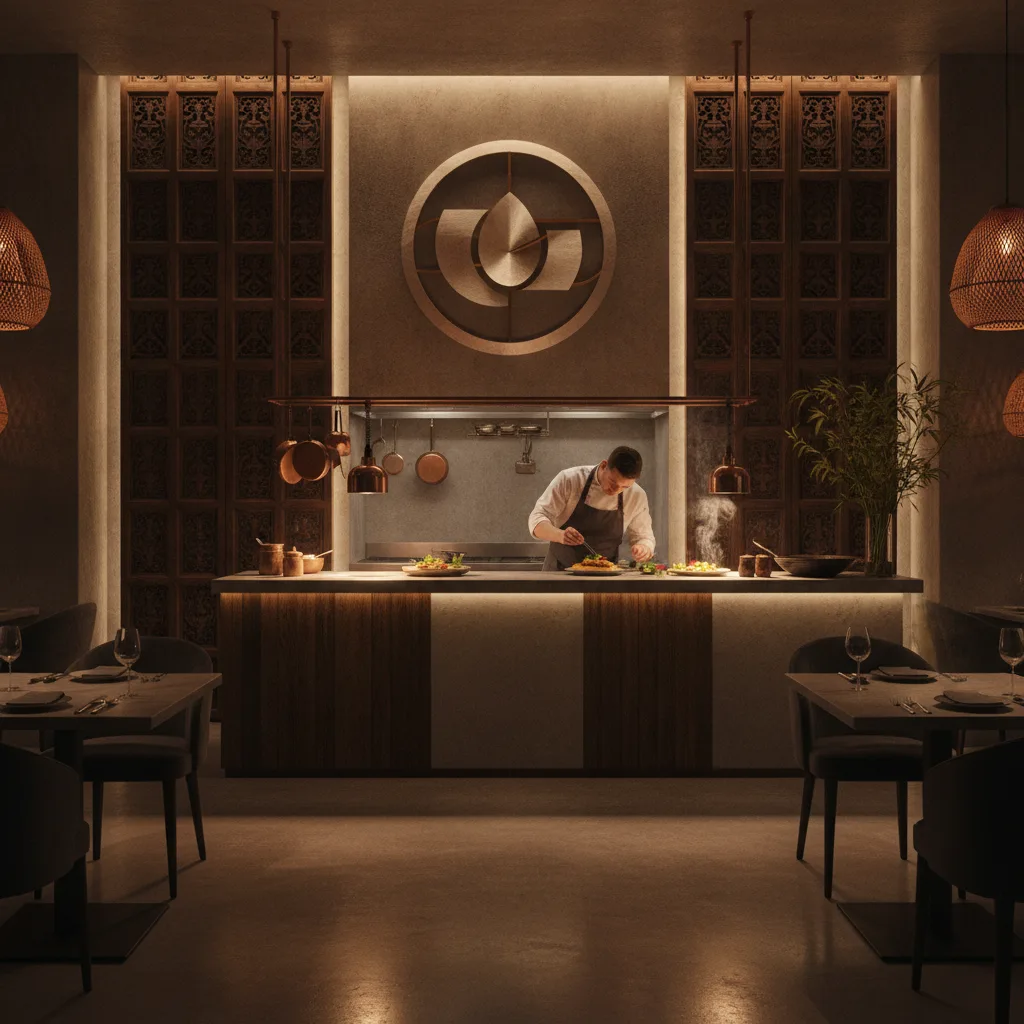
Within this landscape, Mây Bay occupies a niche that no one else clearly claims: that of a 100% vegetarian and vegan Vietnamese restaurant, based in eastern Paris, which combines authentic cuisine with a contemporary, relaxing setting. This concept, which combines a place to enjoy fresh, healthy dishes with an environment designed for well-being, directly meets the expectations of customers such as Claire, an executive in Fontenay-sous-Bois who looks forward to a quality lunch break once a week, or Fabrice, a business owner who appreciates home-cooked, flavourful and delicious food, and always leaves with a bag of takeaway meals.
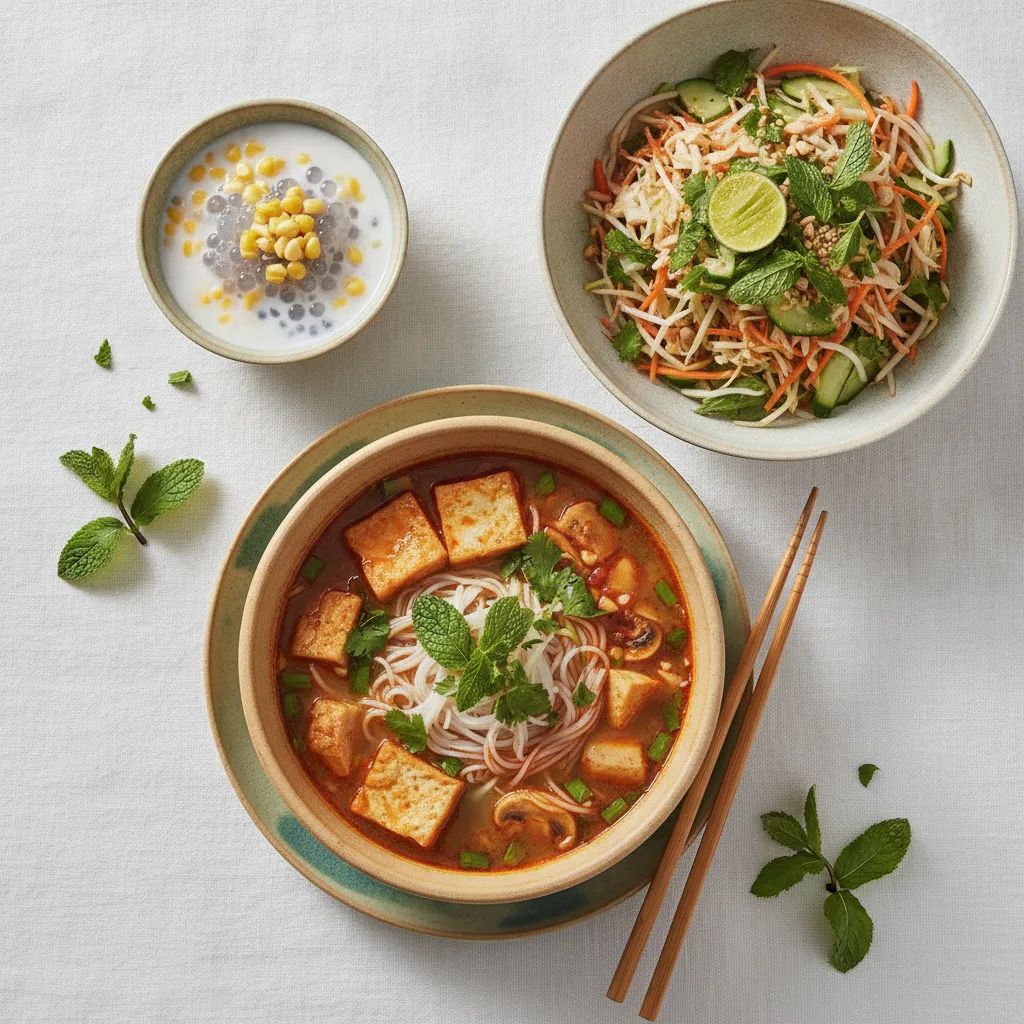
The map of Mây Bay illustrates this ambition: the Mây Bay Delight, homemade satay soup with vegetable stock, rice noodles, tofu and shiitake mushrooms, Gỏi Mây Bay, a vegetable salad, crispy vegetable spring rolls, or desserts such as chè chuối, bananas with tapioca pearls and coconut milk, form a cohesive menu, rooted in Vietnamese culinary tradition whilst being entirely plant-based.
For those who wish to discover Mây Bay without having to travel, or to treat someone to a unique culinary experience, there are gift vouchers are available, along with a takeaway option designed to suit the busy lifestyles of professionals in eastern Paris.
Mây Bay’s ambition extends beyond Vincennes alone. The aim is to become the benchmark for plant-based Vietnamese cuisine throughout eastern Paris and, gradually, across the Île-de-France region. In a landscape where Vietnamese cuisine is still largely associated with meat and bone broths, offering a 100 per cent plant-based version without compromising on authenticity or the richness of flavours, means opening up a new semantic and culinary path that no one has yet truly explored.
Explore Vietnamese plant-based cuisine further in Vincennes
Vietnamese cuisine in eastern Paris is rich, diverse and undergoing rapid change. From the historic 13th arrondissement to the trendy 11th, and from the residential 19th arrondissement to Vincennes, each neighbourhood offers its own take on this culinary tradition from Vietnam.
But beyond geography, there is a fundamental question: what sort of Vietnamese cuisine do we want to offer, and to whom? Mây Bay has made its choice: authentic, entirely plant-based Vietnamese cuisine, served in a contemporary setting, just a stone’s throw from the Bois de Vincennes. A clear response to growing demand in eastern Paris, which is still searching for its go-to spot for Vietnamese vegetarian cuisine.
In short: Vietnamese cuisine in Paris is plant-based in Vincennes
From the historic canteens of the 13th arrondissement to the contemporary bistros of the 11th and the more low-key spots in the 19th and 20th arrondissements, Vietnamese cuisine in Paris forms a rich and varied landscape, both down-to-earth and creative.
By establishing itself in this area with a 100 per cent % vegetarian and vegan offering, Mây Bay provides a clear solution for residents and professionals in eastern Paris who are looking for authentic, hearty, plant-based Vietnamese cuisine without having to travel to the capital’s central districts.
FAQ
Is Vietnamese cuisine suitable for people who don’t eat meat?
Yes, Vietnamese cuisine naturally offers plenty of vegetarian and vegan options. Vegetable broths, vegetable dumplings, fresh salads, coconut milk-based desserts and noodle soups can all be prepared without meat or animal products. Mây Bay has made this approach its core focus, offering a 100% vegetarian and vegan menu that does not compromise on the authenticity of Vietnamese flavours.
What is the difference between the cuisine of North Vietnam and that of South Vietnam?
The cuisine of Northern Vietnam, of which Hanoi is the culinary capital, favours more understated, less sweet flavours, with clear broths and fresh herbs providing a subtle accompaniment. Southern Vietnamese cuisine, influenced by trade and cultural exchanges, is more generous with sugar, spices and aromatic herbs. Northern pho is therefore more refined than its southern counterpart, which is served with a wider variety of toppings and sauces.
Are there any Vietnamese restaurants open in the evenings in eastern Paris?
Yes, several Vietnamese restaurants in eastern Paris offer an evening service. Mây Bay has a Evening and weekend menu Designed for dinners with family, friends or as a couple, in a peaceful, contemporary setting. It’s a particularly good option for residents of Vincennes, Fontenay-sous-Bois or Saint-Mandé who want to dine nearby without having to travel into central Paris.
Is banh mi really a Vietnamese dish?
Yes, the banh mi is a Vietnamese sandwich that originated from French influence in Vietnam, which introduced the baguette into the local cuisine. It is filled with pickled vegetables, fresh herbs, sauces and various other ingredients, depending on the region. It is one of the most striking examples of Indochinese fusion cuisine and has now become a staple of Vietnamese street food in Paris.
How do I book a table at Mây Bay?
Bookings at Mây Bay can be made directly online via the the restaurant’s contact and booking page. It is advisable to book in advance, particularly for weekday lunches and weekend dinners, to ensure you have a table. Customer reviews left by visitors are also available on the website to give you an idea of what to expect.