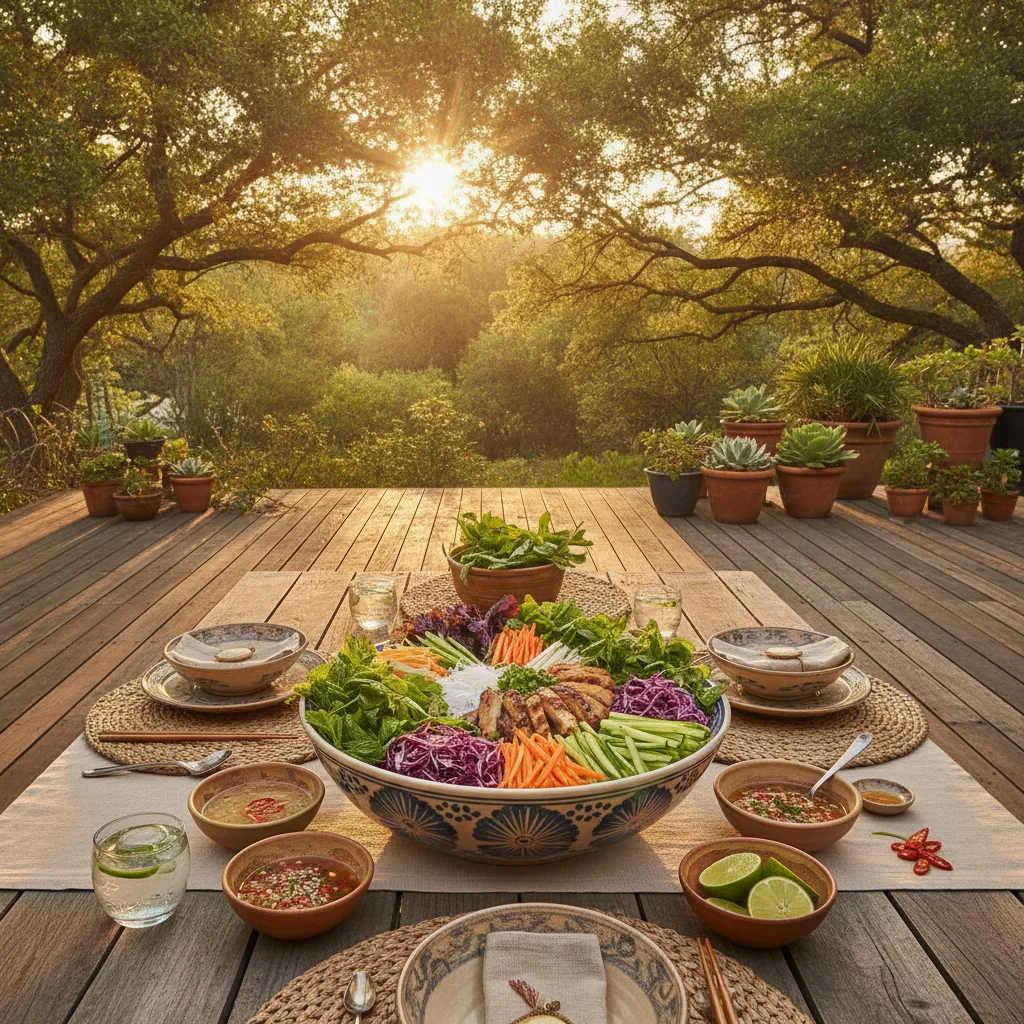
Eating less meat without sacrificing the pleasure of good food: that is precisely what flexitarianism offers, a dietary approach that is attracting more and more French people every year. Understanding the definition of flexitarianism also means understanding why millions of people today are seeking a balance between enjoying good food, health and environmental responsibility.
What if Vietnamese cuisine, with its abundance of plant-based ingredients and rich flavours, were the natural ally in this transition? At Mây Bay, a 100% vegetarian and vegan Vietnamese restaurant in Vincennes, we welcome guests every day who identify with this way of life, sometimes without even knowing the word that defines it.
Definition of ‘flexitarian’ | Vietnamese cuisine and the flexitarian diet
Reading time: ~10 mins
- A brief summary
- Definition of ‘flexitarian’: a portmanteau that says it all
- Flexitarian or vegetarian: what’s the practical difference?
- Flexitarianism in France: a social phenomenon in figures
- Why Vietnamese cuisine is ideal for flexitarians
- How to gradually become a flexitarian
- Is flexitarianism good for your health?
- Taking flexitarianism a step further at Mây Bay
- FAQ
A brief summary
Here are the main ideas discussed in this article:
- The definition of a flexitarian: what the term really means and how a flexitarian differs from a vegetarian or a vegan.
- The reasons why the French are cutting down on their meat consumption, ranging from health and environmental concerns to ethical considerations.
- Key figures on flexitarianism in France, which make it a major social phenomenon.
- Why Vietnamese cuisine is particularly well-suited to a flexitarian diet.
- How to gradually become a flexitarian, and which dishes to try at Mây Bay to get started.
Definition of ‘flexitarian’: a portmanteau that says it all
What does «flexitarian» mean?
The word «flexitarian» is a portmanteau formed from «flexible» and «vegetarianism». It refers to a person whose daily diet is based mainly on plant-based foods, but who continues to eat meat or fish occasionally, in small quantities, prioritising quality over quantity. The Robert dictionary has included this term with the following definition: «someone who limits their meat consumption, without being exclusively vegetarian».
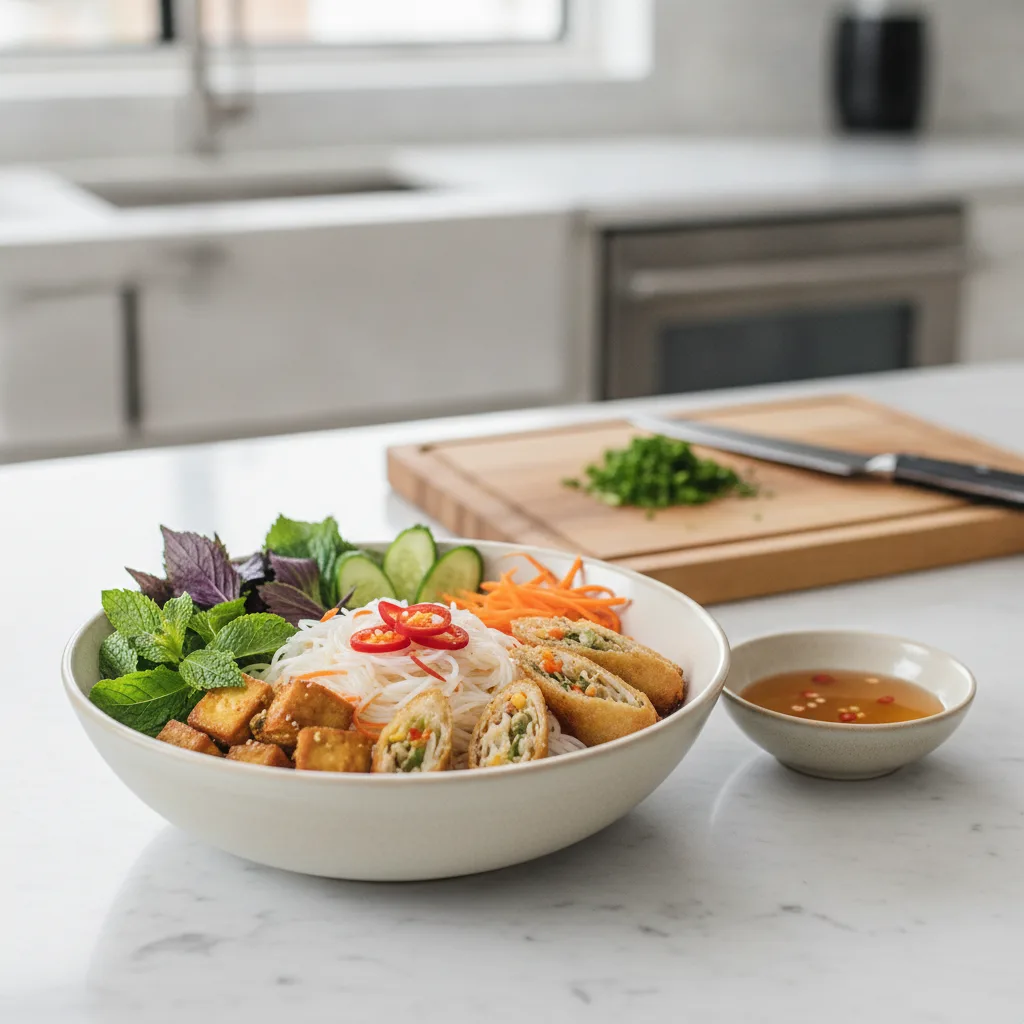
Unlike vegetarians, who exclude all animal meat, or vegans, who reject all animal-derived products, flexitarians retain freedom of choice. They may have an entirely plant-based meal for lunch and, a few days later, eat a high-quality fish without feeling any conflict. It is not a rigid diet; it is an evolving approach to eating.
According to FranceAgriMer, a flexitarian is someone who limits their consumption of meat, poultry and processed meat to less than once a day, including in ready meals. This operational definition makes it possible to clearly distinguish flexitarians from traditional omnivores, whilst avoiding the strict boundaries of vegetarianism.
Good to know
The term «flexitarian» has been officially included in the major French dictionaries, including Le Robert. Its use became widespread from the 2010s onwards, in response to a growing collective awareness of the environmental and health impacts of excessive meat consumption.
Flexitarian or vegetarian: what’s the practical difference?
The difference between a flexitarian and a vegetarian boils down to one thing: whether or not meat products are included in the diet. Vegetarians systematically exclude meat and fish. Flexitarians, on the other hand, still eat them, but in a sensible and infrequent manner. This distinction is important because it paves the way for a gradual dietary transition, without a sudden break from established habits.
Flexitarianism is often described as a semi-vegetarian diet, an intermediate step between a traditional omnivorous diet and strict vegetarianism. It is not a rule imposed from outside, but a personal choice that can be adapted depending on the day, one’s preferences and social circumstances. A flexitarian can easily have lunch at a vegetarian restaurant such as Mây Bay and fully enjoy a meat-free meal without seeing it as a constraint.
| Dietary profile | Meat consumption | Dairy products and eggs | Proportion of the French population |
|---|---|---|---|
| Omnivore | Every day, or almost every day | Yes | Approximately 57 to 74 % |
| Flexitarian | Occasionally, less than once a day | Yes | 24 to 39 %, depending on the study |
| Vegetarian | None | Yes | 3 to 5 % |
| Vegan | None | No | 1 to 2 % |
Sources: Le Figaro, Réussir Les Marchés, Elle à Table, data from Kantar Worldpanel and Ifop.
Flexitarianism in France: a social phenomenon in figures
Flexitarianism is not a fringe trend. According to an Ifop survey reported by Circuits Bio, 24 % of French people describe themselves as flexitarians, which amounts to around 10.6 million people. Kantar Worldpanel goes a step further by measuring the situation at household level: 35 % of French households include at least one flexitarian, and some recent estimates suggest 49 % households, compared with just 25 % six years earlier.
This rapid growth can be explained by a combination of several factors. Firstly, growing environmental awareness: reducing one’s meat consumption is one of the most effective individual actions one can take to minimise one’s environmental impact, particularly in terms of greenhouse gas emissions and water consumption. Secondly, health considerations: limiting animal protein in favour of plant-based protein, pulses and whole grains is associated with a more balanced diet. Finally, growing concern for animal welfare is prompting many consumers to rethink the role of meat in their diet, without necessarily taking the step towards vegetarianism.
These figures confirm that flexitarianism now spans all social backgrounds, all age groups and all geographical areas. Among our guests at Mây Bay, we find precisely these people: executives, self-employed professionals, parents, and young working people, all seeking tasty, healthy dishes that align with their values.
Why Vietnamese cuisine is ideal for flexitarians
A cuisine with a natural focus on plant-based ingredients
Vietnamese cuisine is, by its very nature, plant-based. It is built around vegetable stocks simmered for hours, fresh aromatic herbs, rice vermicelli, tofu, pulses and dishes that develop an intense plant-based umami flavour without the use of meat. This is precisely what a flexitarian is looking for: meat-free dishes that don’t leave you feeling as though something is missing.
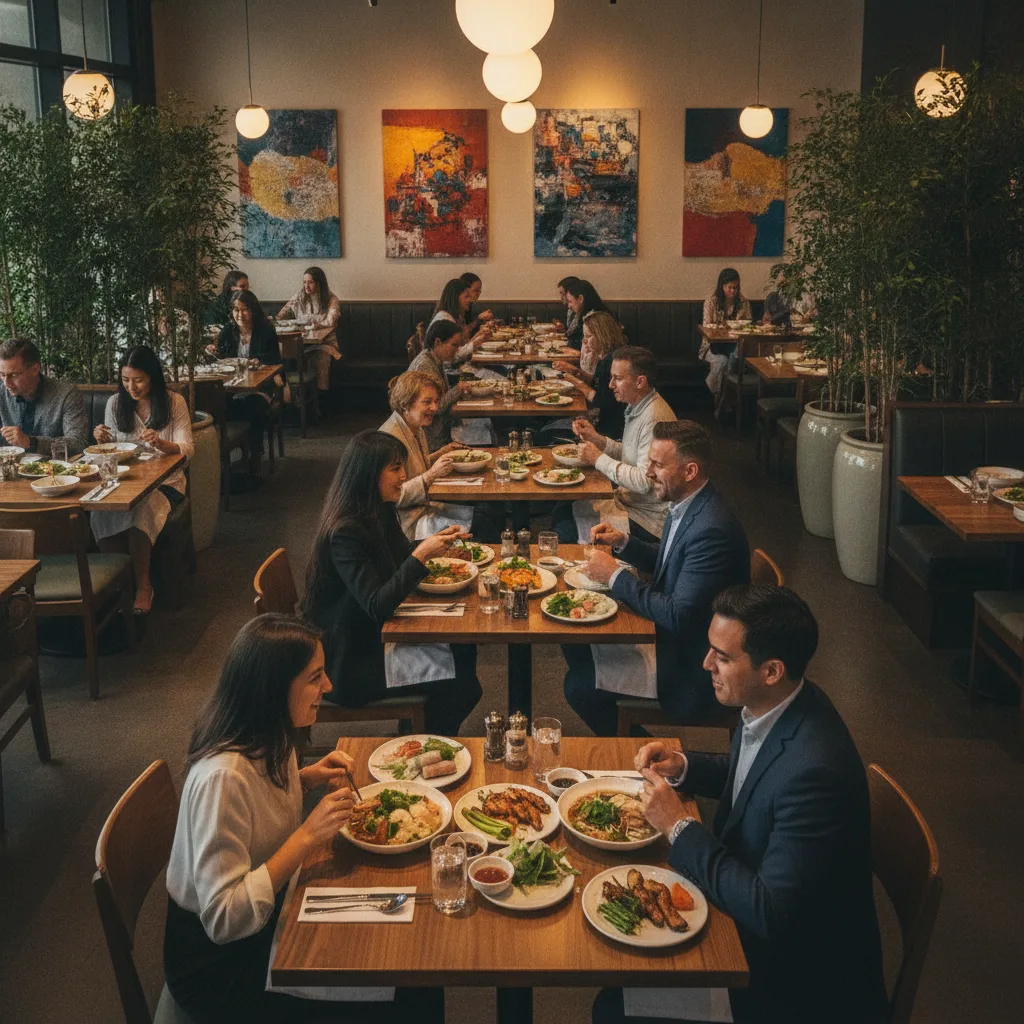
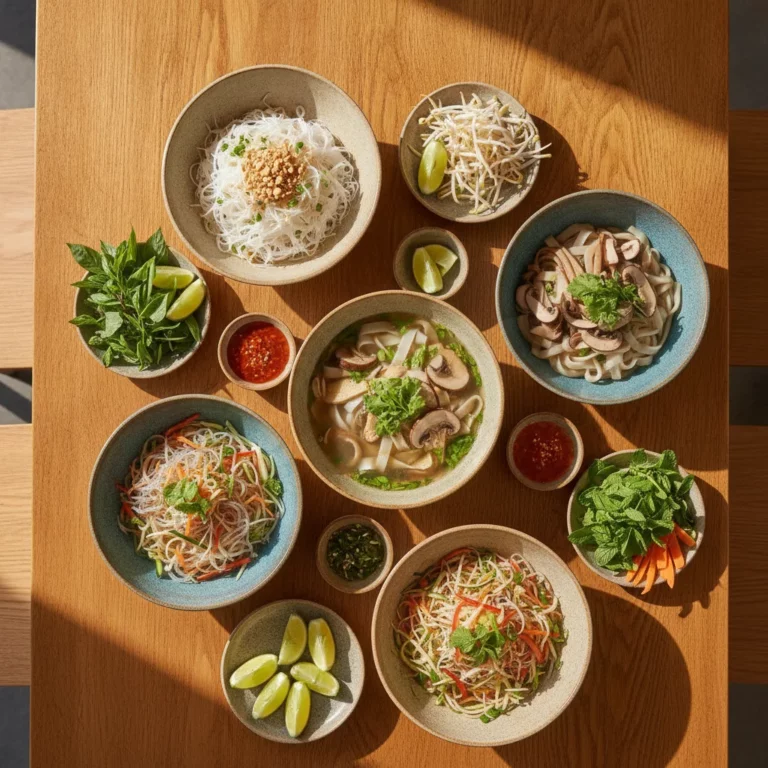
At Mây Bay, our cuisine embodies this principle every day. Our Bun Cha Gio, for example, is a bowl of vermicelli served with crispy vegetable spring rolls, fresh raw vegetables and a tasty sauce: a hearty, satisfying meal that’s every bit as good as its meat-based equivalents. Our Goi May Bay, a vegetable salad with a variety of textures and tangy notes, perfectly illustrates the richness of Vietnamese vegetable cuisine. And for lovers of comforting soups, our Mây Bay Delight, a homemade satay soup with vegetable stock, rice noodles, tofu and shiitake mushrooms, is just the thing when you’re craving a rich and comforting vegan pho.
These dishes are not watered-down substitutes. They are authentic recipes, drawn from a culinary tradition in which vegetables have always played a central role. Vietnamese cuisine has not needed to reinvent itself to appeal to flexitarians: it already did so.
Key points
Vietnamese cuisine is naturally well-suited to a flexitarian diet: rich in plant-based proteins, fresh herbs and homemade stock, it offers a complete culinary experience without meat. At Mây Bay, all our dishes are vegetarian or vegan, making it the ideal choice for a lunch break or dinner that fits in with a flexitarian lifestyle.
How to gradually become a flexitarian
Becoming a flexitarian doesn’t require an overnight revolution. It’s a gradual change in diet, which can start with one or two meat-free meals a week. The aim isn’t to deprive yourself, but to discover other sources of enjoyment and nutrients.
Here are a few simple steps to help you make this change effortlessly:
- Start by replacing one meat-based meal a week with a vegetarian dish that you really enjoy, such as a bowl of vermicelli with vegetables or a tofu and mushroom soup.
- Explore world cuisines that are naturally plant-based, such as Vietnamese, Indian or Mediterranean cuisine, which offer delicious and filling meat-free dishes.
- Prioritise quality when eating meat or fish, by choosing local, certified products sourced through short supply chains.
Whether it’s for a business lunch or a family dinner, Mây Bay also offers takeaway options, ideal for those who are short of time but don’t want to compromise on quality. Our hot drinks menu, featuring herbal teas with lemongrass and goji berries or honey, ginger and lime, rounds off an experience that goes far beyond a simple meal.
Is flexitarianism good for your health?
The potential benefits for the body
Studies consistently link the flexitarian diet to health benefits. By reducing the intake of animal protein in favour of plant-based protein, this diet promotes a more balanced diet and increased intake of fibre, vitamins and antioxidants. Pulses, whole grains and fresh vegetables, which form the basis of this diet, are recognised for their role in preventing many chronic diseases.
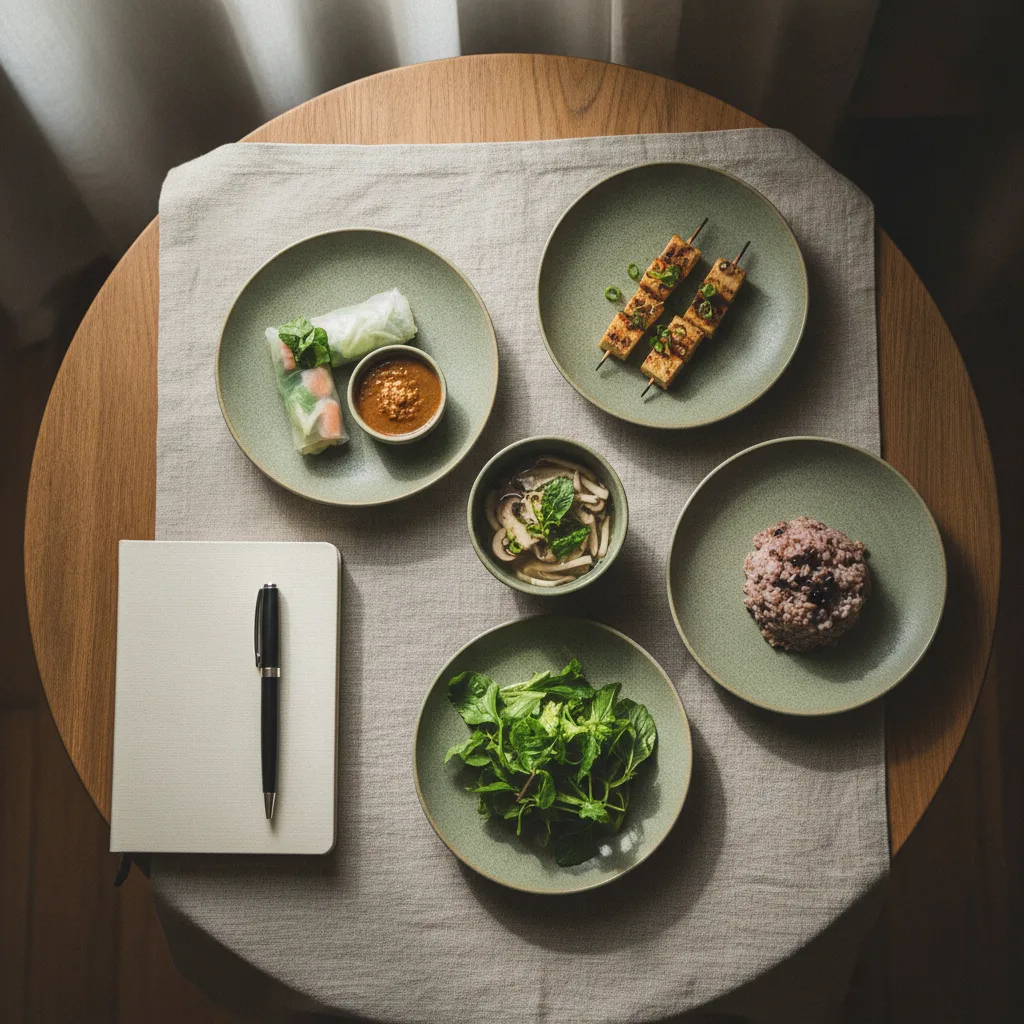
Flexitarianism does not lead to nutritional deficiencies: you simply need to ensure sufficient variety in your sources of plant-based protein and to make sure you are getting enough iron, vitamin B12 and omega-3. For the vast majority of flexitarians, who continue to consume animal products occasionally, these nutritional requirements are naturally met without the need for supplements.
By choosing to have lunch at Mây Bay, you are making a choice that is consistent with this philosophy: fresh, home-cooked dishes, free from additives, prepared with seasonal vegetables and authentic ingredients. This is the very essence of our concept, which combines a place to enjoy healthy food with a contemporary, relaxing setting, designed to ensure that every meal is a moment of genuine well-being.
Taking flexitarianism a step further at Mây Bay
Flexitarianism is much more than just a passing fad. It is a practical and accessible response to the challenges of our time, embraced by millions of French people who are looking to eat better without restricting themselves. Vietnamese cuisine, with its deep-rooted plant-based tradition and complex flavours, is one of the best allies of this approach.
At Mây Bay, we embody this combination every day: authentic cuisine that is 100 % vegetarian and vegan, in Vincennes, in the heart of eastern Paris. Whether you’re a committed flexitarian, simply curious, or just looking for a good meat-free meal, our restaurant is the perfect choice for you.
FAQ
How many times a week can you eat meat if you’re a flexitarian?
There is no set rule. According to FranceAgriMer, the recommended limit is less than one portion of meat per day. In practice, many flexitarians eat meat or fish two to four times a week, gradually reducing their intake in line with their goals.
What meat-free Vietnamese dishes can you eat at Mây Bay?
Our entire menu is vegetarian or vegan. Among our most popular dishes are the Bun Cha Gio with rice vermicelli and vegetable spring rolls, the Délice de Mây Bay (satay soup with tofu and shiitake mushrooms), the Ha Cao vegetable dumplings, Banh Cuon (Vietnamese pancakes) and Goi May Bay (vegetable salad).
Is flexitarianism suitable for children?
Yes, provided you ensure a varied nutritional intake. A diet rich in pulses, whole grains, eggs and dairy products generally meets children’s nutritional needs. It is recommended that you consult a doctor or a dietitian to adjust portion sizes according to age.
Can we book a table at Mây Bay for a flexitarian or vegetarian group?
Yes, Mây Bay welcomes groups and offers tailored menus. Bookings can be made directly online or by telephone via our website Contact and bookings. We also offer gift vouchers so you can treat your loved ones to a vegetarian Vietnamese dining experience.
What is the difference between a vegetarian restaurant and a flexitarian restaurant?
A vegetarian restaurant, such as Mây Bay, does not serve any meat or fish dishes. A flexitarian restaurant, on the other hand, offers a predominantly plant-based menu but also includes a few high-quality meat options. Both types of restaurant are ideal for flexitarian customers.
Does flexitarianism really help to reduce one’s environmental impact?
Yes. Meat production, particularly beef, is one of the activities that generates the most greenhouse gas emissions and consumes the most water and agricultural land. Reducing one’s meat consumption, even if only slightly, makes a measurable contribution to reducing one’s individual ecological footprint.