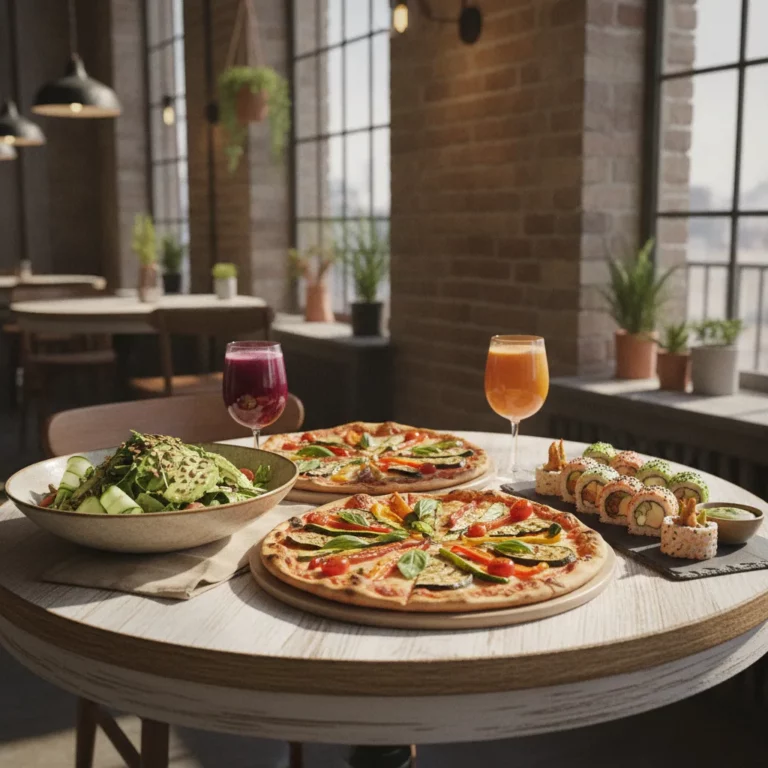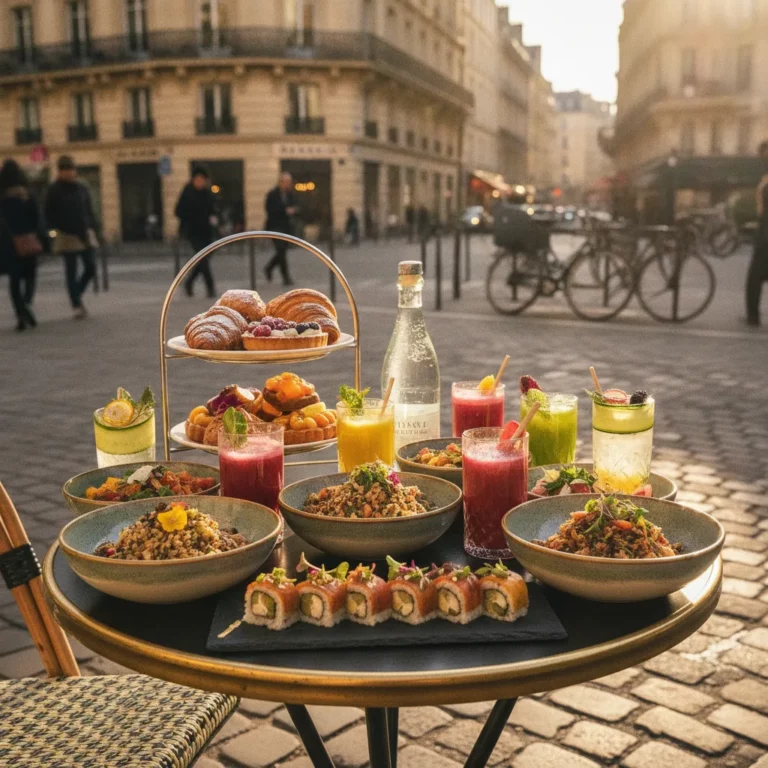
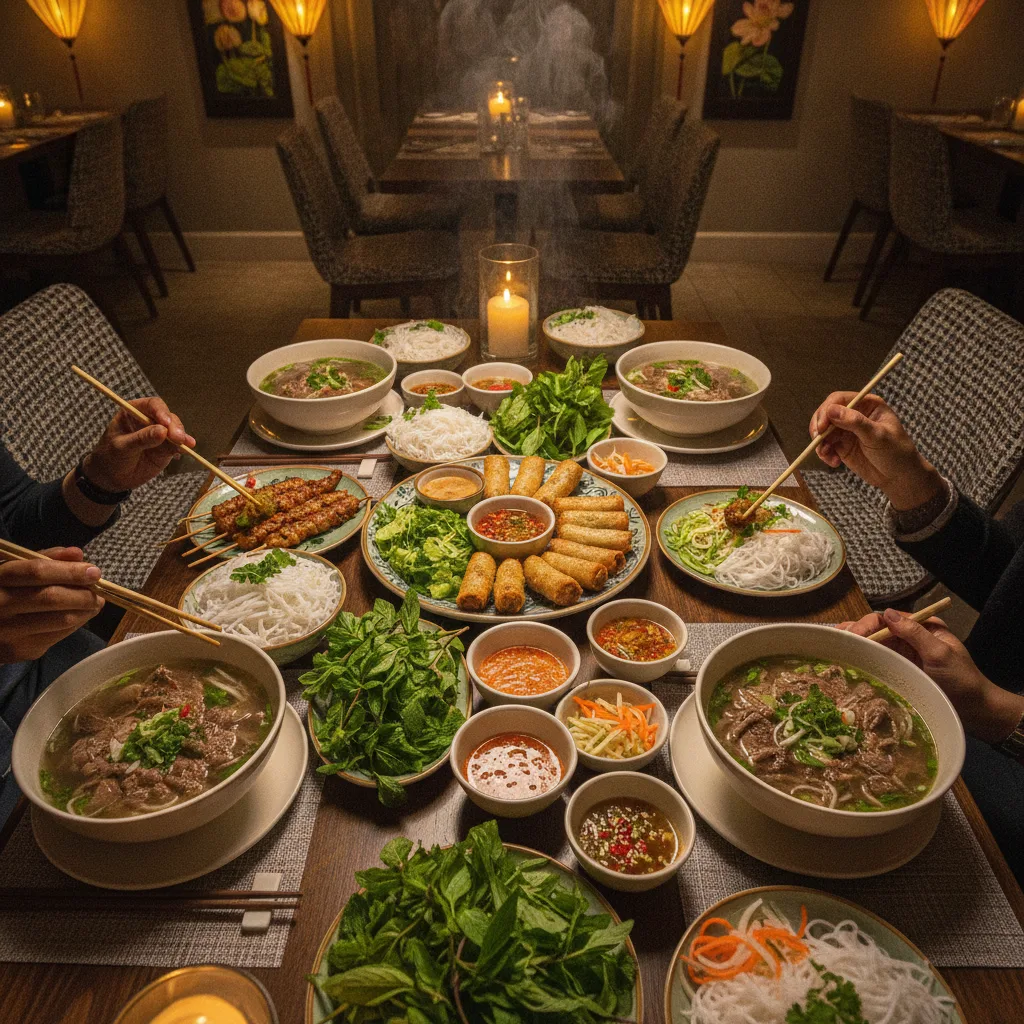
Sharing a table, passing round the plates, trying a bit of everything rather than sticking to a single dish: the way we eat out has changed. Shared dishes have become established as an informal, flexible and convivial way of dining, popular for everything from team lunches to after-work get-togethers and dinners with friends.
At Mây Bay in Vincennes, this approach comes naturally: Vietnamese cuisine has always been conceived as the centrepiece of the table, with textures and temperatures that complement one another. Here’s how to put together a truly convivial meal, how many plates to provide, and which dishes to choose so that no one goes hungry.
Dishes to share with friends: our ideas for a cosy get-together in 2026
Reading time: ~8 mins
- Why sharing platters have become a staple in the restaurant industry
- Tapas, small plates or family-sized dishes – how to make sense of it all
- How many sharing plates should you order per person?
- Our sharing dishes at Mây Bay: Vietnamese-style and 100% plant-based
- Putting together a cocktail reception or a group meal
- Structuring a restaurant menu around sharing
- Take it a step further with dishes to share at Mây Bay
- Frequently asked questions about dishes to share
Why sharing platters have become a staple in the restaurant industry
This trend is not a recent one. It began with appetiser platters and has since expanded to include entire menus centred around carefully crafted small dishes, in both contemporary bistros and more upmarket restaurants.
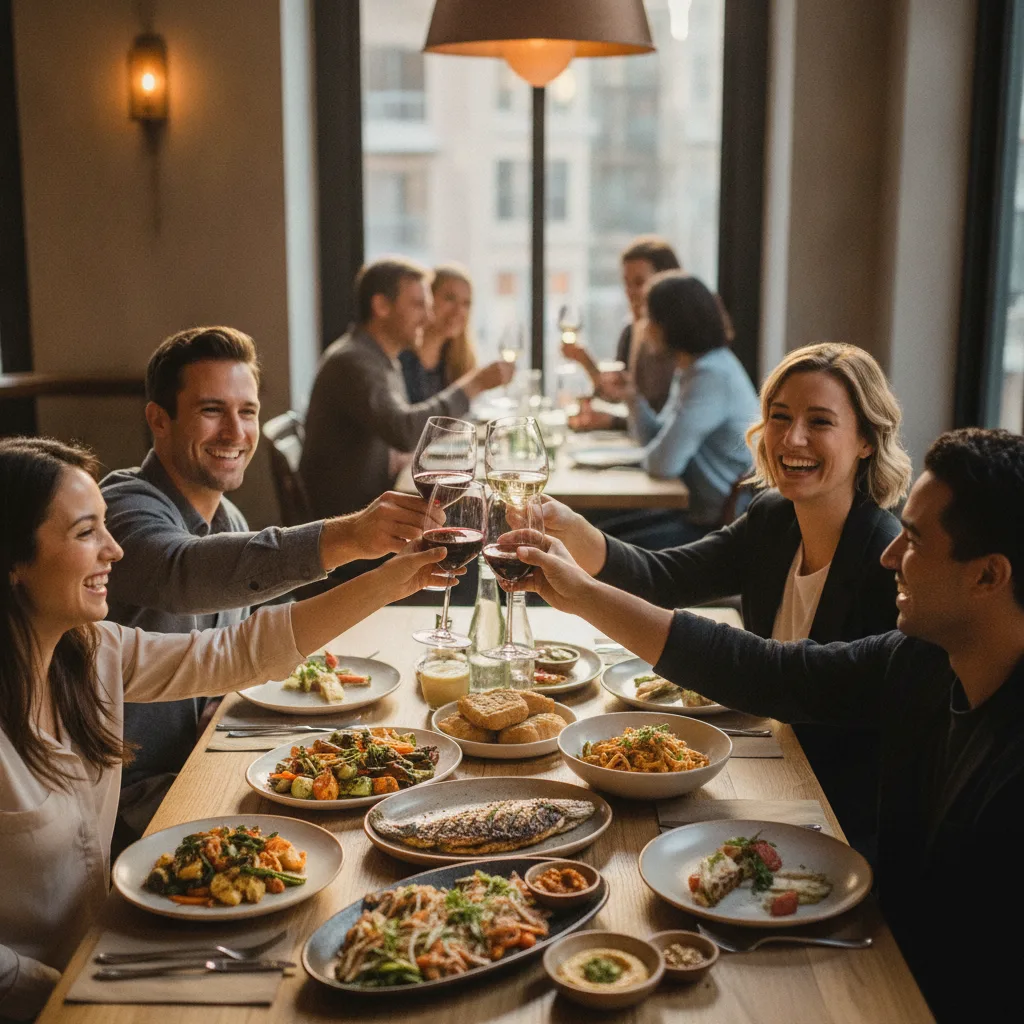
A new way to enjoy a meal at a restaurant
Industry analyses point to a a shift in habits driven in particular by millennials, who favour a less formal meal than the traditional sequence of starter, main course and dessert, and prefer to offer a variety of flavours in a single sitting. Guidebooks and specialist media, from Gault&Millau From Sortiraparis to TheFork, Paris Secret and the Tribune de Lyon, these publications now devote entire sections to restaurants where dishes are shared – a sign that this format has become a category in its own right, rather than merely a passing fad.
From the restaurateurs’ point of view, there is also an economic incentive. The professionals interviewed on the subject explain that tapas and small portions enable them to maintain reasonable profit margins thanks to the number of plates ordered during a single service, coupled with a faster turnover of dishes. The North American catering consultants go a step further and recommend making sharing plates a key category on the menu, even if it means reducing the number of main courses. For the customer, the benefit lies elsewhere: a meal put together step by step, a richer culinary experience, and a meal that remains a shared occasion.
Tapas, small plates or family-sized dishes – how to make sense of it all
Three formats are often confused, yet they serve different purposes. Tapas and small plates are designed for tasting a succession of dishes, with food served to be shared and at a brisk pace. The family-style dish, on the other hand, is placed in the centre of the table and shared amongst the guests; it is better suited to a leisurely, seated meal. The tasting menu for sharing combines the two, with the order of courses determined by the kitchen.
The table below summarises the key differences to bear in mind when making your choice.
| Format | Portions | Second-hand | Meal schedule |
|---|---|---|---|
| Tapas and small dishes | 3 to 4 per person | Cocktail reception, after-work drinks, dining bar | Dishes arriving as the meal progresses |
| Centrepiece | Serves 2 to 4 people | A cosy meal with friends, a family lunch | A unique highlight, extended opening hours |
| Tasting menu to share | 5 to 7 community services | Tasting dinner, business meal | A progression dictated by the kitchen |
| Appetiser platter | Serves 2 to 3 people | Early evening, waiting for a table | Constant snacking |
How many sharing plates should you order per person?
The most common guideline, as set out in Parisian guides specialising in sharing meals, is three to four small plates per person for a full meal. Any fewer and the diners will be left feeling hungry; any more and the flow is disrupted and the dishes get cold.
The real issue isn’t quantity but balance: you need to alternate between hot and cold, crispy and melt-in-the-mouth, tangy and rounded. This is precisely the essence of Vietnamese cuisine, which constantly plays on the contrast between fresh herbs, light fried dishes, fragrant broths and sauces.
A meal to share in three courses
At the table, a balanced meal is put together in three simple steps, which can be adapted to suit your appetite and the time you have available.
- A crisp, fresh starter to begin with, featuring spring rolls and a salad to awaken the palate.
- A steamed or tender, milder dish that sets the tone for the meal and takes pride of place in the centre of the table.
- A warm, fragrant time of year, with broth or a stew simmering on the hob, which we serve ourselves in turn.
Good to know
When sharing a meal, the order in which the dishes are served is just as important as the number of them. Asking the waiting staff to space out the courses avoids the ‘buffet’ effect and gives you time to savour each dish.
Our sharing dishes at Mây Bay: Vietnamese-style and 100% plant-based
Our concept is based on combining a place to enjoy fresh, healthy food with a contemporary, relaxing setting. Everything on offer is vegan and vegetarian, without exception, which makes group meals much simpler: there’s no need to cater for everyone’s individual dietary requirements – everyone can help themselves from the same dishes. This is a key selling point for a team lunch or a dinner with friends where flexitarians, vegetarians and those simply curious about plant-based food all come together.
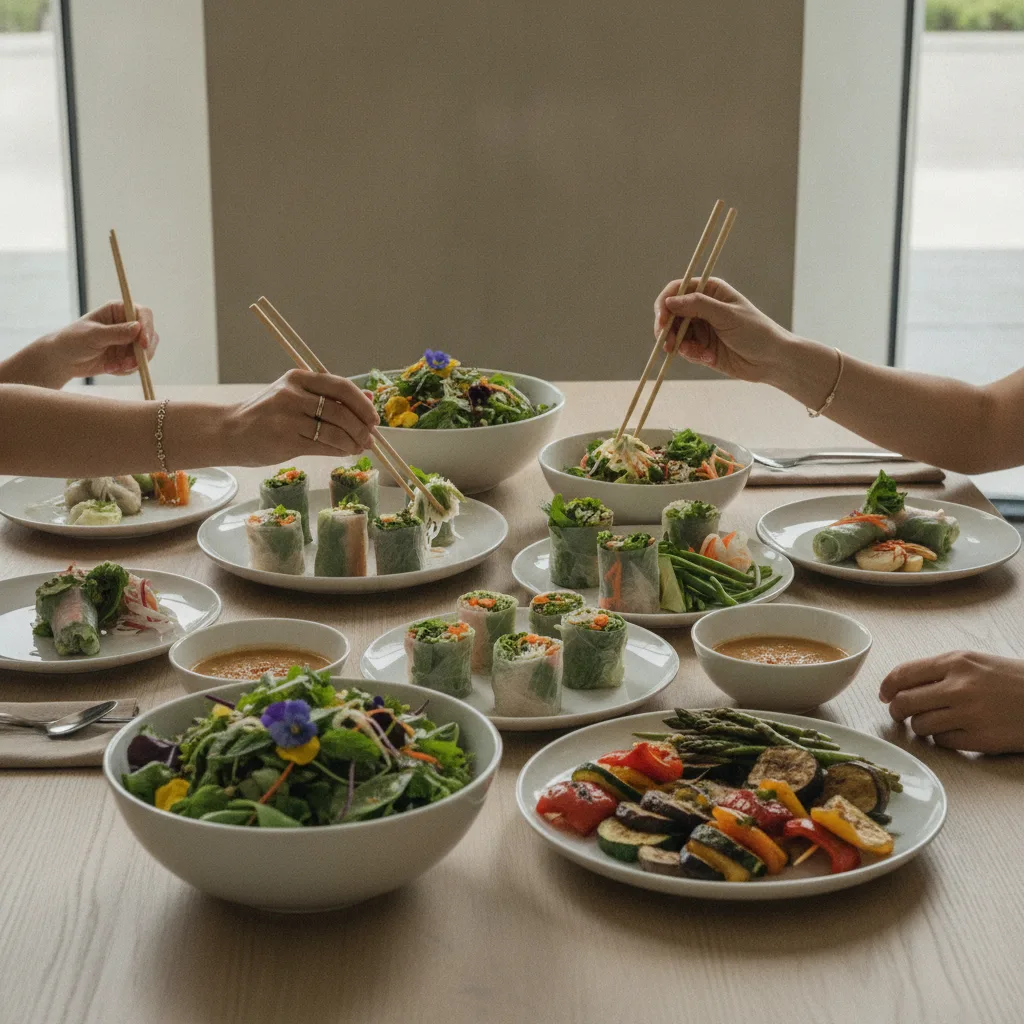
Examples of Vietnamese dishes to share at Mây Bay
To start the meal, the Cha Gio, our crispy vegetable spring rolls, remain a sure-fire favourite for sharing, as does the Goi Mây Bay, our fresh and tangy vegetable salad. The Ha Cao, vegetable dumplings, and the Banh Cuon, our steamed Vietnamese pancake, provide the soft texture that balances out the crispiness.
For the main course, the Bà Dung’s stew, a Vietnamese-style curry served with plain rice, is the perfect family dish to share, whilst the Hu Tieu Mây Bay and the Délice de Mây Bay – our house-made satay soup with vegetable stock, rice noodles, tofu and shiitake mushrooms – are ideal for sharing at the end of a meal. The Bun Cha Gio, vermicelli with spring rolls, our plant-based version of bo bun, remains the signature dish that many order to try it for the first time before ordering it on its own.
When it comes to sweet treats, the sharing continues effortlessly with Banh Bao Chi (coconut pearls), Banh Bo (puffed rice cake), Che Chuoi (bananas with tapioca pearls, coconut milk and peanuts), or the Hoa Qua cocktail (a seasonal fruit salad). As for drinks, these dishes pair just as well with fresh coconut juice as they do with a Vietnamese beer or a lemongrass and goji berry infusion – a lighter option for a quick lunch.
Putting together a cocktail reception or a group meal
A successful cocktail dinner relies on a generous starter platter followed by two or three hot dishes. In the vegetarian version, the traditional starter platter is replaced by an assortment of spring rolls, steamed dumplings and salad, to be nibbled at with your fingers or chopsticks. The concept is similar to that of Japanese izakayas, where people eat and drink in small portions, with no hierarchy between the dishes.
Whether you’re planning a cosy meal with friends or a business lunch, it’s best to book in advance and let us know how many people will be joining you, as large groups require specific arrangements in the dining room. We also offer a takeaway option, popular with those who want to make the most of their meal at home or organise a buffet at the office, as well as a gift voucher for a tasting menu. Our evening and weekend menus, which offer a wider selection, are particularly well suited to sharing.
Structuring a restaurant menu around sharing
For a restaurant owner, the shift towards dishes designed for sharing involves three trade-offs frequently cited by catering experts:
- Include garnishes directly on the plates rather than charging for them separately.
- Reduce the number of main courses in favour of smaller portions.
- Clarify the terminology used on the menu so that the customer immediately understands what is being shared.
The Paris and Lyon guides show dishes priced mostly between eight and eighteen euros, a price range that allows diners to order multiple dishes without hitting a price threshold.
Seasonal changes also play a part. A sharing menu works best with a few permanent favourites and two or three rotating dishes, which give guests a reason to come back. That’s the thinking behind our starter of the day, our dish of the day and our dessert of the day, which are chosen according to what’s available at the market and the seasons.
Key points
The ‘sharing’ format works best when the waiting staff look after the customer, recommending a suitable number of plates for the table and time the serving of dishes.
Take it a step further with dishes to share at Mây Bay
Dishes designed for sharing are not just a menu trend; they reflect a more flexible, sociable and adventurous way of eating. Vietnamese cuisine lends itself naturally to this, as it is designed to be the centrepiece of the table, with herbs, broths and textures that really come into their own when combined.
At Mây Bay in Vincennes, this approach is combined with a menu that’s entirely plant-based, fresh and homemade. The best thing to do is to come with a group, order plenty and pass the dishes round.
FAQ – Frequently asked questions about dishes to share
Do you need to book a table for a group meal?
Yes, this is strongly recommended for groups of four or more. Tables designed for sharing require a suitable seating plan, and making a booking also allows you to let us know about any special dietary requirements or tight time constraints, such as a lunch break limited to one hour.
Are dishes designed for sharing suitable for a business lunch?
Absolutely, provided you plan ahead. A business lunch often lasts less than an hour and a half, so it’s best to specify the format you’d like on arrival so that orders can be grouped together. An invoice in the company’s name can be issued for expense claim purposes.
Can we put together a meal to share for takeaway?
Yes, our takeaway menu covers most of the regular menu. The crispy starters and steamed dishes travel well, whilst the soups are packed separately from the stock. Placing an order in advance by telephone reduces the waiting time when you come to collect your order.
How can you manage allergies when sharing a meal?
Sharing meals requires extra care, particularly with nuts, soya and sesame, which are widely used in Asian cuisine. Please mention any allergies when booking so that certain dishes can be served separately.
Which drink goes best with a selection of small dishes?
A lightly sweetened, refreshing drink works better than a single pairing, as the flavours change from one course to the next. Fresh coconut water, green tea or lemongrass tea will see you through the whole meal.