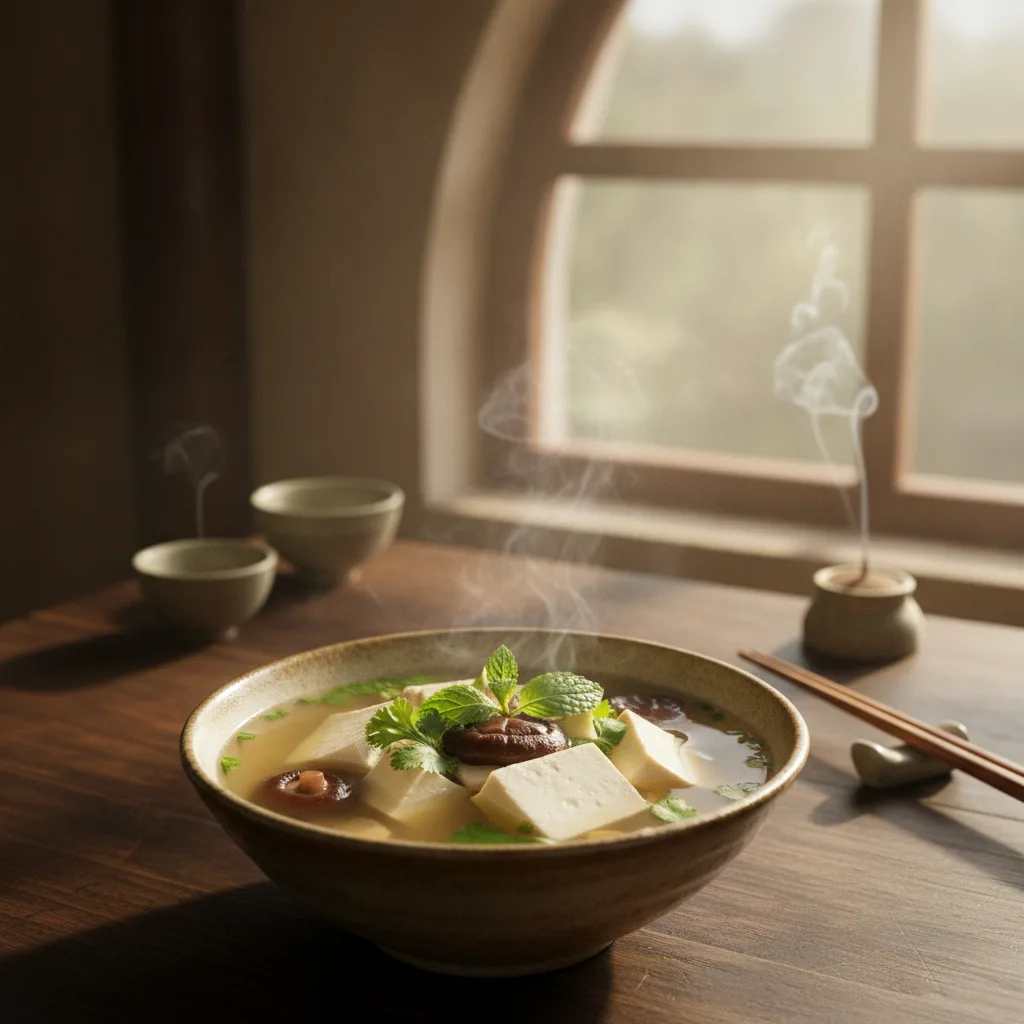
Vietnamese Buddhist cuisine is not a recent trend born out of the popularity of plant-based eating in Europe. It is rooted in an ancient religious and family tradition – that of *ăn chay* – which has shaped life in pagodas and temple kitchens in Vietnam for centuries.
To understand this tradition is to understand why a vegetable stock, some tofu, shiitake mushrooms and a handful of aromatic herbs are all it takes to create a complete and flavourful meal. At Mây Bay in Vincennes, it is precisely this heritage that we serve, through a 100% vegetarian and vegan menu. Here’s what this cuisine really entails: its vocabulary, its ingredients and its dishes.
Vietnamese Buddhist cuisine, origins and vegetarian dishes
Reading time: ~9 mins
- What is Vietnamese Buddhist cuisine?
- What does ‘chay’ mean in Vietnamese cuisine?
- Why do people eat a vegetarian diet on the 1st and 15th days of the lunar month?
- What ingredients are used as meat substitutes in vegetarian cooking?
- The most typical Vietnamese vegetarian dishes
- Huế, Hanoi, Hội An, Ho Chi Minh City: the geography of chay
- Vegetarian, vegan, chay – how to make sense of it all
- Is vegetarian cuisine nutritionally balanced?
- Temple cuisine in Vincennes
- Exploring Vietnamese Buddhist cuisine in greater depth
- Frequently asked questions about Vietnamese Buddhist cuisine
What is Vietnamese Buddhist cuisine?
The origins and principles of Vietnamese Buddhist cuisine
Vietnamese Buddhist cuisine refers to the range of plant-based dishes associated with the practice of Mahāyāna Buddhism in Vietnam, which are collectively known as ‘chay’ cuisine. It is based on two central concepts of this school, compassion for living beings and non-violence, karuṇā and ahiṃsā. Academic studies on Vietnamese vegetarianism emphasise that this diet is directly linked to these principles, and that it is often accompanied by an element of mindfulness, with meals being regarded as a time for spiritual practice rather than merely a dietary constraint.
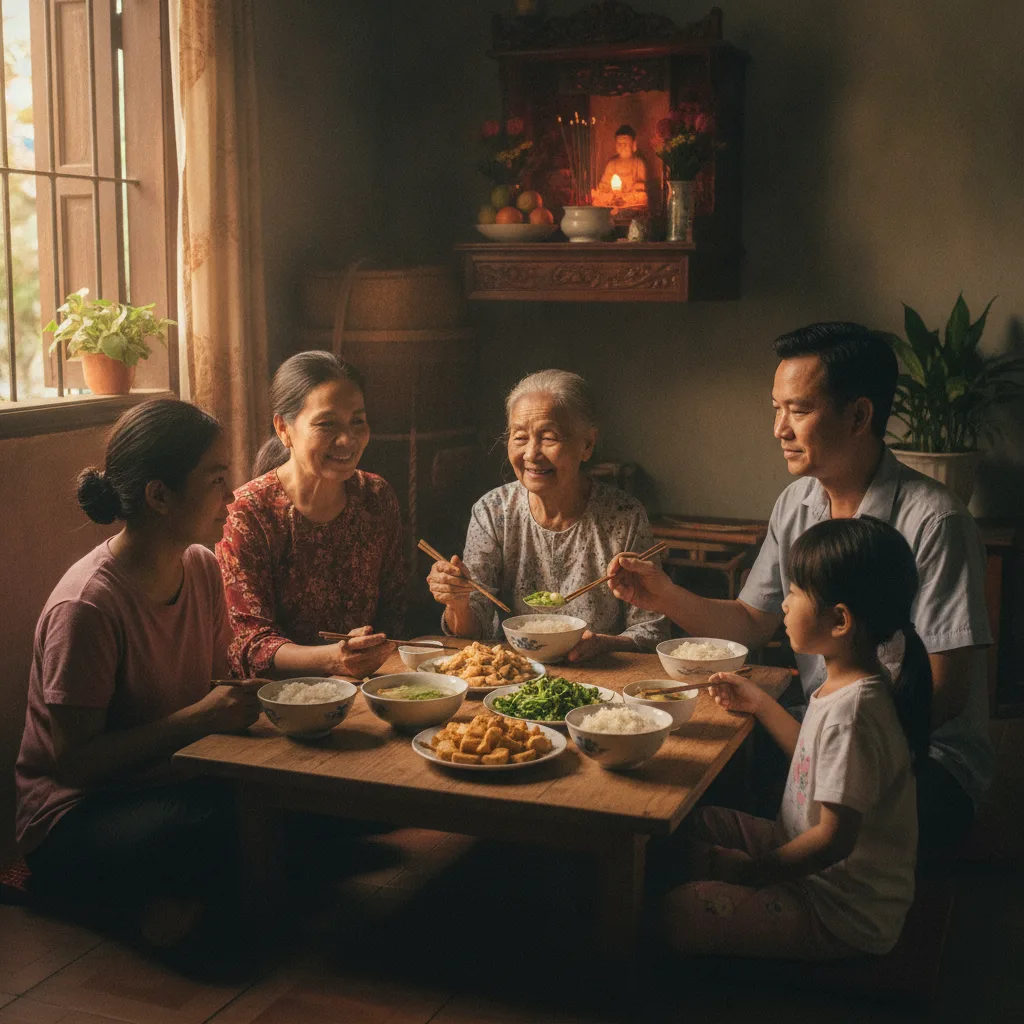
In practical terms, this cuisine has developed across three complementary spheres. Firstly, the monasteries, where monks and nuns create refined temple cuisine using simple ingredients. Secondly, families, who prepare meals without meat or fish on certain dates in the lunar calendar. Finally, there are the quán chay – urban vegetarian restaurants that have popularised chay cuisine amongst a much wider audience than just the practising community.
The available sources also point out that Vietnamese vegetarian cuisine has long been an integral part of the country’s religious, family and culinary traditions, and is not merely a contemporary trend linked to wellbeing.
What does ‘chay’ mean in Vietnamese cuisine?
In Vietnamese, ‘chay’ means vegetarian. The word is used in several expressions that you’ll come across all over Vietnam. ‘Ăn chay’ means to eat vegetarian food, ‘quán chay’ refers to a vegetarian restaurant, and ‘cơm chay’ means a vegetarian meal or a vegetarian rice platter. The word is also added to the names of dishes to indicate the vegetarian version, as in ‘phở chay’, ‘bún chay’ or ‘bánh xèo chay’. This very simple structure explains why the menu at a Vietnamese vegetarian restaurant is easy to understand, even for a visitor who doesn’t speak the language.
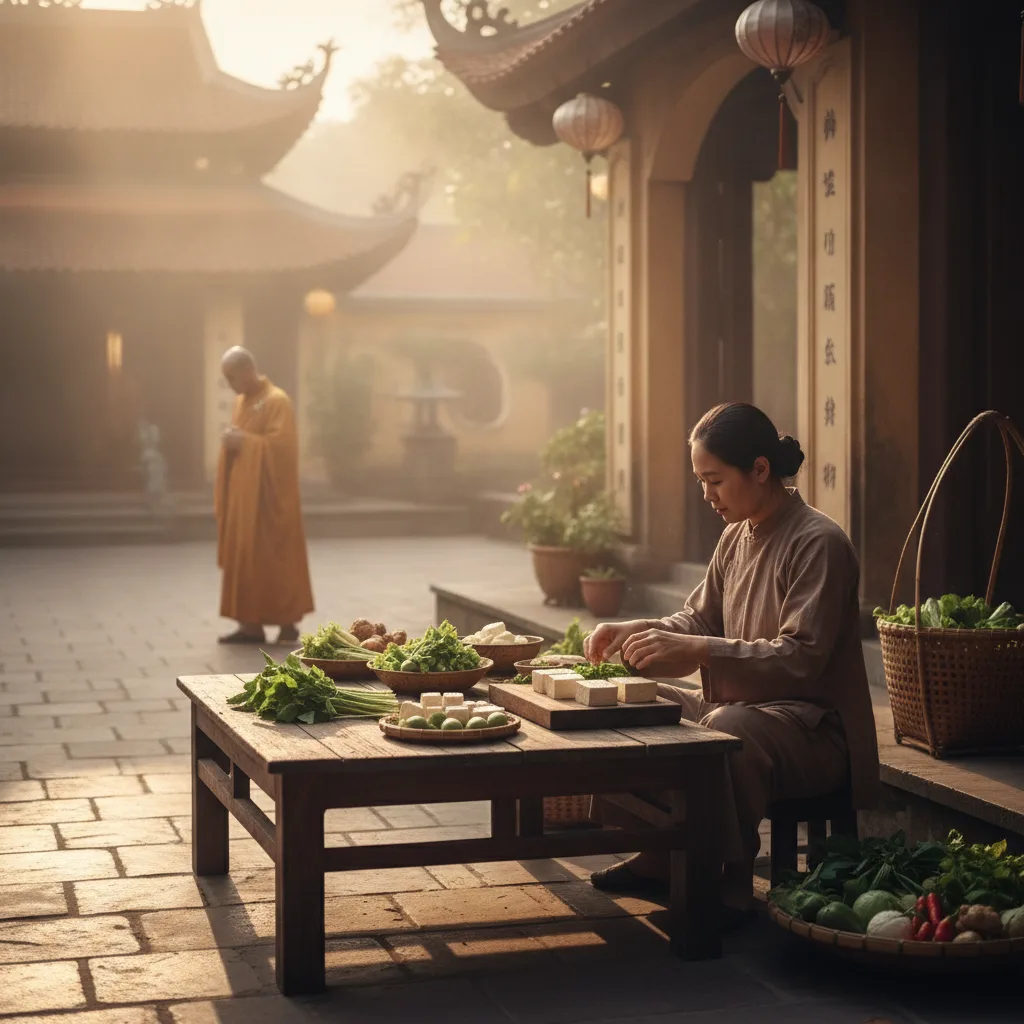
There is, however, one nuance worth noting. In common usage, ‘chay’ most often refers to a diet free from meat, fish and nước mắm (fish sauce), which is replaced by soya sauce. Many establishments associated with pagodas go a step further and also exclude eggs and dairy products, bringing their cuisine closer to a vegan diet. However, this practice varies from one restaurant to another, as noted by the Vietnam National Administration of Tourism. The term ‘chay’ is therefore a useful guide, but not a certification.
Why do people eat a vegetarian diet on the 1st and 15th days of the lunar month?
Most Vietnamese Buddhists do not follow a permanent vegetarian diet. Many practise it periodically, particularly on the 1st and 15th days of the lunar month, which correspond to the new moon and the full moon. These two dates are key moments in religious life, devoted to making offerings and visiting pagodas. On these occasions, abstaining from meat symbolises a renewed commitment to non-violence in one’s diet – a commitment within everyone’s reach, including those who eat differently for the rest of the month.
The effect is visible in public spaces. Official tourism sources note that the range of vegetarian options is increasing significantly in markets and restaurants during this period, with some traditional establishments expanding their vegetarian menus as a result. The practice may also be permanent, gradual, or adopted in stages, depending on the level of commitment of each individual. This flexibility is an important feature of Vietnamese vegetarianism, which explains its spread far beyond monastic circles.
Good to know
In Vietnam, asking for a meat-free dish does not guarantee that it is vegetarian, as the stock, paste or sauce may contain fish sauce or dried prawns. The phrase ‘không nước mắm’ is therefore just as useful as ‘không thịt’.
What ingredients are used as meat substitutes in vegetarian cooking?
Key ingredients and plant-based substitutes
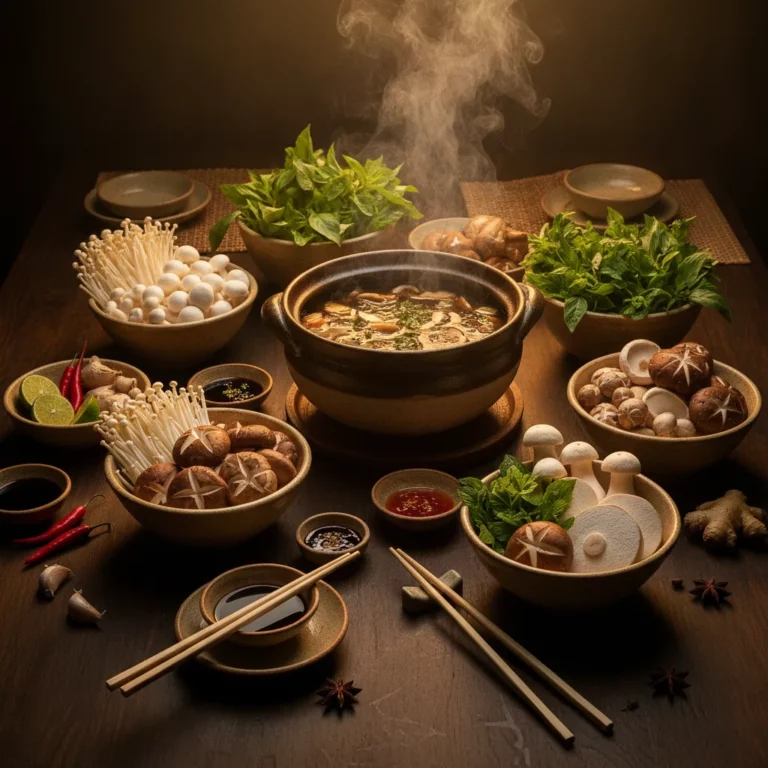
Vietnamese Buddhist cuisine does not seek to simplify recipes, but rather to recreate their textures and flavours using plant-based ingredients. Tofu provides a soft, creamy texture; seitan and wheat gluten add chewiness; shiitake and black mushrooms contribute umami; pulses provide plant-based protein; and Vietnamese herbs bring freshness. Plant-based substitutes are sometimes shaped and seasoned to resemble traditional dishes, which helps to preserve the familiar structure of the dishes whilst eliminating all ingredients of animal origin.
The following table summarises the main categories of ingredients used in a Vietnamese Buddhist meal and their role on the plate.
| Category | Common ingredients | Culinary role |
|---|---|---|
| Plant-based proteins | Tofu, seitan, wheat gluten, beans, peas | To provide structure, texture and a source of protein |
| Mushrooms | Shiitake mushrooms, oyster mushrooms, black mushrooms | To add umami and a meaty texture |
| Vegetables | Cabbage, carrots, squash, aubergines, leafy vegetables | Side dishes, stir-fries, broths and salads |
| Starchy foods | Rice, rice vermicelli, noodles, sweet potato | Energy content of the meal |
| Herbs and spices | Lemongrass, ginger, coriander, Thai basil, spring onions | Flavouring stocks and sauces |
| Condiments | Soy sauce, soya paste, lime, chilli, peanuts | Season with salt, add a splash of acid and spice it up |
The most typical Vietnamese vegetarian dishes
Some iconic dishes from Chay cuisine
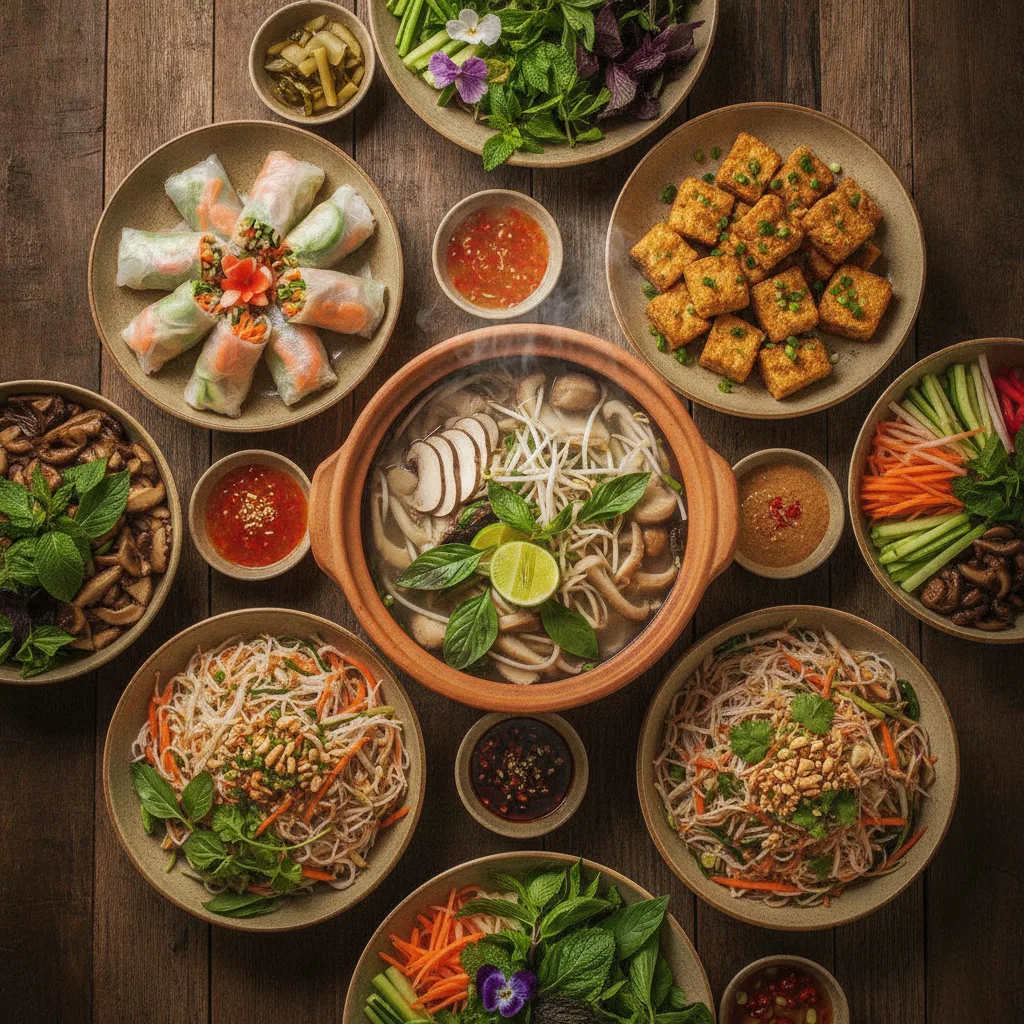
The chay tradition has produced vegetarian versions of almost all the classic Vietnamese dishes, from north to south. Here are the dishes you’ll most commonly come across in a quán chay or at a Vietnamese Buddhist meal.
- Vegetarian phở, a rice noodle soup made with a vegetable stock that has been slowly infused with spices, topped with tofu, mushrooms and fresh herbs.
- Bún chay, rice vermicelli served with crunchy vegetables, tofu, herbs and a vegetable-based sauce, is often cited as the go-to starter in vegetarian cuisine.
- Gỏi cuốn chay: fresh spring rolls with tofu, rice vermicelli and raw vegetables.
- Vegetarian bánh xèo, a crispy pancake filled with vegetables and mushrooms.
- Cơm chay, a selection of rice served with a variety of small vegetarian dishes, a classic dish found in pagoda canteens.
- Cao lầu chay, the animal-free version of Hội An’s signature noodle dish.
These recipes travel remarkably well. In our kitchen, they take the form of the bún chả giò, our vermicelli with crispy vegetable spring rolls, bánh cuốn – those thin steamed rice pancakes – hà cảo – vegetable dumplings – or even Bà Dung’s stew, a Vietnamese-style curry served with rice. Our homemade soups, such as hủ tiếu Mây Bay or Mây Bay’s satay speciality, are also based on a vegetable stock, in the tradition of classic vegetarian soups. View the full menu for Mây Bay restaurant, with detailed descriptions of each dish.
Huế, Hanoi, Hội An, Ho Chi Minh City: the geography of chay
Huế holds a special place. A former imperial capital, rich in temples, the city is regarded as one of the main centres of the Vietnamese vegetarian tradition, with a particularly elaborate monastic and home-style cuisine consisting of numerous small dishes served together. Huế’s vegetarian dishes are often regarded as the technical pinnacle of vegetarian cuisine, as they retain the refinement of court cuisine whilst adhering to the rules of monastic practice.
In Hanoi, the choice is more contemporary, with restaurants offering modern vegetarian menus and plant-based versions of classic dishes, some of which are listed in the Michelin Guide. Ho Chi Minh City is home to a large number of quán chay, ranging from popular canteens to more upmarket establishments. Finally, Hoi An offers its local specialities in versions free from meat and seafood. In all cases, restaurants situated near pagodas and temples are a reliable guide to finding a plant-based meal, provided you check the exact ingredients of the dishes.
Vegetarian, vegan, chay – how to make sense of it all
Differences between terms and usage
Three concepts are often conflated in discussions about Vietnamese Buddhist cuisine, and it is useful to distinguish between them. ‘Vegetarian’ means no meat or fish, though eggs or dairy products may be included. ‘Vegan’ excludes all products of animal origin. ‘Chay’ cuisine, on the other hand, is a cultural and religious category, very similar to veganism in its monastic practice, but whose specific rules may vary from one community and establishment to another.
To enjoy a strictly vegan meal in Vietnam, a few simple checks are usually all it takes. Simply say ‘tôi ăn thuần chay’ (I eat a strictly vegan diet), ask for a vegetable stock, ‘không nước mắm’ (no fish sauce) and ‘không trứng’ (no eggs), and enquire whether there might be any dried prawns in the noodles or sauces. In a clearly labelled quán chay, these precautions are rarely necessary. In France, the situation is different, as a Vietnamese vegetarian restaurant that is entirely vegan, such as ours, removes any ambiguity regarding the composition of the dishes by its very nature.
Key points
Our menu is 100 % vegetarian and vegan, with no fish sauce or animal stock, which means that a mixed-diet table can order without having to make compromises or check each dish individually.
Is vegetarian cuisine nutritionally balanced?
A well-balanced vegetarian diet provides a variety of vegetables, fibre, complex carbohydrates and plant-based proteins from tofu, pulses and wheat gluten. However, the literature on Vietnamese vegetarianism emphasises one point: nutritional quality depends on the variety of meals and the degree to which meat substitutes are processed. Processed meat substitutes can be high in salt, whilst deep-fried foods and sweet sauces increase the energy density of an otherwise plant-based dish.
The same sources point out that a strict vegan diet requires particular attention to vitamin B12, iron, calcium and omega-3s, and that a vegetarian lifestyle may also face economic, socio-cultural or information-related barriers. This is one of the reasons why we prioritise fresh produce, seasonal vegetables, aromatic herbs and steaming or slow-cooking methods rather than relying on a host of processed substitutes.
Temple cuisine in Vincennes
Our concept is based on combining a venue where guests can enjoy fresh, healthy dishes with a contemporary, relaxing atmosphere. This dual focus is precisely what defines chay cuisine, where the quality of the ingredients and the tranquillity of the dining experience are just as important as the recipe itself. In Vincennes, this translates into a comprehensive plant-based menu, ranging from gỏi Mây Bay, our vegetable salad, to desserts such as the chè chuối, bananas with tapioca pearls, coconut milk and peanuts, including Vietnamese coffee and herbal teas made with lemongrass or chrysanthemum flowers.
The format also adapts to the demands of the working week. A 45-minute business lunch, a weekend brunch, a takeaway order picked up on the way home from the office, or a dinner for two in a contemporary setting. Book a table at Mây Bay, and order your Vietnamese vegetarian dishes to take away.
Exploring Vietnamese Buddhist cuisine in greater depth
Vietnamese Buddhist cuisine is a comprehensive culinary tradition, which originated in temples, was shaped by Mahāyāna Buddhism, and has been passed on through families and quán chay. It demonstrates that a cuisine containing no animal products whatsoever can be generous, aromatic and technically demanding, provided its fundamentals are respected: fresh produce, vegetable stock, herbs and a balance of textures. It is this heritage that we champion in Vincennes, not as a trendy gimmick, but as the continuation of a culinary tradition dating back several centuries.
In summary: Vietnamese Buddhist cuisine today
In both France and Vietnam, this Vietnamese Buddhist cuisine is therefore based on the same principle: respecting all living things, making the most of plant-based ingredients, and cultivating the art of making stock and using fresh herbs. Whether practised occasionally or on a daily basis, ‘ăn chay’ provides a clear framework for eating plant-based food without compromising on flavour or the rituals of mealtimes.
Frequently asked questions about Vietnamese Buddhist cuisine
Are all Vietnamese Buddhists vegetarians?
No. The practice varies greatly; it can be permanent, periodic or gradual. Many practitioners choose to eat a vegetarian diet only on the 1st and 15th days of the lunar month, whilst monastic communities follow a vegetarian diet all year round.
Does vegetarian phở taste the same as the traditional version?
The flavour profile remains similar, as it is based mainly on the spices in the stock: cinnamon, star anise, toasted ginger and coriander. The difference lies in the depth of the stock, achieved using dried mushrooms, root vegetables and soya rather than animal products.
What is the difference between a quán chay and a traditional restaurant in Vietnam?
A vegetarian quán explicitly displays the word ‘chay’ and prepares its entire menu without meat, fish or fish sauce. A traditional restaurant may offer a few vegetarian dishes, but these are prepared in a kitchen where animal-based stocks and seasonings are used.
Can we bring children or non-vegetarian guests?
Yes, and that’s actually the most common scenario here. As vegetarian cuisine is based on familiar Vietnamese dishes – rice vermicelli, rice pancakes, steamed dumplings, soups and curries – it suits both flexitarians and strict vegans.
Is there a gift voucher available to introduce people to this cuisine?
Yes, we offer gift vouchers for our set menus, which are a great way to treat someone to a complete introduction to Vietnamese plant-based cuisine rather than just a single dish.
How can you recognise high-quality vegetarian cuisine in France?
Look at the proportion of fresh produce and herbs in the dishes, the use of homemade stocks, and the consistency of the menu. A menu based primarily on industrial substitutes strays from the tradition of temple cuisine.