Introduction
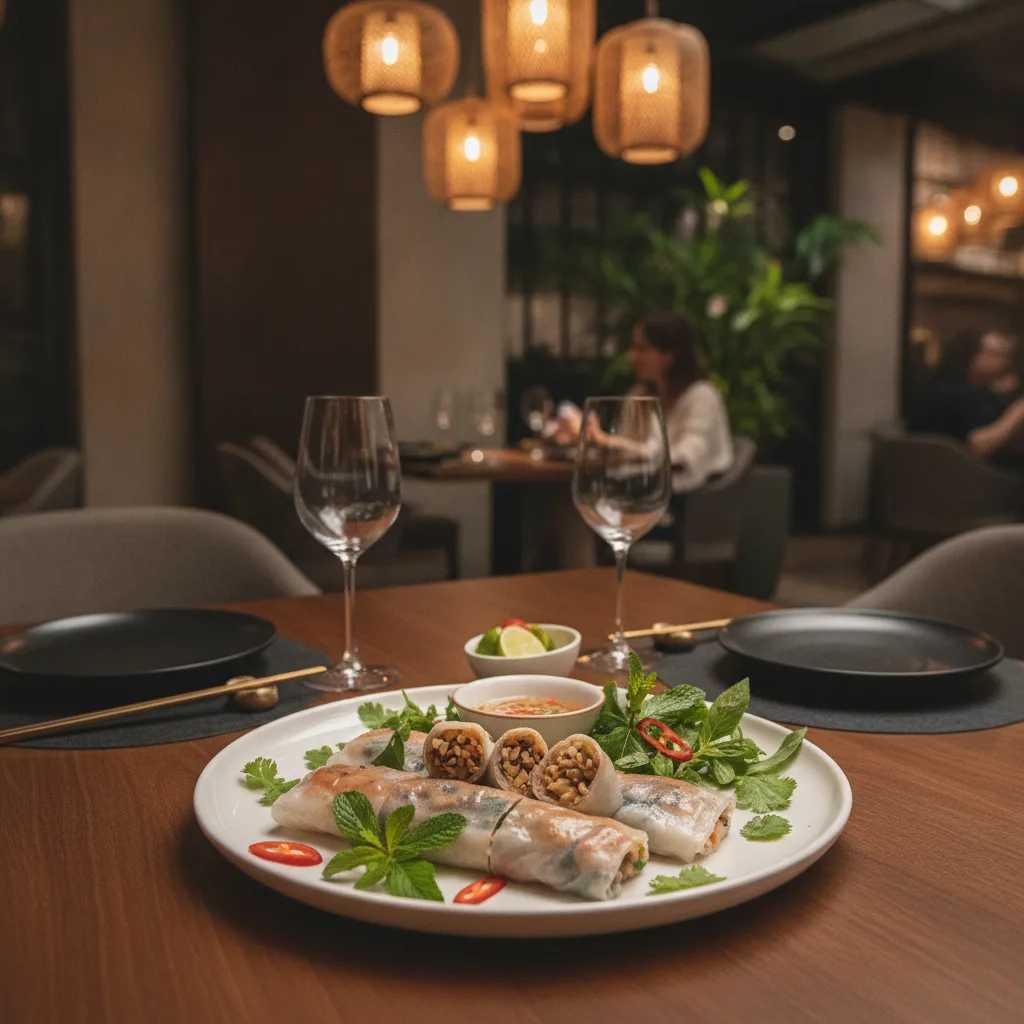
Vegan banh cuon is one of those dishes that appear simple at first glance but, upon tasting, reveal the full subtlety of Vietnamese cuisine. Ultra-thin rice paper, fragrant filling, fresh herbs, a light and well-balanced sauce – it all comes down to the delicacy of the technique and the quality of the ingredients.
In Vincennes and eastern Paris, this iconic dish fits perfectly into a plant-based Vietnamese cuisine that is both exotic and reassuring for flexitarians. To truly understand what a vegan banh cuon is, you need to delve into the intricacies of a rare culinary craft and discover how a restaurant such as Mây Bay It offers a well-rounded experience, combining authenticity, modernity and 100 % plant-based cuisine.
Vegan banh cuon: The Delicate Art of the Vietnamese Steamed Crepe, 100% Plant-Based Version
Reading time: ~11 mins
- Contents
- What is vegan banh cuon?
- The secrets of steamed rice dough
- A 100 % vegetable filling, packed with flavour
- Vegan nuoc cham sauce and side dishes
- Vegan banh cuon, a healthy and nutritious dish
- How does vegan banh cuon fit into the Mây Bay world?
- FAQ
- In summary
What is vegan banh cuon?
Definition of vegan banh cuon
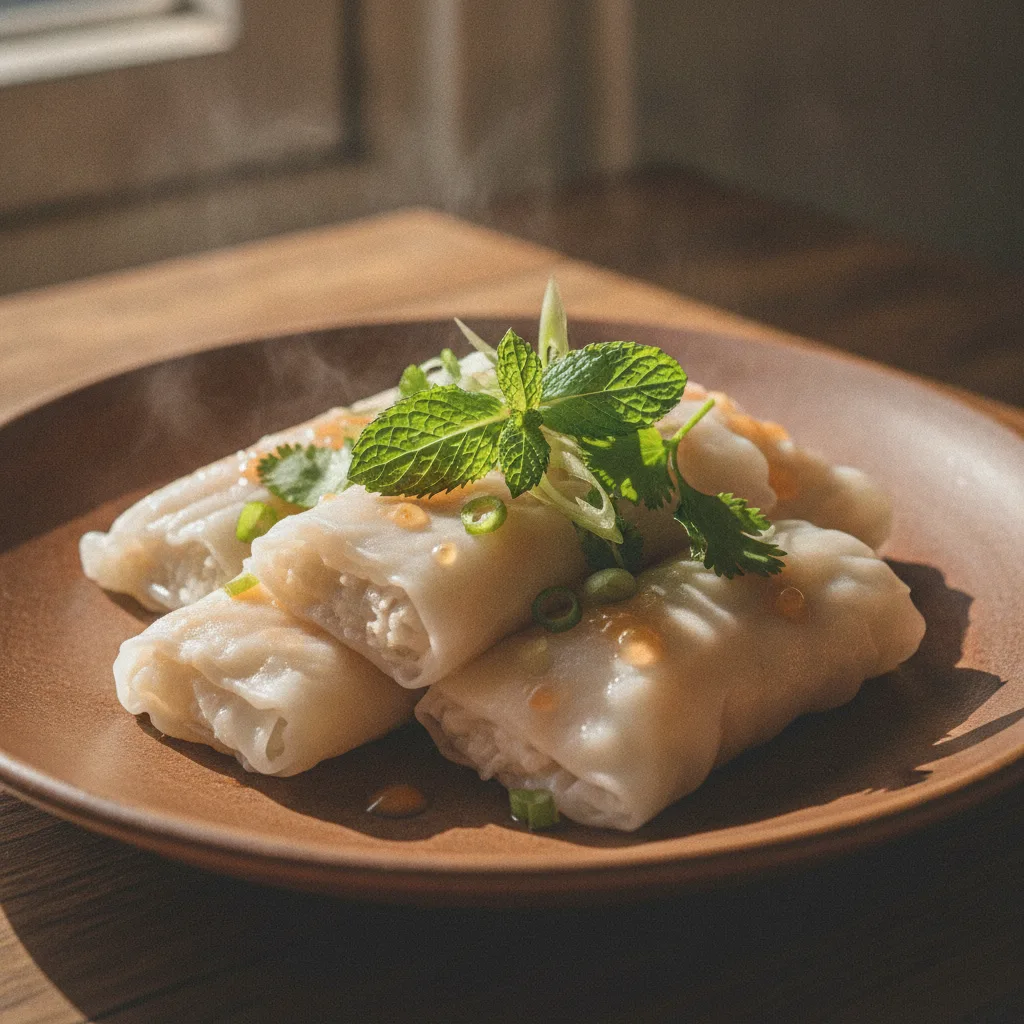
Banh cuon is traditionally a roll of very thin rice dough, steamed and then rolled around a savoury filling. Often compared to a giant ravioli or a rice pancake, it is distinguished by its soft, translucent wrapper. In the traditional version, the filling combines meat, black mushrooms and onions. The vegetarian version (bánh cuốn chay) retains the characteristic texture and umami flavour whilst replacing the animal ingredients with plant-based proteins.
| Element | Composition |
|---|---|
| Rice pancake | Rice flour, tapioca or maize starch, water, salt, oil |
| Vegetable filling | Tofu, wood ear mushrooms, onions, carrots or vermicelli, soya sauce, garlic, pepper |
| Accompanying sauce | Vegan nuoc cham: soya sauce or plant-based “fish” sauce, water, sugar, lime, garlic |
Served with fresh herbs, bean sprouts and a crisp salad, vegan banh cuon is a complete meal, naturally gluten-free, ideal for vegetarians, vegans and flexitarians looking for an authentic culinary experience.
The secrets of steamed rice dough
A fine, supple rice dough
In a vegan banh cuon, the rice batter is key to its success. It must be runny enough to spread into an almost translucent veil, whilst remaining firm enough to hold its shape when rolled. The base combines rice flour for firmness and tapioca or maize starch for suppleness, all mixed with water, a pinch of salt and sometimes a dash of oil. Some modern recipes add a splash of coconut milk for an even silkier texture.
Precise steam cooking
A resting period is essential: it allows the flour to absorb the liquid and settle slightly. Before making each crêpe, the batter must be stirred to restore its perfect consistency. Traditionally cooked on a cloth stretched over a steaming saucepan, the crêpe can now be made in a very hot non-stick frying pan, covered to create the necessary steaming environment. The desired result remains the same: a crêpe so thin that light shines through it, yet firm enough to hold a generous filling.
A 100 % vegetable filling, packed with flavour
A balance of textures and flavours
The balance of textures and flavours is key. Extra-firm tofu, crumbled or lightly fried, adds a hearty, «meaty» element. The mushrooms – often wood ear mushrooms – provide a pleasant crunch and umami flavour. Onions, carrots and mung bean vermicelli add sweetness and texture. Stir-fried with soy sauce, garlic, sugar and pepper, these ingredients form a fragrant filling that is dry enough not to make the pancake soggy. The umami of the tofu and mushrooms, the sweetness of the onion, the hint of sugar and the freshness of the herbs combine to create a taste experience that appeals to vegans and flexitarians alike.
Vegan nuoc cham sauce and side dishes
Without its sauce, vegan banh cuon would lose some of its vibrancy. Adapted to a plant-based version, the nuoc cham retains the same flavour profile that delicately coats each roll.

| Ingredient | Function |
|---|---|
| Soy sauce or plant-based “fish” sauce | Savoury & umami base |
| Water | Dilution |
| Sugar | A balance of sweetness |
| Lime juice or vinegar | Acidity |
| Garlic & chilli | Character |
Poured over just before serving, this light sauce slowly soaks into the crêpe without weighing it down. Mint, coriander and Vietnamese basil, along with crisp salad leaves, cucumber or bean sprouts, round off the dish, adding a touch of freshness and crunch.
Vegan banh cuon, a healthy and nutritious dish
As the rice batter contains no wheat, banh cuon is naturally gluten-free (provided the sauce is suitable). The combination of tofu and mushrooms provides plant-based protein and fibre, leaving you feeling full without feeling heavy. Most of the dish’s flavour comes from the steaming process, the marinades and the herbs: a light yet generous dish, perfect for a quick lunch or a cosy dinner for two.
How does vegan banh cuon fit into the Mây Bay world?
100% plant-based Vietnamese expertise %
At Mây Bay, the mastery of steamed rice dough, well-balanced fillings and finely crafted sauces transports connoisseurs back to Asia, whilst respecting contemporary dietary preferences. For newcomers, it offers an accessible introduction to a refined culinary culture.
A complete dining experience, from starter to dessert
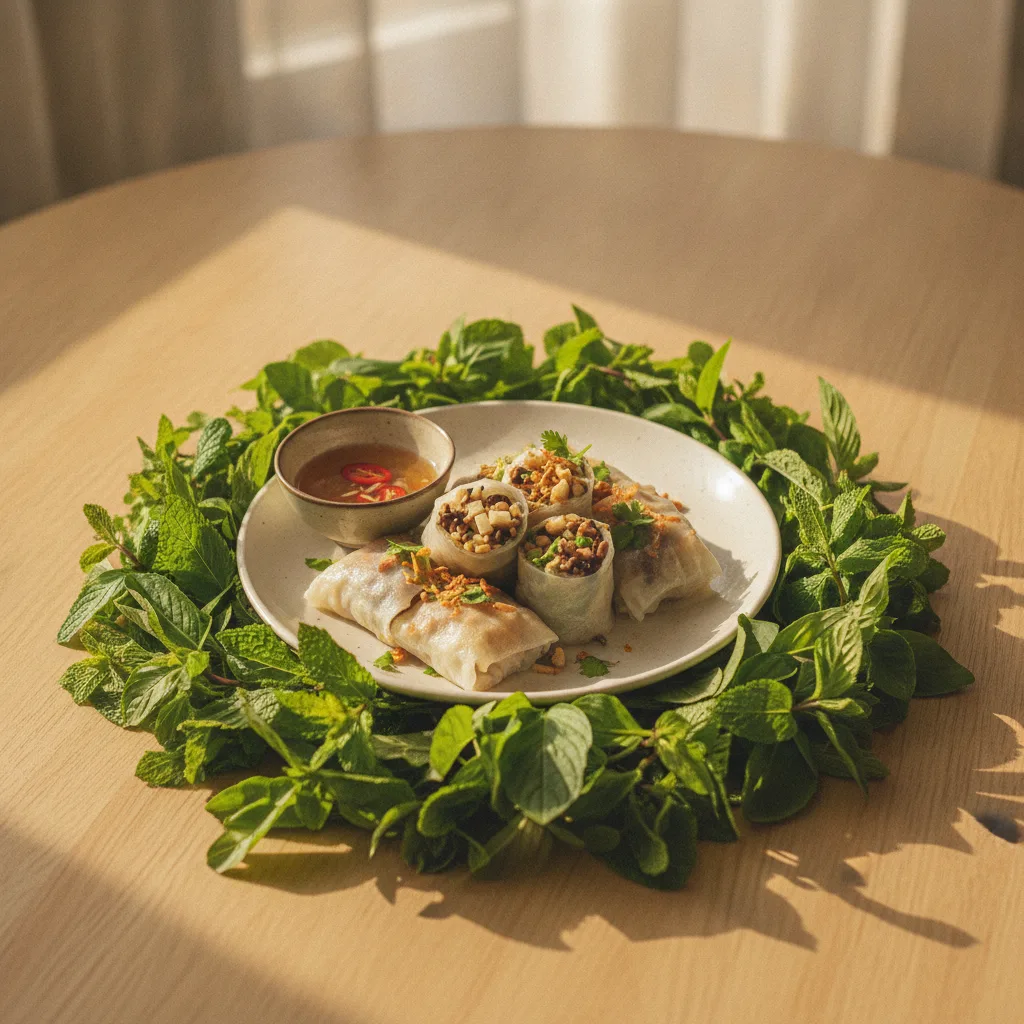
The meal could start with a steamed Vietnamese crêpe, followed by a vegan banh cuon or a Vegetarian Bun Cha Gio, before rounding off with a coconut- or fruit-based dessert, all served with homemade herbal teas or Vietnamese coffee. The page dedicated to the Vietnamese banh cuon pancake sets out these proposals in detail.
A setting suited to different stages of life
Whether it’s for a business lunch, a romantic vegetarian dinner or a takeaway via the website order, Mây Bay’s contemporary and soothing décor transforms every culinary break into a moment of well-being in eastern Paris.
FAQ
Is vegan banh cuon suitable for flexitarians who are used to eating meat?
Yes. The use of textures – such as fried or well-seasoned tofu, and mushrooms rich in umami – provides a feeling of fullness and indulgence without leaving you feeling that anything is missing. Many flexitarians find this a convincing alternative.
Does vegan banh cuon contain gluten?
Rice noodles do not contain any; however, it is advisable to check the ingredients of the sauces. At Mây Bay, the recipes are designed to meet these requirements whilst remaining delicious.
Is vegan banh cuon usually eaten as a starter or a main course?
Served in small portions, it’s ideal for sharing as a starter. Served in a more generous portion, accompanied by herbs and a drink, it makes for a balanced main course.
Can we take some vegan banh cuon home for lunch or dinner?
Yes. Its rolled format makes it easy to take away, provided the sauce is packed separately. Mây Bay’s takeaway service allows you to order in advance and collect your meal quickly.
In summary
Vegan banh cuon embodies all the refinement of Vietnamese plant-based cuisine: an exquisitely delicate steamed rice pancake, a fragrant filling, a light sauce and a bouquet of fresh herbs. A signature dish at Mây Bay in Vincennes, it offers a complete culinary journey and a sense of well-being. To continue your discovery, explore the page dedicated to the Vietnamese banh cuon pancake and let us guide you, dish by dish.